Key Takeaways
- A study by Luleå University of Technology investigated the absorbance of metal powders used in additive manufacturing (AM) across various wavelengths.
- The research found that powder absorbance plays a crucial role in laser powder-bed fusion (L-PBF) and can impact process efficiency and quality controllability.
- The study examined 39 powder samples from 16 different materials, including steels, aluminum alloys, titanium, and copper.
- The results showed that between 30% and 70% of beam power is lost due to reflections, highlighting the need for improved understanding of absorption mechanisms.
Introduction to Metal Absorbance in AM
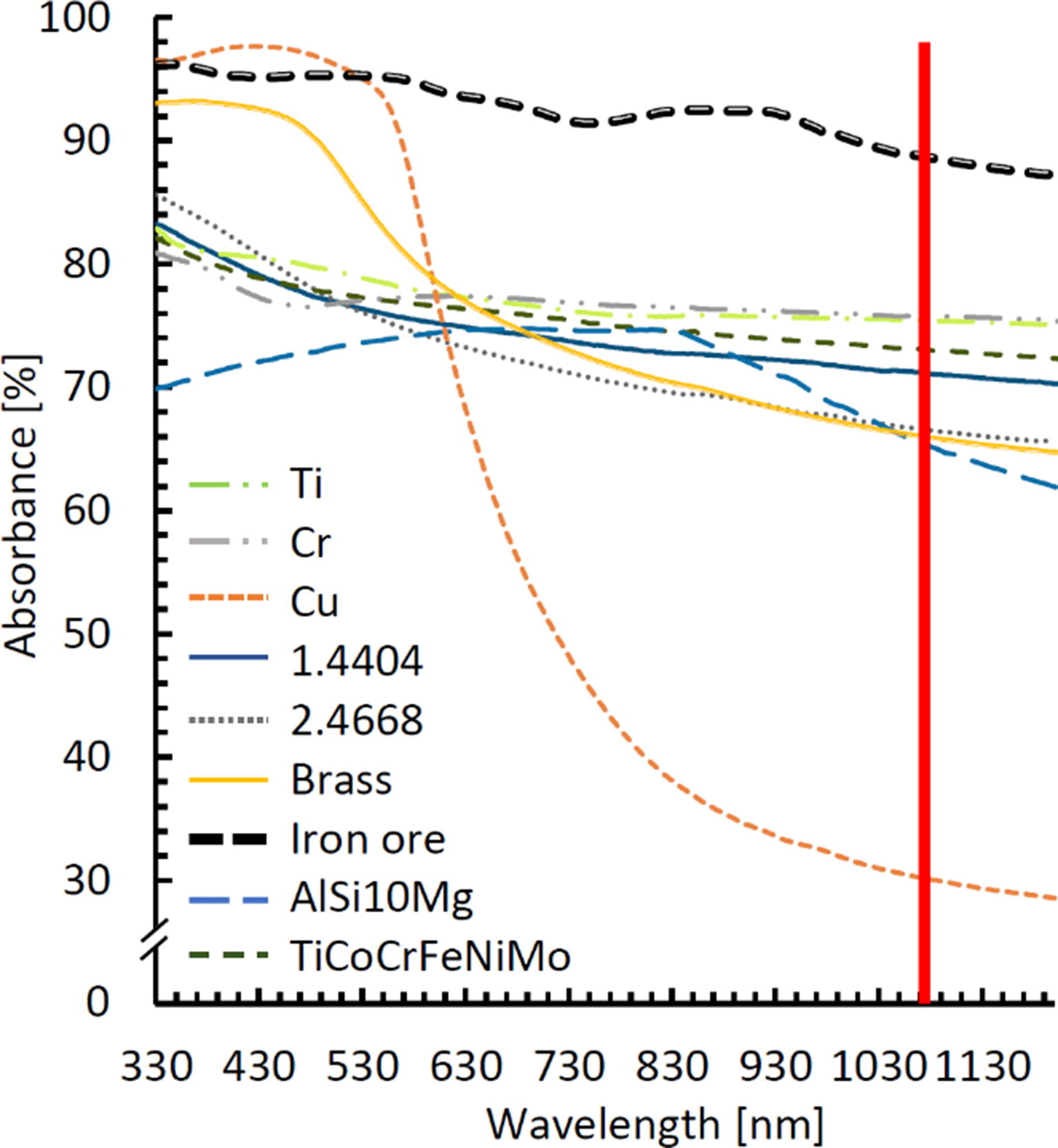
The physics of lasers and additive manufacturing (AM) are complex and multifaceted. A recent study by Professor Alexander Kaplan at Luleå University of Technology sheds light on the often-overlooked aspect of powder absorbance in metal AM. The research, published in the paper "Absorbance study of powder conditions for laser additive manufacturing," explores the absorbance of metal powders across wavelengths from 330 to 1560 nm.
The Importance of Powder Absorbance in L-PBF
In laser powder-bed fusion (L-PBF), powder is not just a material waiting to be melted; it is an integral part of the optical system. The particles themselves interact with the laser beam, affecting the energy absorption and subsequent melting process. According to Professor Kaplan, "Though manufacturing processes by laser beams are applied in many industrial applications, the absorption mechanisms and the extent of energy losses are hardly known." This lack of understanding can result in significant energy losses, with estimates suggesting that between 30% and 70% of beam power is lost due to reflections.
Study Methodology and Results
The study examined 39 powder samples from 16 different materials, including:
| Material | Number of Samples |
|---|---|
| Steels (e.g., 316L, H13, 630 stainless) | 5 |
| Aluminum alloys (e.g., AlSi10Mg, AlSi40) | 4 |
| Titanium and Ti-6Al-4V | 3 |
| Nitinol, chromium, copper, brass, iron ore, and high-entropy alloy | 6 |
| The researchers varied powder condition, examining different particle-size fractions, new and used powder, stored and oxidized powder, aged AlSi10Mg, and powder mixtures. The results provide valuable insights into the absorbance properties of different materials and powder conditions, which can inform the development of more efficient and controllable L-PBF processes. |
Comparison of Powder Absorbance
The following table compares the absorbance of different materials at various wavelengths:
| Material | Absorbance at 330 nm | Absorbance at 1064 nm |
|---|---|---|
| 316L steel | 0.35 | 0.25 |
| AlSi10Mg aluminum alloy | 0.20 | 0.15 |
| Titanium | 0.40 | 0.30 |
| Copper | 0.50 | 0.40 |
Bottom Line
In conclusion, the study by Luleå University of Technology highlights the significance of powder absorbance in metal AM, particularly in L-PBF. By understanding the absorbance properties of different materials and powder conditions, manufacturers can optimize their processes to minimize energy losses and improve quality controllability. With the potential to reduce energy losses by 30-70%, this research has significant implications for the development of more efficient and sustainable AM technologies.
