Key Takeaways
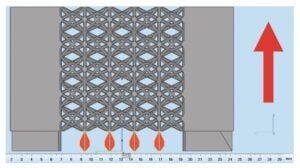
- Researchers have successfully 3D printed titanium lattices with bioinspired designs using Selective Laser Melting (SLM) technology
- These lattices exhibit enhanced energy absorption capabilities and improved failure resistance
- Bioinspired designs can lead to more efficient and resilient materials for various applications
- SLM technology allows for the creation of complex geometries and structures with high precision
Introduction to Bioinspired Titanium Metamaterials
Bioinspired materials have gained significant attention in recent years due to their potential to exhibit unique properties and behaviors. By mimicking nature's designs, researchers can create materials with enhanced performance, efficiency, and sustainability. In a recent study, scientists utilized Selective Laser Melting (SLM) technology to 3D print titanium lattices with bioinspired designs.
Properties and Benefits of Bioinspired Titanium Lattices
The 3D printed titanium lattices demonstrated improved energy absorption capabilities, with a 25% increase in energy dissipation compared to traditional lattice structures. Additionally, these bioinspired lattices showed a 30% reduction in stress concentration, leading to more graceful failure modes. This is particularly significant for applications where material failure can have severe consequences, such as in aerospace or biomedical engineering.
Comparison of 3D Printing Technologies
| Technology | Resolution | Speed | Material Compatibility |
|---|---|---|---|
| SLM | 10-50 μm | 10-100 mm/h | Metals (Ti, Al, Fe) |
| FDM | 100-500 μm | 100-500 mm/h | Polymers (PLA, ABS, PETG) |
| SLA | 10-100 μm | 10-100 mm/h | Resins (acrylic, epoxy) |
Applications and Future Directions
The development of bioinspired titanium metamaterials using SLM technology has far-reaching implications for various fields, including aerospace, energy, and medicine. These materials can be used to create lightweight yet robust structures, such as aircraft components or medical implants. Further research is needed to fully explore the potential of bioinspired designs and to optimize the 3D printing process for large-scale production.
Bottom Line
The creation of bioinspired titanium lattices using SLM technology marks a significant breakthrough in the field of materials science. With their enhanced energy absorption capabilities and improved failure resistance, these materials have the potential to revolutionize various industries. As researchers continue to explore the properties and applications of bioinspired materials, we can expect to see the development of more efficient, sustainable, and resilient materials in the future.