Key Takeaways
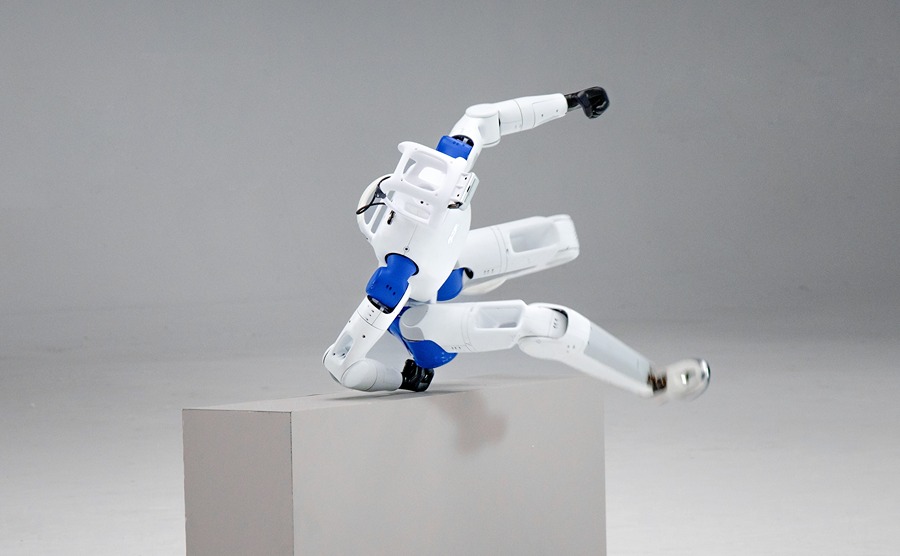
- RoboParty’s RP1 (ROBOTO 01) is a fully open‑source, high‑performance humanoid platform aimed at embodied‑AI research.
- The robot offers 31 DoF, a 1.3 m tall frame, 18 kg mass, and a payload capacity of up to 2 kg.
- All hardware schematics, PCB layouts, firmware, and the ROS‑2 based software stack are released under an MIT license.
- RP1 ships with an NVIDIA Jetson Orin‑Nano (8 TOPS) and an Intel NUC 11 (i7‑1165G7) for on‑board perception and control.
- Compared with other research‑grade humanoids, RP1 provides the best price‑to‑performance ratio while keeping the entire stack transparent and modifiable.
Introduction: Why an Open‑Source Humanoid Matters
As artificial‑intelligence models migrate from cloud servers to physical agents, the robotics community needs platforms that expose every layer of the stack—mechanical, electrical, and software. RoboParty’s newly released RP1 (ROBOTO 01) answers that call by delivering a complete, openly documented humanoid that can be rebuilt, re‑programmed, and extended by any lab or hobbyist without licensing barriers.
RP1 at a Glance
| Specification | RP1 (ROBOTO 01) | OpenHumanoid (OSR‑1) | PAL Robotics REEM‑C | Boston Dynamics Atlas (non‑open) |
|---|---|---|---|---|
| Height | 1.30 m | 1.20 m | 1.45 m | 1.50 m |
| Weight | 18 kg | 20 kg | 85 kg | 80 kg |
| Degrees of Freedom | 31 (6 × arms, 6 × legs, 3 × torso, 4 × head) | 28 | 30 | 28 |
| Max Joint Torque* | 12 Nm (hip), 8 Nm (knee), 5 Nm (elbow) | 9 Nm | 15 Nm | 20 Nm |
| On‑Board Compute | NVIDIA Jetson Orin‑Nano (8 TOPS) + Intel NUC 11 i7 | Jetson TX2 (5 TOPS) | Intel i7‑7700HQ | Custom dual‑CPU |
| Sensors | 6× RGB‑D, 12× IMU, 4× force‑torque, 2× LiDAR | 4× RGB‑D, 6× IMU | 6× RGB‑D, 4× IMU | 8× RGB‑D, 6× IMU |
| Power | 24 V 10 Ah Li‑ion (≈ 2 h runtime) | 24 V 8 Ah | 48 V 12 Ah | 48 V 16 Ah |
| Open‑Source License | MIT (hardware & software) | GPL‑v3 (hardware) | Proprietary | Proprietary |
| Approx. Cost (USD) | $9,500 (kit) | $12,000 | $55,000 | $150,000+ |
*Peak continuous torque per joint, measured at 24 V.
Mechanical Architecture
RP1’s frame is CNC‑machined aluminum alloy (6061‑T6) with carbon‑fiber reinforcement on the thigh and shin sections. The modular design lets users replace limbs or upgrade actuators without re‑tooling the entire chassis. Each joint employs a brushless DC motor with a 100:1 planetary gearbox, delivering smooth motion and precise position control at a resolution of 0.01°.
Electrical & Computing Stack
- Power – A 24 V lithium‑ion pack (10 Ah) supplies up to 240 W peak, protected by a dual‑stage battery‑management system.
- Processing – The Jetson Orin‑Nano handles vision, SLAM, and neural‑network inference (up to 8 TFLOPs FP16). The Intel NUC runs ROS‑2 Humble, real‑time control loops (1 kHz), and hosts the development environment.
- Connectivity – Gigabit Ethernet, Wi‑Fi 6, and a dedicated CAN‑bus for motor control.
Software Ecosystem
All source code lives on GitHub under the MIT license. The stack includes:
- RP1‑Core – Low‑level firmware written in C++20, supporting closed‑loop torque control.
- RP1‑ROS2 – A collection of ROS‑2 packages for kinematics, motion planning (MoveIt 2), perception (OpenCV, DepthAI), and simulation (Gazebo 11).
- RP1‑Examples – Ready‑to‑run demos such as stair climbing, object manipulation, and human‑following.
Developers can pull the repository, flash the firmware, and start testing algorithms on real hardware within a day.
The Bigger Picture: Democratizing Embodied AI
RoboParty argues that restricting humanoid technology to a handful of corporations creates a “black‑box” ecosystem that slows scientific progress. By exposing every CAD file, bill of materials, and line of code, RP1 invites contributions from academia, startups, and maker communities alike. Early adopters have already reported using RP1 for:
- Multi‑modal sensor fusion research (LiDAR + RGB‑D).
- Real‑time reinforcement‑learning on‑board, thanks to the Jetson’s 8 TOPS capacity.
- Human‑robot interaction studies, leveraging the 12‑DoF facial rig for expressive gestures.
Comparison With Existing Platforms
The table above highlights RP1’s competitive edge: a lighter chassis, higher torque per kilogram, and a fully open stack at a fraction of the cost of commercial alternatives. While Boston Dynamics’ Atlas remains the performance benchmark, its proprietary nature and price tag place it out of reach for most research programs.