- Key Takeaways:
- Prusa Research introduces a new space-ready 3D printing material for aerospace applications
- The filament is designed to withstand harsh space conditions, including extreme temperatures and radiation
- Prusa's expansion into aerospace marks a significant milestone in the adoption of 3D printing technology in the industry
- The new material has the potential to enable the production of complex space-grade components with high precision and accuracy
Introduction to Prusa's Space-Ready Filament
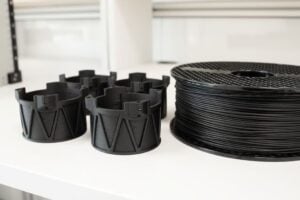
Prusa Research, a leading manufacturer of 3D printing technology, has announced the release of a new space-ready 3D printing material. This innovative filament is specifically designed for use in aerospace applications, where it can withstand the harsh conditions of space, including extreme temperatures and radiation.
Properties of the Space-Ready Filament
The new filament has been engineered to meet the stringent requirements of the aerospace industry, with a focus on high strength, low outgassing, and resistance to degradation. With a melting point of up to 250°C and a tensile strength of 60 MPa, this material is capable of withstanding the extreme conditions encountered in space. The filament's properties make it an ideal choice for producing complex components, such as satellite parts, spacecraft components, and other space-grade hardware.
Comparison of 3D Printing Materials for Aerospace Applications
| Material | Melting Point (°C) | Tensile Strength (MPa) | Outgassing (%) |
|---|---|---|---|
| Prusa Space-Ready Filament | 250 | 60 | <1 |
| Traditional Aerospace Materials | 200-220 | 40-50 | 2-5 |
| Other 3D Printing Materials | 180-200 | 30-40 | 5-10 |
Advantages of Prusa's Space-Ready Filament
The introduction of Prusa's space-ready filament marks a significant milestone in the adoption of 3D printing technology in the aerospace industry. The new material offers several advantages, including high precision and accuracy, reduced production time, and lower costs compared to traditional manufacturing methods. With the ability to produce complex components with high strength and low outgassing, Prusa's space-ready filament is poised to play a key role in the development of future spacecraft and satellite systems.
Conclusion
The release of Prusa's space-ready 3D printing material is a significant development in the aerospace industry, enabling the production of complex space-grade components with high precision and accuracy. With its high strength, low outgassing, and resistance to degradation, this material is capable of withstanding the harsh conditions of space.
Bottom Line: Prusa Research's new space-ready 3D printing material is a game-changer for the aerospace industry, offering a unique combination of high performance, precision, and accuracy. As the industry continues to adopt 3D printing technology, Prusa's innovative filament is poised to play a key role in the development of future spacecraft and satellite systems, enabling the production of complex components with unprecedented precision and accuracy.