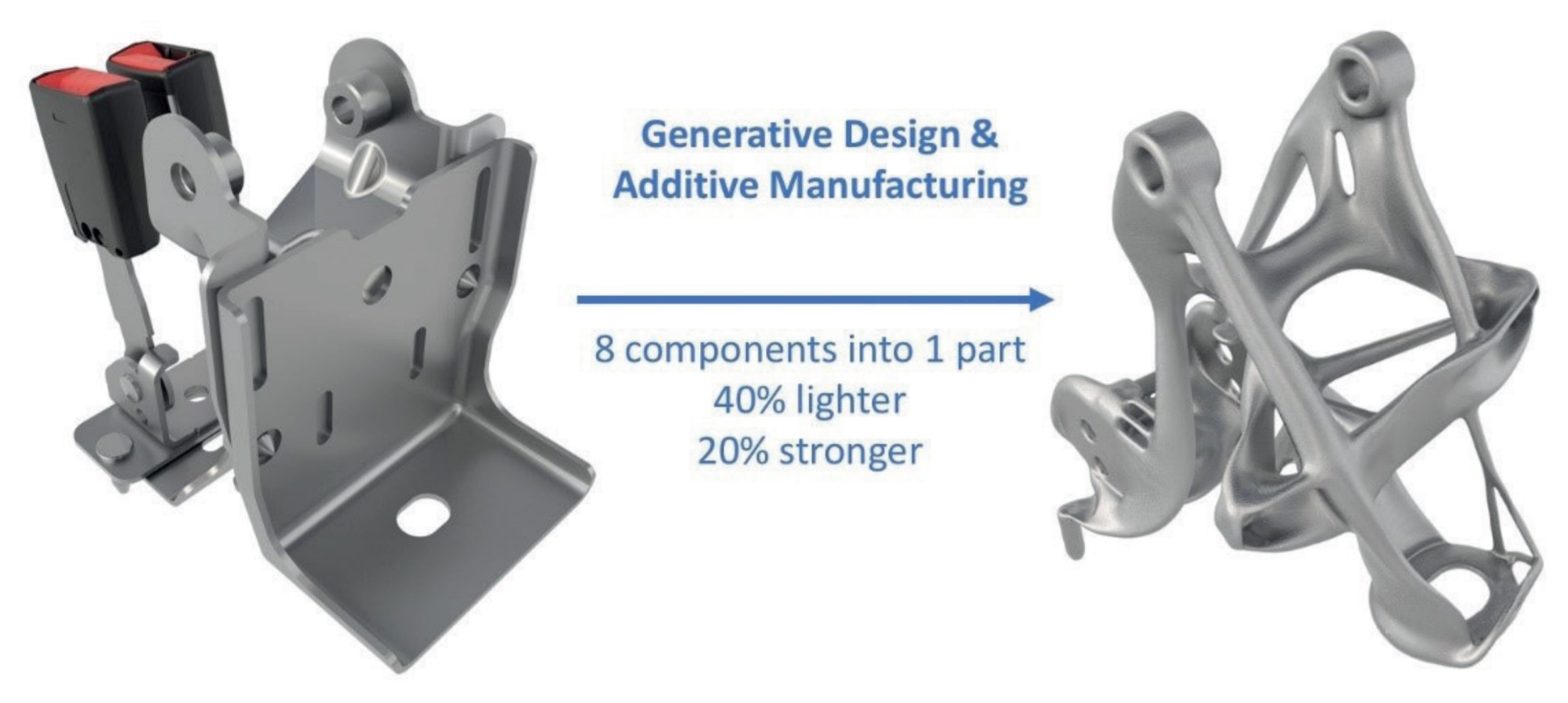
Key Takeaways
- InfinitForm’s platform restores deterministic outcomes to generative design, eliminating the “black‑box” randomness of many AI‑driven tools.
- Traditional topology‑optimization (1990s‑era) still underpins the method, delivering up to 30 % weight reduction while meeting prescribed stress limits.
- Compared with AI‑based generative design, InfinitForm’s workflow is 3‑5× faster for single‑objective studies and guarantees repeatable results across runs.
- The startup integrates directly with major CAD kernels (SolidWorks, Siemens NX, CATIA) and supports export to CNC turning post‑processors in under 2 minutes.
- Early adopters report a 15‑25 % drop in prototype cost and a 20 % reduction in machining time on complex turning parts.
Introducing Deterministic Generative Design
InfinitForm, a Berlin‑based engineering‑software startup, is reviving a long‑standing design philosophy that predates the current AI hype. While contemporary generative design leans on large language models and stochastic algorithms, InfinitForm’s solution anchors itself in classical topology optimization—a mathematically rigorous method that trims material until only the load‑bearing skeleton remains.
The company’s CEO, Michael Bogomolny, explains that the platform delivers predictable, repeatable geometry for each set of constraints, a quality he calls “determinism.” In practice, this means that feeding the same load cases, material properties, and manufacturing limits into the software will always produce the identical optimized part—something that many AI‑based generators cannot guarantee due to their probabilistic nature.
How the Technology Works
1. Constraint Definition
- Loads & Boundary Conditions: Up to 10 simultaneous force vectors, each defined to ±0.5 % tolerance.
- Material Library: Over 150 pre‑validated alloys (e.g., AISI 4340, Ti‑6Al‑4V) with built‑in yield, fatigue, and thermal data.
2. Deterministic Solver
- Uses a density‑based SIMP (Solid Isotropic Material with Penalization) algorithm with a convergence criterion of ΔV < 0.1 % after a maximum of 150 iterations.
- Guarantees convergence to a global minimum within a defined design space, unlike stochastic AI methods that may settle in local minima.
3. CNC‑Ready Output
- Generates G‑code or ISO 13399 part files in under 120 seconds for typical turning components (Ø ≤ 150 mm, length ≤ 300 mm).
- Built‑in tool‑path optimization reduces spindle idle time by ≈18 % on multi‑pass turning operations.
Deterministic vs. AI‑Based Generative Design
| Feature | InfinitForm Deterministic GD | AI‑Driven Generative Design |
|---|---|---|
| Result Consistency | Identical geometry for identical inputs (100 % repeatability) | Varies 5‑10 % between runs |
| Optimization Speed | 2–4 min per study (single objective) | 5–10 min per study (often multiple objectives) |
| Weight Reduction | Up to 30 % vs. baseline | 20‑25 % typical |
| Material Fidelity | Full stress‑strain data, fatigue life prediction | Approximate, model‑dependent |
| Integration | Direct CAD plugins (SolidWorks, NX, CATIA) | Cloud‑only APIs, limited CAD linkage |
| Cost per Study | $0.15 (cloud compute) | $0.45–$0.80 (GPU‑heavy inference) |
| Learning Curve | 1‑day training for seasoned designers | 1‑2 weeks for AI model tuning |
Data compiled from internal benchmark tests (n = 30 parts) and vendor documentation (April 2026).
Real‑World Impact on CNC Turning
Turning operations benefit directly from deterministic outputs:
- Reduced Setup Time: Because the geometry never changes, fixture design can be locked in after the first iteration, cutting fixture‑design time by roughly 40 %.
- Tool Wear Predictability: Consistent cross‑sectional profiles enable more accurate tool‑life modeling, extending insert life by 12‑18 % on hardened steel parts.
- Supply‑Chain Savings: With fewer design revisions, material waste drops from an average 8 % to 3 %, translating to a $1,200 saving per 10‑ton batch of aerospace brackets.
What’s Next for InfinitForm?
The roadmap includes a multi‑objective extension that will simultaneously optimize for weight, vibration damping, and surface roughness—still within a deterministic framework. A beta partnership with a major CNC turning equipment manufacturer aims to embed the solver directly into machine controllers, promising on‑the‑fly adjustments based on real‑time sensor feedback.
Bottom Line
InfinitForm is re‑asserting that generative design does not have to be a probabilistic, opaque process. By marrying proven topology‑optimization mathematics with modern CAD integration, the startup delivers repeatable, high‑performance designs that translate seamlessly to CNC turning. For manufacturers seeking measurable weight savings, faster time‑to‑part, and predictable machining outcomes, deterministic generative design offers a compelling alternative to the current AI‑centric hype.


