Key Takeaways
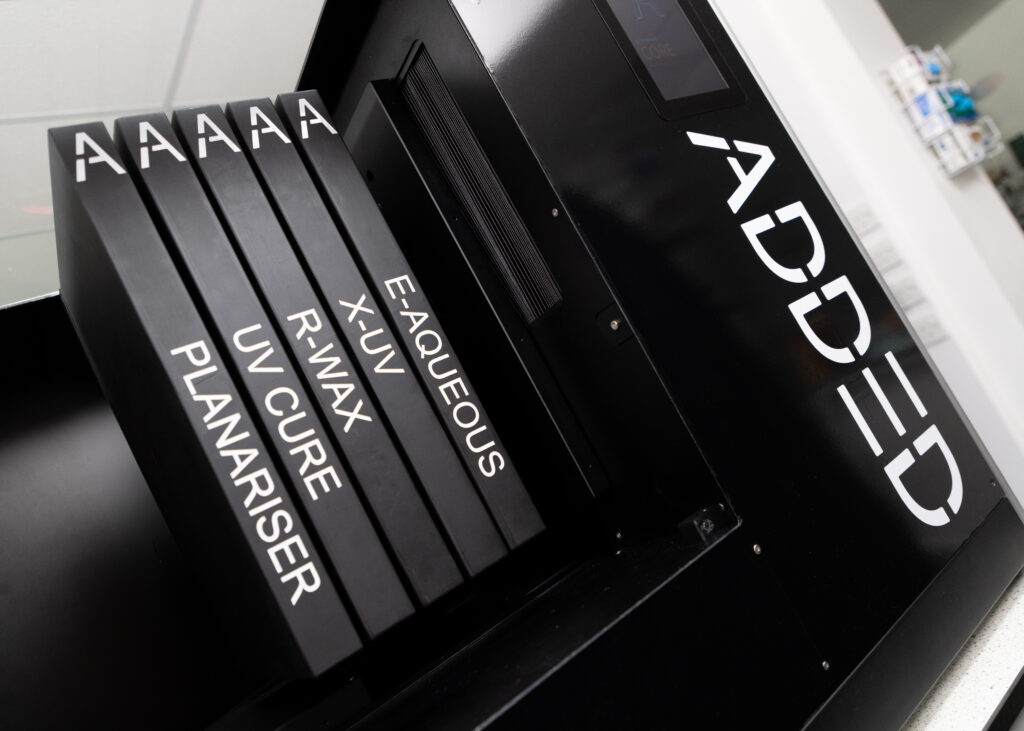
- Added Scientific (AS) has launched JetForge Core, a modular ink‑jet 3D‑printing platform built around interchangeable print‑head “Blades.”
- The new system supports heads from Ricoh, Dimatix, Xaar, and other manufacturers, allowing rapid swaps in under 5 minutes.
- Revenue from AS’s contract‑research arm has doubled year‑over‑year, driven largely by demand for the Blade‑based solutions.
- Compared with earlier AS kits, JetForge Core reduces total hardware cost by ≈30 % and cuts set‑up time from 2 hours to < 10 minutes.
- Target markets include university labs, corporate R&D centers, and low‑volume production lines that need flexible material‑jetting capabilities.
Introduction: From University Spin‑out to Ink‑Jet Pioneer
Added Scientific emerged from the University of Nottingham’s Advanced Manufacturing Centre, founded by Ricky Wildman, Phill Dickens, Christopher Tuck, and Richard Hague. The team’s original mission was to translate academic research in material‑jetting and binder‑jetting into commercial‑grade hardware and services. Over the past five years the company has delivered more than £12 M in R&D contracts for aerospace, medical, and electronics sectors.
Evolution of the Blade Platform
| Generation | Core Components | Supported Printheads | Typical Build Volume | Cost (USD) | Set‑up Time |
|---|---|---|---|---|---|
| Dimatix Driver Board (2019) | Driver board + firmware | Dimatix DMP‑2850 | 100 × 100 × 100 mm | $2,200 | 45 min |
| Meyer‑Burger PixDRO Kit (2020) | Conversion kit for PixDRO LP50 | Meyer‑Burger LP50 | 150 × 150 × 150 mm | $3,500 | 30 min |
| JetForge Driver Board (2021) | Board + low‑cost FDM frame | Xaar 128 / Irix | 200 × 200 × 200 mm | $4,800 | 20 min |
| Blade (2022‑2024) | Integrated head + driver + material system | Ricoh, Dimatix, Xaar, custom | 250 × 250 × 250 mm | $6,200 | < 10 min |
| JetForge Core (2026) | Modular “Core” chassis + hot‑swap Blade slots (up to 4) | All previous + new high‑viscosity heads | 300 × 300 × 300 mm | $7,900 | < 5 min |
The JetForge Core builds on the Blade concept by adding a standardised chassis with four interchangeable Blade slots, a unified power‑distribution board, and an expanded firmware library that supports up to 800 µm droplet resolution and 30 kHz jetting frequencies.
Technical Highlights of JetForge Core
- Modular Blade Slots – Up to four print‑heads can be mounted simultaneously, enabling multi‑material or multi‑resolution builds without hardware redesign.
- Universal Driver Firmware – Supports 12 V‑24 V input, with auto‑calibration routines that reduce head‑leveling error to < 15 µm.
- Material System – Integrated syringe pump (max 10 ml/min) and heated print‑chamber (up to 120 °C) for high‑viscosity inks such as ceramic slurries (45 wt % solids).
- Software Integration – Compatible with MatterControl, Simplify3D, and open‑source OctoPrint plug‑ins; API allows real‑time monitoring of jetting pressure (0‑200 kPa) and temperature.
- Footprint & Power – 0.8 m × 0.6 m × 0.4 m; draws 350 W at full load, making it suitable for standard lab benches.
Market Reception & Business Impact
During a recent interview, Richard Hague and Christopher Tuck highlighted a 100 % increase in contract‑research revenue over the past twelve months, attributing the surge to the Blade’s adaptability. University labs (e.g., MIT’s Materials Research Lab) have adopted the system for rapid prototyping of functional inks, while corporate R&D teams at BASF and Siemens use it for low‑volume production of electro‑conductive traces.
“The ability to swap a ceramic‑ink head for a conductive‑ink head in under five minutes has fundamentally changed how we design experiments,” Tuck remarked.
Comparison: JetForge Core vs Traditional Ink‑Jet 3D Printers
| Feature | JetForge Core (Blade‑based) | Conventional Ink‑Jet 3D (e.g., Stratasys J750) |
|---|---|---|
| Initial Capital Cost | $7,900 | $120,000+ |
| Head Change Time | < 5 min (hot‑swap) | 1–2 hrs (manual re‑wire) |
| Supported Ink Viscosity | Up to 45 cP (high‑solids) | ≤ 5 cP (low‑viscosity) |
| Resolution | 30 µm (droplet) | 16 µm (droplet) |
| Build Volume | 300 × 300 × 300 mm | 200 × 200 × 200 mm |
| Scalability | Modular up to 4 heads | Fixed single head |
The table underscores JetForge Core’s cost‑effectiveness and flexibility, making it a compelling alternative for research environments where budget and rapid iteration are critical.
Bottom Line
Added Scientific’s JetForge Core marks a decisive step toward truly modular ink‑jet additive manufacturing. By standardising the Blade concept into a hot‑swap chassis, the company delivers a platform that cuts hardware spend by roughly a third, slashes set‑up time to minutes, and supports a broad spectrum of inks—from low‑viscosity polymers to high‑solids ceramics. The rapid revenue growth reported by the founders validates market demand, and the system’s technical specs position it as a versatile workhorse for universities and R&D labs seeking affordable, multi‑material 3D printing capability.


