Key Takeaways
- Direct Ink Additive Lithography (DIAL) deposits paste‑like, yield‑stress inks layer‑by‑layer and solidifies them with patterned light, eliminating the need for separate support material.
- The technique can print voxel resolutions of 30–60 µm and achieve build rates up to 12 mm³ s⁻¹, far exceeding conventional stereolithography (SLA) for viscous inks.
- DIAL opens design space for aerospace, robotics, and biomedical parts that were previously impossible to fabricate with existing AM methods.
- Compared with Fused Deposition Modeling (FDM) and SLA, DIAL offers higher mechanical anisotropy control, broader material palette, and intrinsic support from the ink itself.
A New Frontier in Additive Manufacturing: Direct Ink Additive Lithography (DIAL)
What Is DIAL?
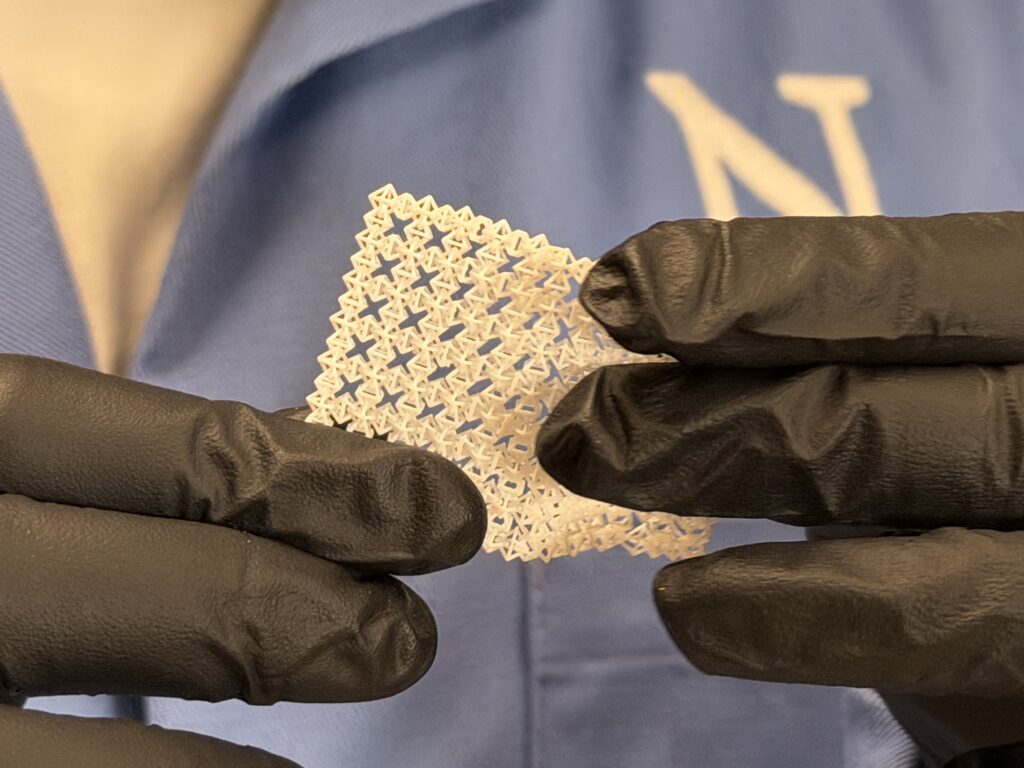
Direct Ink Additive Lithography (DIAL) is a voxel‑based 3D printing process that spreads a shear‑thinning, yield‑stress ink across a build platform, then cures selected voxels with a focused light pattern. The uncured ink remains fluid, acting as a built‑in support for overhangs and complex geometries. This dual‑function approach removes the post‑processing steps typical of conventional support removal.
The method was detailed by a team from Northwestern University in Science Advances (doi:10.1126/sciadv.aei1146). Lead authors Pranav Kaarthik, Michael Bayer, EunBi Oh, Alexander Kane, and Ryan Truby described the process as “a rapid, voxel‑based printing platform for yield‑stress fluid inks.”
How DIAL Works – Step‑by‑Step
- Ink Deposition – A piston‑driven roller or syringe spreads a thin film of the ink (typically 0.5–2 mm thick) across the build area.
- Selective Photocuring – A digital micromirror device (DMD) projects a 2‑D light mask that cures voxels ranging from 30 µm to 60 µm in lateral resolution and 10 µm in vertical resolution.
- Layer Advancement – The platform lowers by the cured voxel height, and the cycle repeats. Uncured ink stays fluid, supporting subsequent layers.
Because the ink itself serves as a sacrificial scaffold, DIAL can fabricate overhangs exceeding 90° without dedicated support structures.
Performance Metrics
| Metric | DIAL | SLA (standard) | FDM |
|---|---|---|---|
| Typical voxel size | 30–60 µm | 25–100 µm | 100–300 µm |
| Build speed | up to 12 mm³ s⁻¹ | 1–4 mm³ s⁻¹ | 0.5–2 mm³ s⁻¹ |
| Material viscosity | 10³–10⁴ cP (yield‑stress) | <10³ cP (photopolymer) | 100–500 cP (thermoplastic) |
| Support requirement | Intrinsic (ink) | External support structures | External support (often needed) |
| Post‑process | Light curing only | Support removal + UV cure | Support removal + annealing (optional) |
Values derived from the Northwestern study and typical commercial SLA/FDM specifications.
Why DIAL Matters for Industry
Aerospace & Robotics
- High‑temperature ceramics and metal‑filled composites can be formulated as yield‑stress inks, enabling parts that survive >1200 °C.
- The ability to print lattice structures with graded density in a single build reduces weight while maintaining stiffness—critical for turbine blades and robotic manipulators.
Biomedical Applications
- Bio‑inks containing living cells retain viability because the curing step is light‑based and occurs at room temperature.
- DIAL’s gentle shear during deposition (≤ 5 Pa) minimizes cell damage, supporting the fabrication of vascularized tissue scaffolds.
Design Freedom
Ryan Truby, Assistant Professor of Materials Science and Engineering at Northwestern, emphasized:
“DIAL can produce parts that have been challenging, if not impossible, to make with other 3D printing methods… This new printing method opens up an entirely new design space, giving us the freedom to create materials and architectures that were previously out of reach.”
Potential Limitations
- Ink formulation complexity: Achieving the right yield‑stress and photoinitiator concentration can require extensive rheological testing.
- Equipment cost: The high‑resolution DMD and precision rollers add to capital expense (estimated $250k–$350k for a research‑grade system).
Bottom Line
Direct Ink Additive Lithography represents a paradigm shift in additive manufacturing by merging material deposition and support into a single, light‑cured workflow. Its ability to handle high‑viscosity, yield‑stress inks while delivering voxel‑scale resolution and rapid build rates positions DIAL as a compelling alternative to SLA and FDM for high‑performance aerospace, robotics, and biomedical parts. While ink development and equipment cost remain challenges, the technology’s inherent design flexibility and support‑free capability promise to expand the horizons of what can be 3‑D printed.


