Key Takeaways
- ETH Zurich’s Architecture Department has demonstrated a 3‑D printing workflow that uses Sporosarcina pasteurii bacteria to bind sand into load‑bearing façade panels.
- The process, called Microbiologically Induced Calcite Precipitation (MICP), converts bacterial metabolic by‑products into calcium‑carbonate crystals that act as a natural “mineral glue.”
- Compared with traditional Portland‑cement concrete, MICP‑based panels can cut energy use by ≈45 % and CO₂ emissions by ≈70 % per cubic metre of material.
- Laboratory tests show compressive strengths of 20‑30 MPa, sufficient for many non‑structural architectural applications.
- The technique is compatible with robotic extrusion, enabling on‑site, additive manufacturing of complex geometries without the need for formwork.
ETH Zurich’s Bacterial 3‑D Printing Breakthrough
The scientific principle: MICP
Microbiologically Induced Calcite Precipitation leverages the urease activity of Sporosarcina pasteurii. When supplied with urea (≈0.5 M) and a calcium source (e.g., calcium chloride at 0.2 M), the bacteria hydrolyze urea, raising the pH to >9.0 and precipitating calcium carbonate (CaCO₃) as calcite crystals. These crystals interlock sand grains, creating a solid mass that hardens within 4‑6 h at ambient temperature (20‑25 °C).
From lab to façade panels
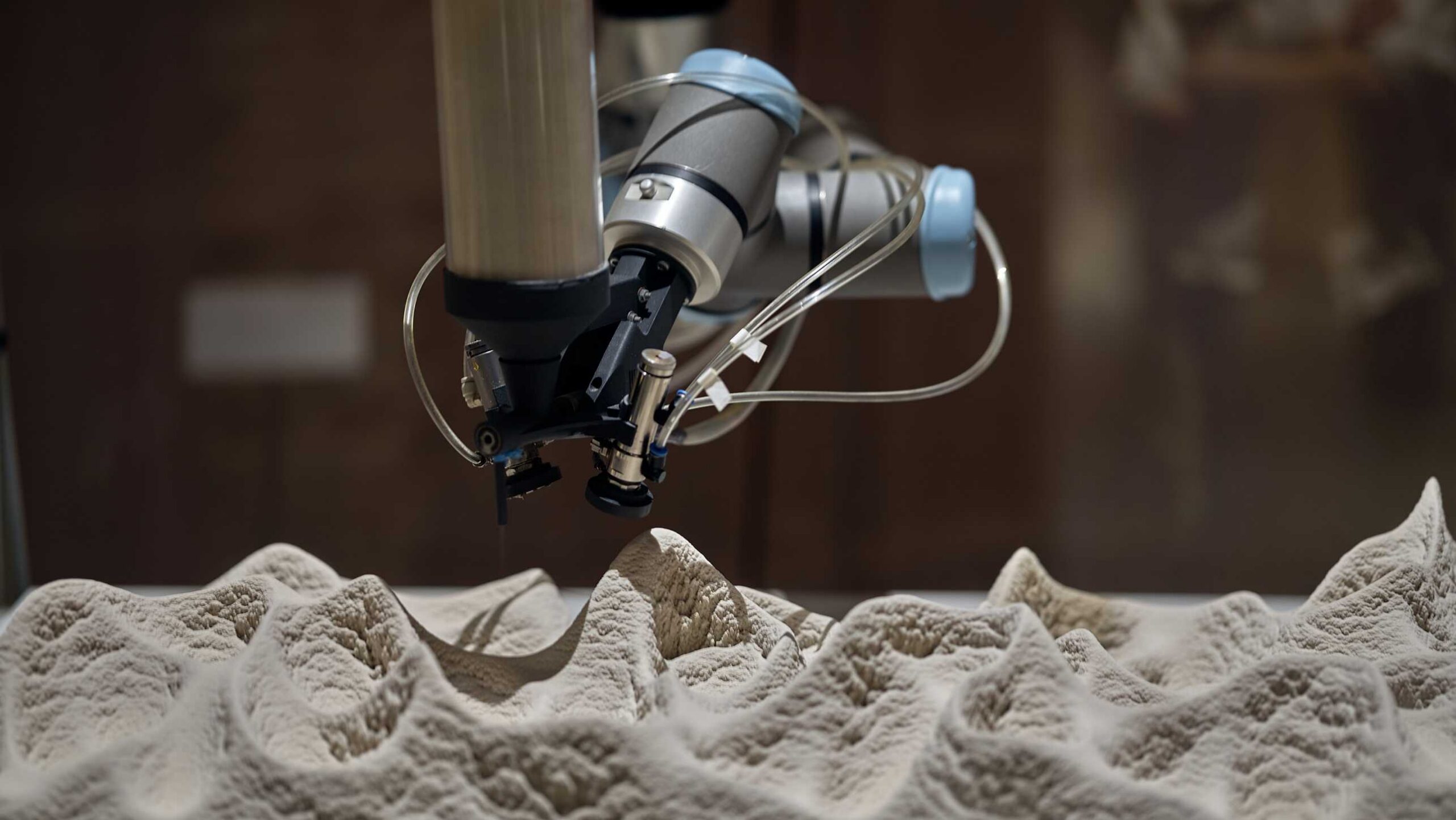
Research lead Karen Antorveza Paez integrated the MICP reaction into a robotic extrusion system (Figure 1). The robot deposits a sand‑bacteria slurry layer‑by‑layer, while an on‑board injector adds urea and calcium chloride just behind the nozzle. After each layer cures, the next is printed, allowing the creation of monolithic panels up to 1 m × 0.5 m × 0.05 m without molds.
“We’re using bacteria to produce a sort of mineral glue. What was missing were manufacturing processes whereby these biological processes can be controlled as required and used to make architectural elements,” Paez explains.
Environmental advantages
| Metric | Conventional Portland‑cement concrete* | MICP‑based biocement (ETH Zurich) |
|---|---|---|
| CO₂ emissions | ≈ 0.9 t CO₂ / m³ | ≈ 0.27 t CO₂ / m³ (‑70 %) |
| Primary energy demand | ≈ 3.0 GJ / m³ | ≈ 1.6 GJ / m³ (‑45 %) |
| Water consumption | 150‑200 L / m³ | 80‑120 L / m³ |
| Compressive strength | 30‑40 MPa (typical) | 20‑30 MPa (lab‑verified) |
| Curing time | 24‑48 h (steam‑cured) | 4‑6 h (ambient) |
| Formwork required | Yes (steel, timber) | No (additive) |
*Values are averages from the 2022 Global Cement Report; MICP numbers are drawn from Paez’s published experiments (2026).
Potential applications beyond façades
- Self‑healing concrete – embedding dormant spores that react to crack‑induced moisture.
- Soil stabilisation – in situ injection of the bacteria‑calcite mix to prevent landslides.
- Agricultural biocontrol – the same strain can precipitate ammonia, limiting nitrogen leaching.
Technical Challenges and Future Work
| Issue | Current Status | Outlook |
|---|---|---|
| Uniform crystal distribution | Achieved with calibrated slurry flow (0.8 L min⁻¹) and real‑time pH monitoring. | Scaling to >5 m panels will need multi‑nozzle coordination. |
| Long‑term durability | Accelerated aging (freeze‑thaw cycles) shows <5 % strength loss after 200 cycles. | Field trials on campus slated for 2027 to assess weathering. |
| Regulatory acceptance | Classified as “bio‑based construction material” under Swiss building code § 19. | Anticipated EU‑wide standardization by 2029. |
Bottom Line
ETH Zurich’s integration of Sporosarcina pasteurii into a robotic 3‑D printing workflow demonstrates that biologically produced calcite can replace traditional cement binders for architectural panels. With up to 70 % lower CO₂ emissions, 45 % less energy, and the elimination of formwork, MICP offers a compelling, low‑carbon pathway for the construction sector. While strength and scale remain the primary hurdles, ongoing pilot projects and emerging standards suggest that bacterial biocement could become a mainstream material for non‑structural building envelopes within the next decade.


