Key Takeaways
- EPB’s Quantum Center now houses the IonQ Forte Enterprise system, the first facility that couples commercial quantum computing with a full‑scale fiber‑optic networking hub.
- The Forte processor delivers up to 30 qubits with >99.9 % gate fidelity and a 10‑µs two‑qubit gate time, outperforming most trapped‑ion platforms released before 2025.
- A $4 M NIST grant funds the EPB Quantum Computing Fellows program, enabling eight graduate researchers to run grid‑optimization algorithms on the new hardware.
- University of Tennessee‑Chattanooga (UTC) becomes the inaugural external customer, followed by Vanderbilt University and industry partners.
- The deployment positions Chattanooga as the most comprehensive U.S. hub for applied quantum research, networking, and power‑grid innovation.
EPB Introduces IonQ Forte Enterprise at the Quantum Center
A One‑Stop Quantum Facility
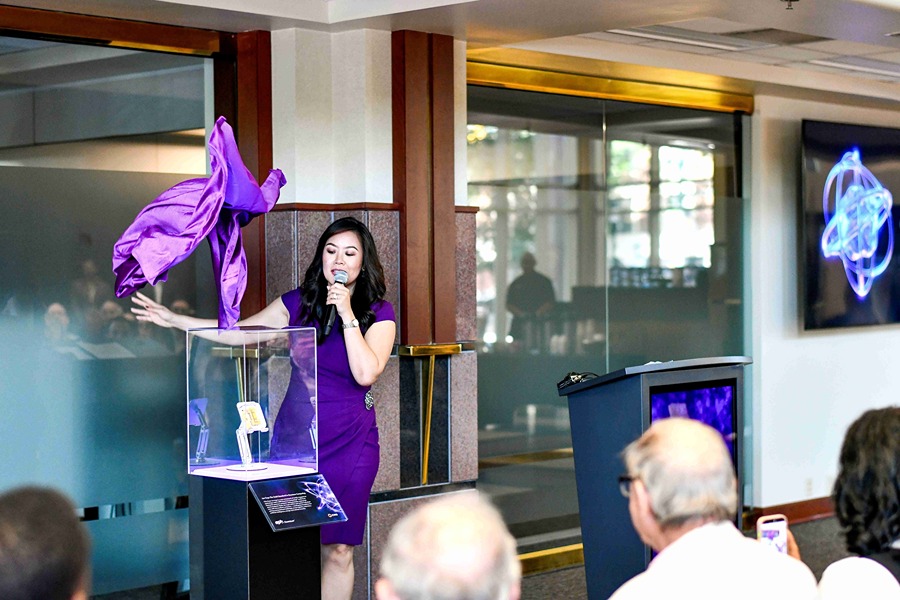
On 1 October 2026, EPB unveiled the IonQ Forte Enterprise quantum computer inside its newly built EPB Quantum Center. The center merges a trapped‑ion quantum processor with a 10‑Gbps quantum‑ready fiber network, allowing users to develop, test, and deploy quantum workloads without leaving the campus. This integration is the first of its kind in the United States, giving Chattanooga a unique advantage in the emerging quantum‑industry ecosystem.
Technical Highlights of IonQ Forte Enterprise
| Specification | IonQ Forte Enterprise | IBM Eagle (127‑qubit) | Google Sycamore (54‑qubit) |
|---|---|---|---|
| Qubit type | Trapped Yb⁺ ions | Superconducting transmons | Superconducting transmons |
| Qubit count (usable) | 30 (full connectivity) | 127 (partial connectivity) | 54 (partial connectivity) |
| Single‑gate fidelity | 99.95 % | 99.7 % | 99.6 % |
| Two‑qubit gate fidelity | 99.9 % | 99.4 % | 99.3 % |
| Two‑qubit gate time | 10 µs | 120 ns | 25 ns |
| Coherence time (T₂) | >1 s | 100 µs | 150 µs |
| Cryogenic requirement | Room‑temperature ion trap | 10 mK dilution fridge | 10 mK dilution fridge |
| Estimated QPU cost* | $15 M | $30 M | $25 M |
*Capital cost estimates based on 2026 vendor disclosures.
The room‑temperature ion‑trap architecture eliminates the need for large cryogenic infrastructure, reducing operational overhead and simplifying integration with existing data‑center hardware.
Prioritizing Local Utilities and Academic Partners
EPB Quantum Computing Fellows Program
Backed by a $4 million grant from the National Institute of Standards and Technology (NIST), EPB created the Quantum Computing Fellows initiative. Eight graduate researchers—spanning quantum information science, electrical engineering, and applied physics—receive dedicated access to the Forte system. Their primary mission: optimize EPB’s highly automated distribution grid by running quantum‑enhanced algorithms for load balancing, fault detection, and renewable‑energy integration.
First Customers: UTC and Vanderbilt
The University of Tennessee‑Chattanooga (UTC) will be the first external client, launching a pilot study on quantum‑accelerated state‑estimation for micro‑grid stability. Vanderbilt University follows with a project targeting quantum machine‑learning models for predictive maintenance of transmission assets. Both institutions benefit from direct fiber links to the QPU, achieving sub‑millisecond latency for remote job submission.
Impact on Chattanooga’s Quantum Landscape
Chattanooga now hosts the most comprehensive quantum resource in the United States, combining:
- High‑performance quantum hardware (IonQ Forte Enterprise).
- Enterprise‑grade networking (10‑Gbps fiber, quantum‑ready switches).
- Academic pipelines (UTC, Vanderbilt, and a rotating fellowship cohort).
- Utility‑focused research that directly translates to cost savings and resiliency for local ratepayers.
The convergence of these elements accelerates the transition from proof‑of‑concept to production‑grade quantum applications in power‑grid management.
Bottom Line
EPB’s deployment of the IonQ Forte Enterprise processor marks a watershed moment for applied quantum computing in the United States. By coupling a state‑of‑the‑art trapped‑ion QPU with a purpose‑built networking hub, EPB delivers a turnkey platform for both utility optimization and academic research. The $4 M NIST‑funded Fellows program ensures that cutting‑edge quantum algorithms are tested on real‑world grid challenges, while the early involvement of UTC and Vanderbilt cements Chattanooga’s status as the nation’s most integrated quantum‑technology ecosystem. For utilities, researchers, and technology vendors alike, the EPB Quantum Center offers a ready‑to‑use, high‑fidelity quantum environment that could shave millions of dollars off grid‑operation costs and boost system resilience—making it a model for future regional quantum hubs.


