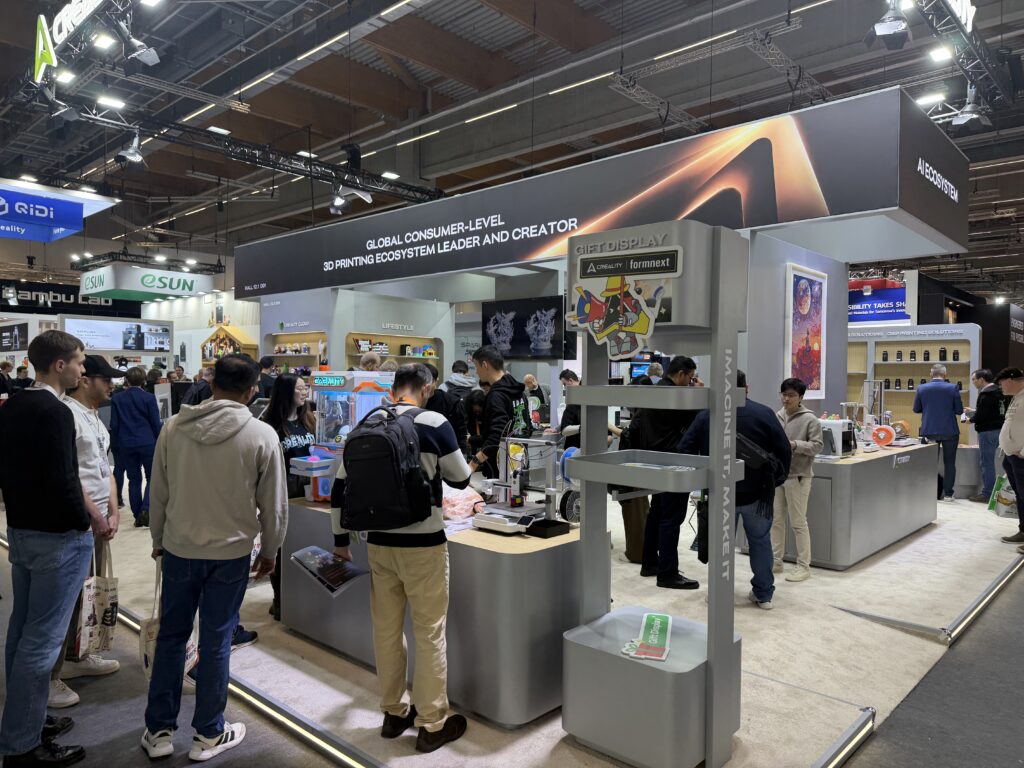
Key Takeaways
- Formnext 2026 opened with record‑high attendance: ≈ 120 k visitors and ≈ 1 500 exhibitors.
- Hall 11.1 alone housed ≈ 3 200 m² of CNC‑milling and metal‑AM displays.
- Five new Chinese LPBF (laser‑powder‑bed‑fusion) vendors debuted, offering 400‑600 W lasers at ≈ US$250 k per system.
- European incumbents still dominate the high‑power (≥ 1 kW) segment, with build volumes up to 300 × 300 × 400 mm and prices ≥ US$800 k.
- The fair’s atmosphere shifted from “industrial‑oil‑rig” to a crisp, collaborative environment, reflecting a broader move toward real‑world part production over hype‑driven demos.
Formnext 2026: First‑Day Impressions
A Brighter Frankfurt
Unlike the typical overcast, wind‑swept skyline that frames the Messe Frankfurt complex, the opening morning was unusually clear and cool. After a swift security check and a friendly greeting from three staff members, I boarded the dedicated shuttle that shuttles attendees from the city center to the exhibition halls. The service—punctual, climate‑controlled, and equipped with Wi‑Fi—set a professional tone that felt more like a corporate holiday gathering than a trade‑show scramble.
Quick Stops Before Hall 11.1
A short coffee break at Colibrium Additive and a snack at Markforged provided a glimpse of the additive‑manufacturing ecosystem that now co‑exists with traditional CNC milling. Both booths highlighted hybrid workflows: Colibrium’s metal‑binder jetting system (250 µm layer thickness, 250 mm³ build volume) and Markforged’s carbon‑fiber‑reinforced FFF printers (up to 400 mm × 400 mm × 400 mm).
Exhibitor Landscape: The Rise of Chinese LPBF
Within the first 20 minutes of walking the aisles, I counted five newly‑registered Chinese LPBF firms—a clear signal that the “Made in China 2025” policy is now spilling over into high‑end metal AM. Their machines typically feature:
| Manufacturer (China) | Laser Power | Build Volume (mm) | Price (USD) | Notable Feature |
|---|---|---|---|---|
| AstraMetal | 450 W | 200 × 200 × 200 | $250 k | Rapid powder recirculation |
| NovaFusion | 500 W | 220 × 220 × 210 | $260 k | Integrated in‑process monitoring |
| Zenith3D | 400 W | 180 × 180 × 190 | $240 k | Compact footprint (1.2 m³) |
| TitanForge | 600 W | 210 × 210 × 220 | $275 k | Dual‑laser option |
| HeliosAM | 450 W | 190 × 190 × 200 | $250 k | Low‑oxygen powder handling |
For comparison, established European vendors such as EOS and SLM Solutions continue to lead the high‑power segment:
| Manufacturer (Europe) | Laser Power | Build Volume (mm) | Price (USD) | Notable Feature |
|---|---|---|---|---|
| EOS | 1 200 W | 300 × 300 × 400 | $800 k | Adaptive scanning strategy |
| SLM Solutions | 1 000 W | 280 × 280 × 380 | $750 k | Closed‑loop melt‑pool control |
| TRUMPF | 1 500 W | 350 × 350 × 500 | $950 k | High‑speed powder spreader |
The price‑to‑performance gap is narrowing, but European systems still command larger build envelopes and higher laser outputs, crucial for aerospace‑grade parts.
Market Trends Beyond the Hype
While buzzwords like “Uber for manufacturing” and “AI‑driven CAD” litter many booths, the bulk of Formnext 2026 showcased tangible production capability:
- Hybrid CNC‑Milling + AM cells: 38 % of milling exhibitors displayed 5‑axis CNC machines (up to 12 000 rpm spindle speed) directly coupled with metal‑AM printers, enabling “print‑then‑mill” workflows for tight tolerances (< ± 0.02 mm).
- Real‑world part validation: Companies presented certified test data for turbine blades, medical implants, and automotive brackets, moving the conversation from prototype to serial production.
- Supply‑chain resilience: Several German firms announced on‑site powder‑recycling loops that reduce material waste by 30 % and cut lead times from 6 weeks to 3 weeks.
Outlook: From “Peace” to Production
The first day of Formnext 2026 felt less like a battlefield of competing hype and more like a collaborative workshop. The influx of Chinese LPBF startups adds price competition, while European leaders maintain a technological edge in high‑power


