Key Takeaways
- 103 ASTM‑approved AM standards exist today (F42 + ISO/TC 261) with 74 work items still open.
- The U.S. $9 M “Additive Manufacturing Qualification” program targets repeat‑testing reduction and cross‑border part acceptance.
- NATO’s “civil‑first” policy pushes civilian standards to the forefront; military‑only standards are adopted only when required.
- German Air Force logistics data (≈ 1,920 parts, > 160 aircraft) show 30 % cost drop and 50 % lead‑time reduction when switching from machined POM to SLS‑printed PA12.
- A unified NATO Technical Data Package (TDP) is proposed to capture CAD, load cases, material provenance, and safety factors in a single, auditable document.
Introduction: Why Global AM Standards Matter
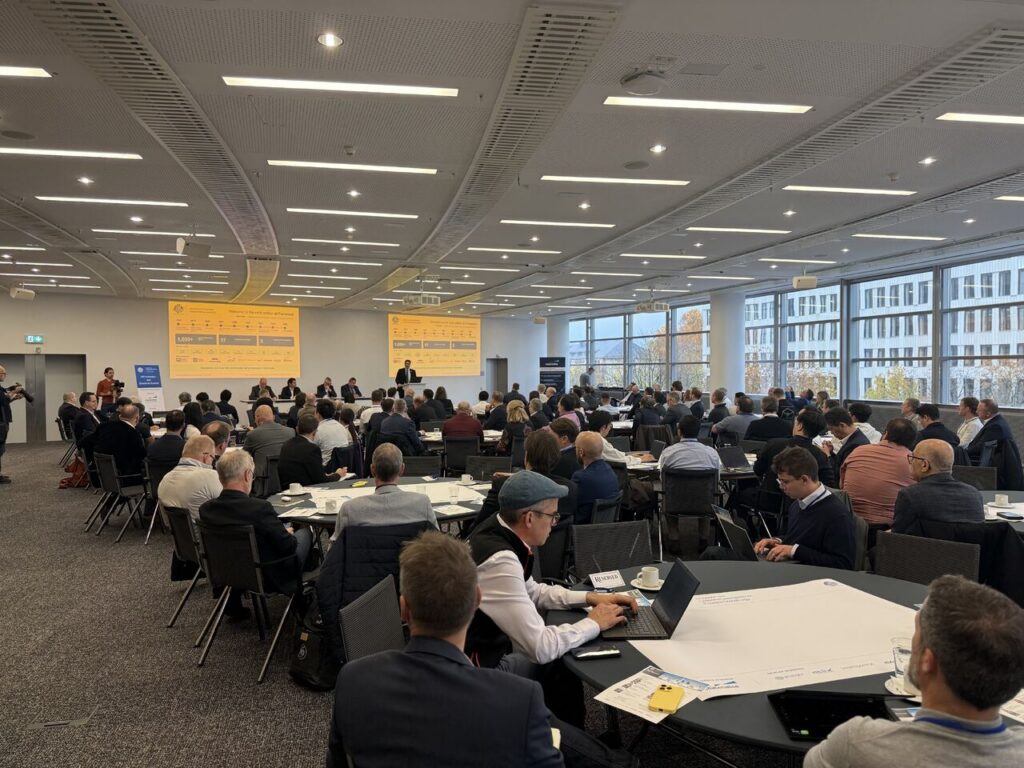
At the Additive Manufacturing (AM) Innovation and Standards Summit—held on 16 November 2026 in Frankfurt’s Illusions hall—industry leaders argued that a part qualified in Frankfurt should be instantly trusted in Houston, Seoul, or Tokyo. The message resonated with the 176 attendees from 17 nations who gathered a day before Formnext 2026 opened.
Current Landscape of AM Standards
ASTM & ISO Coverage
| Organization | Published Standards (2026) | Active Work Items | Primary Focus |
|---|---|---|---|
| ASTM F42 | 63 | 45 | Process qualification, material specifications |
| ISO/TC 261 | 40 | 29 | International harmonisation, test methods |
| Combined Total | 103 | 74 | End‑to‑end part certification |
Source: ASTM International slide deck, 16 Nov 2026.
U.S. Funding Initiative
- $9 million allocated by the U.S. Department of Defense to streamline qualification, emphasizing repeatability testing and data sharing across borders.
NATO’s “Civil‑First” Stance
Holger Ziegler, NATO’s Head of Standardization and Enablement, outlined a pragmatic policy:
“Civil first – NATO only when necessary.”
The breakout session on civilian‑military collaboration recommended:
- A shared document set covering design, testing, and safety.
- Clear division of labor between ASTM, ISO, and NATO standard bodies.
The goal is to avoid duplicate efforts and accelerate adoption of civilian‑grade standards for defense applications.
Real‑World Logistics: German Air Force Case Study
Workflow Overview
Captain Lukas Hohn (German Air Force) demonstrated the logistics chain for a failed component:
- Non‑critical parts → routed to an interim spare pool.
- Critical/structural parts → escalated to engineering for redesign or replacement.
The scenario spanned ≈ 1,920 parts across > 160 aircraft stands.
Material Switch: POM → PA12 (SLS)
| Metric | Machined POM | SLS‑Printed PA12 |
|---|---|---|
| Unit Cost | $12.40 | $8.70 |
| Lead Time | 21 days | 10 days |
| Part Weight Variance | ±5 % | ±2 % |
| Design Change Lead | 14 days | 4 days |
Result:
- 30 % reduction in part cost.
- 50 % faster delivery.
- Simplified variant management due to digital design flexibility.
Proposed NATO Technical Data Package (TDP)
Captain Hohn advocated a single, auditable TDP that would include:
- CAD geometry (STEP, IGES).
- Installation instructions (fasteners, torque).
- Operational loads (static, dynamic, vibration spectra).
- Material traceability (original polymer, powder batch).
- Safety factor (baseline, e.g., 1.5 for structural parts).
The TDP aims to eliminate ambiguity when different AM machines produce parts from the same source data, ensuring one accountable provider for the entire certified process chain.
Implications for Suppliers
- Data Integrity: Suppliers must deliver a complete TDP to satisfy both civilian and NATO reviewers.
- Process Transparency: Full traceability from powder lot to final part is mandatory.
- Cross‑Domain Compatibility: Ability to switch between ISO/ASTM and NATO documentation without re‑qualification.
Bottom Line
The AM Innovation and Standards Summit highlighted a decisive shift toward global, interoperable certification for additive‑manufactured parts. With 103 active standards, a $9 M U.S. qualification push, and NATO’s civil‑first policy, the industry is moving away from siloed testing toward a unified data‑driven approach. Real‑world evidence from the German Air Force—showing 30 % cost savings and 50 % faster lead times after adopting SLS‑printed PA12—underscores the tangible benefits of standardisation. Suppliers that adopt the proposed NATO Technical Data Package and align with ASTM/ISO frameworks will be best positioned to meet the demand for trusted, cross‑border AM components in both civilian and defense markets.


