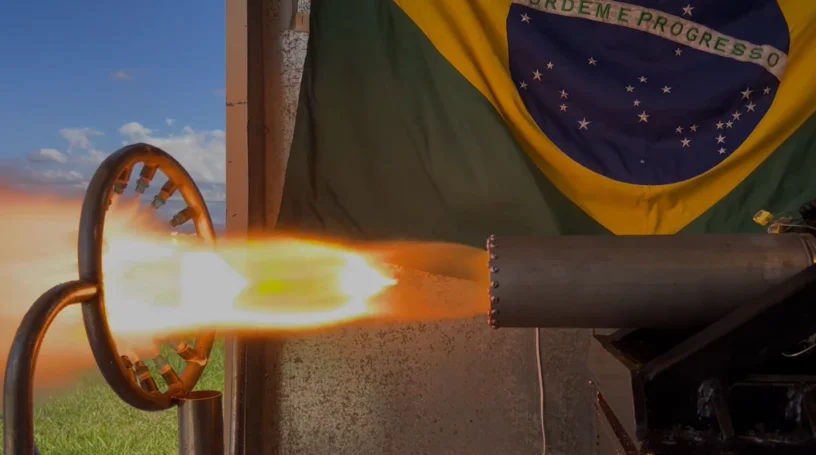
Key Takeaways
- EOS and Brazil’s BIZU Space have signed a strategic partnership to accelerate additive‑manufacturing (AM) adoption for orbital‑class propulsion hardware.
- BIZU engineers will receive Design‑for‑Additive‑Manufacturing (DfAM) training via EOS’s Additive Minds Academy and ongoing technical support from EOS experts.
- The collaboration targets metal‑AM of combustion chambers and closed‑cycle turbopumps, aiming for up to 30 % weight reduction and 40 % faster part lead‑times versus conventional machining.
- EOS will supply its EOS M 400 metal‑laser‑powder‑bed fusion system (400 W laser, 400 × 400 × 600 mm build envelope) using aerospace‑grade alloys such as Inconel 718 and Ti‑6Al‑4V.
- Successful implementation could shorten BIZU’s launch‑vehicle development cycle from the current 24 months to under 15 months.
EOS × BIZU Space: A New Frontier for Space‑Hardware Additive Manufacturing
Why Additive Manufacturing Matters for Propulsion
The global aerospace sector is shifting toward metal AM to overcome the mass, cost, and schedule penalties of traditional subtractive processes. In propulsion systems, complex internal cooling channels, weight‑critical geometries, and rapid iteration are essential. EOS estimates that metal AM can cut part weight by 20‑35 % and reduce tooling costs by up to 70 %.
BIZU Space, a Brazilian startup spearheading the nation’s first fully private orbital launch vehicle, is leveraging this potential for its small‑satellite launcher (target payload ≈ 200 kg to 500 km LEO). The company’s propulsion suite—liquid‑methane/oxygen engine with a thrust class of ≈ 30 kN—requires high‑performance combustion chambers and turbopumps that can survive cyclic thermal loads while staying lightweight.
Partnership Mechanics
| Aspect | EOS Contribution | BIZU Space Contribution |
|---|---|---|
| Training | Access to Additive Minds Academy (DfAM curriculum, 40 h online + 2 on‑site workshops) | Participation of 6 senior propulsion engineers |
| Hardware | EOS M 400 metal‑laser‑powder‑bed fusion system (400 W, 400 × 400 × 600 mm) | Provision of design files for combustion chamber & turbopump prototypes |
| Materials | Inconel 718, Ti‑6Al‑4V, and AlSi10Mg powders (particle size 15‑45 µm) | Specification of alloy requirements based on thermal‑stress analysis |
| Support | Dedicated EOS Additive Minds technical liaison (1 FTE) for 12 months | In‑house testing (hot‑fire, vibration) and data feedback |
| Outcome Goal | Demonstrated AM part with ≥ 30 % mass saving, ≤ 48 h build time | Integration into BIZU’s next‑generation engine test campaign (Q2 2027) |
From Design to Flight: Expected Benefits
- Weight Savings – By consolidating multiple machined components into a single AM part, BIZU anticipates a 30 % reduction in combustion‑chamber mass, directly translating to higher payload capacity.
- Lead‑Time Compression – EOS’s rapid build cycle (typical ≈ 48 h for a 300 mm³ chamber) can replace a 6‑week machining and inspection schedule.
- Design Freedom – DfAM training enables engineers to embed internal lattice cooling structures that would be impossible with conventional tooling.
- Cost Efficiency – Eliminating multi‑step machining and assembly can lower part cost by ≈ 40 % for low‑volume production runs (< 100 units).
Technical Highlights of the EOS M 400 System
- Laser Power: 400 W fiber laser, enabling high energy density for dense alloys.
- Build Volume: 400 × 400 × 600 mm, sufficient for full‑scale turbopump housings.
- Resolution: 50 µm XY, 30 µm Z layer thickness.
- Process Capability: Certified for aerospace standards (AS9100, ISO 9001).
BIZU Space’s Propulsion Roadmap
- Phase 1 (2026‑2027): Evaluate AM‑produced combustion chambers and turbopump prototypes; conduct hot‑fire tests at the Brazilian Space Agency’s launch complex.
- Phase 2 (2028): Integrate validated AM parts into the flight‑ready engine; target first orbital launch by Q4 2029.
- Long‑Term Goal: Scale AM for serial production of up to 150 engines per year, supporting a constellation‑deployment market valued at US$2.5 bn by 2035.
Bottom Line
EOS’s partnership with BIZU Space provides the Brazilian startup with world‑class AM expertise, training, and hardware, positioning it to pioneer metal‑3D‑printed propulsion components for its inaugural orbital launch vehicle. By exploiting EOS’s M 400 laser‑powder‑bed fusion platform and DfAM best practices, BIZU aims to slash component weight, halve development lead times, and cut costs—advantages that could accelerate Brazil’s entry into the competitive small‑sat launch market. The collaboration exemplifies how targeted industry alliances can translate additive‑manufacturing technology into tangible performance gains for next‑generation space systems.