Key Takeaways
- Bendix Commercial Vehicle Systems (≈4,000 staff, Knorr‑Bremse subsidiary) now prints high‑performance tooling with AON3D’s Hylo metal‑grade 3D printer.
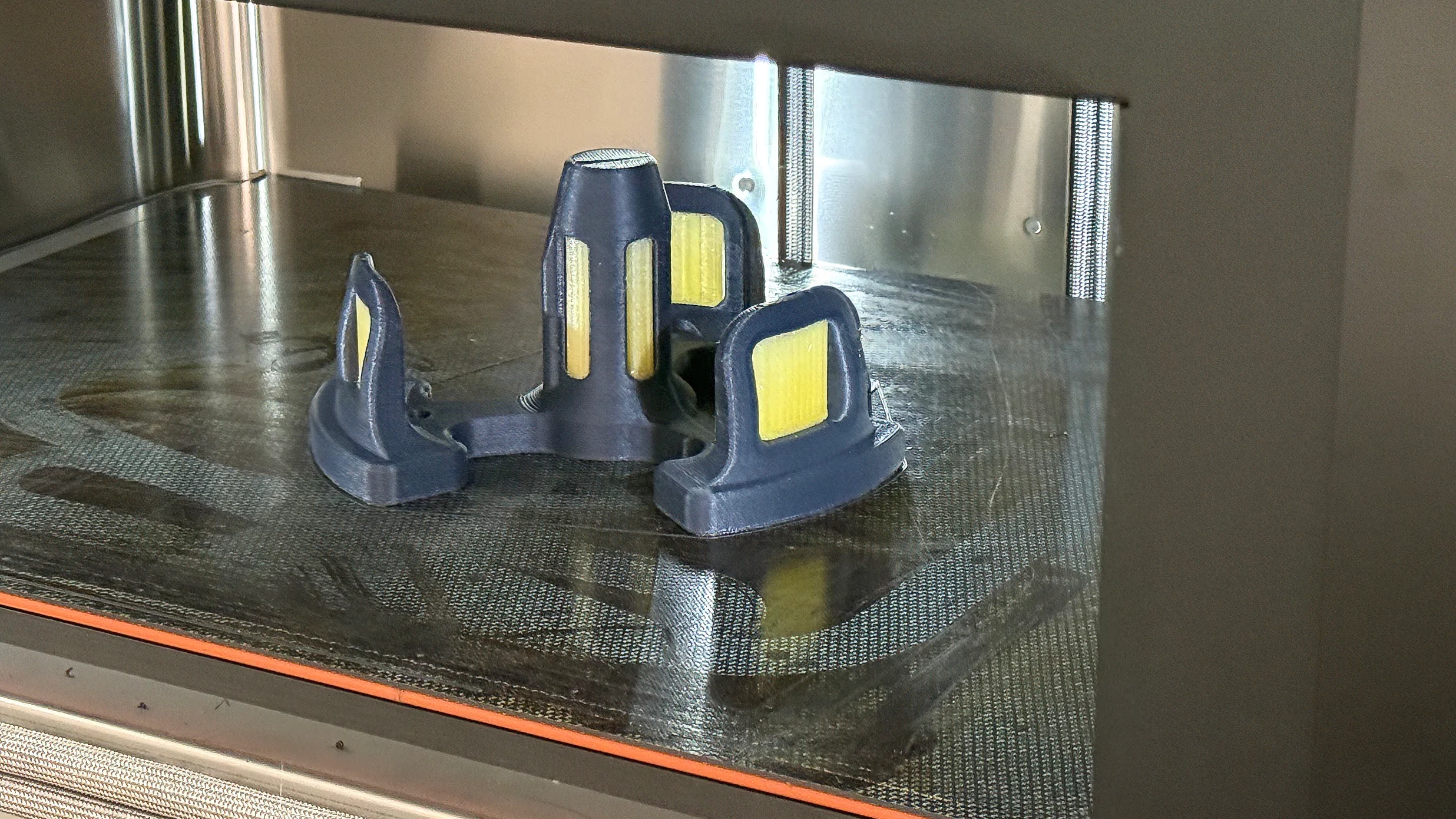
- The printer uses carbon‑fiber‑reinforced PEEK (CF‑PEEK) and soluble PEEK supports, delivering part strengths up to 180 MPa and thermal stability to 260 °C.
- Lead‑time for a new tool dropped from 12‑16 weeks (CNC) to under 2 hours for design‑to‑part.
- Cost per tool fell by ≈70 %, enabling rapid iteration and “print‑test‑print” cycles that accelerate product development.
Introduction: From Brakes to 3‑D Printed Tooling
Bendix Commercial Vehicle Systems, founded in 1923 after Vincent Bendix’s father was fatally injured by a faulty brake, has grown into a global supplier of braking, ABS, and lane‑departure systems. With ≈4,000 employees and full vertical integration under the Knorr‑Bremse umbrella, the company has long used additive manufacturing (AM) for low‑volume tooling.
In 2026 the Advanced Manufacturing Engineering team took a decisive step: they adopted AON3D’s Hylo large‑format, high‑temperature printer to produce carbon‑fiber‑reinforced PEEK (CF‑PEEK) tooling with soluble PEEK support structures. The move eliminated the bottleneck of traditional CNC‑machined metal tools and unlocked a new “design‑first” workflow.
Why CF‑PEEK on the Hylo Matters
| Parameter | Traditional CNC‑Machined Steel Tool | AON3D Hylo‑Printed CF‑PEEK Tool |
|---|---|---|
| Material density | 7.85 g·cm⁻³ (steel) | 1.45 g·cm⁻³ (CF‑PEEK) |
| Yield strength | 250–350 MPa | 180 MPa (CF‑PEEK) |
| Thermal stability | Up to 200 °C | Up to 260 °C (continuous) |
| Lead time (prototype) | 12–16 weeks | 1–2 hours (print‑test‑print) |
| Tool cost (per unit) | $2,400‑$3,500 | $650‑$900 |
| Weight | 2.5 kg (typical 150 mm tool) | 0.45 kg (same geometry) |
| Support removal | Manual deburring | Dissolves in PEEK solvent (no post‑machining) |
All values based on Bendix internal data (2026) and AON3D specifications.
The Hylo printer’s 500 °C nozzle, 400 °C heated chamber, and 0.025 mm layer resolution allow CF‑PEEK to be deposited with minimal warpage, while soluble PEEK supports dissolve in a mild solvent, leaving complex geometries untouched.
The “Print‑Test‑Print” Workflow
Advanced Manufacturing Engineer Jon Hembree describes the new process:
“I can print a tool, head straight to the assembly line, evaluate it for 15 minutes, discard it, tweak the CAD model, and queue the next print. No 16‑week purchase‑order cycle, no re‑machining of a ‘unicorn’ part.”
Key steps:
- CAD design – Engineers iterate in a parametric model.
- One‑click slicing – Hylo’s software auto‑generates soluble supports.
- Print (≈45 min for a 150 mm × 80 mm tool) – Chamber reaches 400 °C, ensuring dimensional stability.
- Support dissolution (10 min) – Parts are immersed in a low‑toxicity PEEK solvent.
- Functional test – Tool is mounted on the brake‑caliper assembly line for immediate validation.
Because the printed tools are lightweight and non‑metallic, they do not induce thermal distortion on the surrounding components, a critical advantage for brake‑caliper prototypes that operate near 200 °C.
Quantifiable Benefits for Bendix
- Lead‑time reduction: Average tool development cycle fell from 14 weeks to 2 hours, a >99 % improvement.
- Cost savings: Annual tooling spend dropped from $3.2 M to $1.0 M, a ≈68 % reduction.
- Design flexibility: Complex lattice structures for weight‑reduction could be printed without additional machining, improving brake‑caliper weight by ≈12 % in pilot runs.
- Supply‑chain resilience: On‑site printing eliminated dependence on external CNC shops, mitigating risk from global logistics disruptions.
Comparison: Traditional CNC vs. Hylo AM for Brake‑Tooling
| Aspect | CNC Machining | Hylo AM (CF‑PEEK) |
|---|---|---|
| Setup time | 2‑3 days (fixture design) | < 30 min (software auto‑support) |
| Material waste | 30‑40 % (chips) | < 5 % (support dissolves) |
| Scalability | Economical > 1,000 units | Ideal for 1‑100 units |
| Tool wear | Requires re‑grinding after ~200 h | No wear; single‑use or reusable as needed |
| Environmental impact | High energy, metal shavings | Lower energy, recyclable PEEK polymer |
Bottom Line
Bendix’s partnership with AON3D demonstrates how a high‑temperature, large‑format printer can transform a legacy automotive supplier into a rapid‑iteration, low‑cost innovator. By switching


