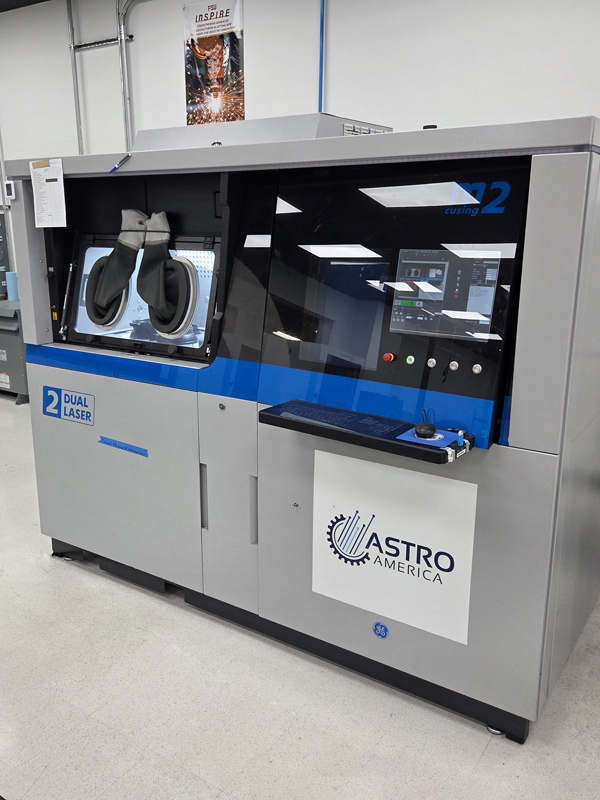
Key Takeaways
- ASTRO America has signed a $9 million CRADA with the U.S. Air Force Research Laboratory (AFRL) to fast‑track additive‑manufacturing (AM) of the Gray Wolf cruise‑missile family.
- The partnership creates the DART (Design for Affordable and Rapid Throughput) hub near Eglin AFB, FL, combining metal‑laser powder‑bed fusion, binder‑jet, directed‑energy deposition, and conventional casting/machining.
- Northrop Grumman, Florida State University’s InSPIRE, and ASTRO’s AM Forward Compact will share facilities, intellectual‑property rights, and test data, enabling rapid prototyping and low‑cost production.
- Early‑stage goals include a 30 % reduction in per‑missile part cost and a 50 % cut in lead time compared with legacy machining‑only methods.
- The CRADA framework also opens the door for future defense‑related AM projects, offering a repeatable model for public‑private R&D collaboration.
Overview of the New CRADA
ASTRO America, the nonprofit steward of the AM Forward Compact, has entered a Cooperative Research and Development Agreement (CRADA) with the Air Force Research Laboratory (AFRL). The joint effort is funded with nearly $9 million in combined government‑industry investment and targets the rapid, low‑cost production of Northrop Grumman’s Gray Wolf cruise‑missile design.
The agreement follows a growing trend in the defense sector where CRADAs are used to pool resources, share intellectual property (IP), and accelerate technology transition from lab to battlefield.
What Makes a CRADA Different?
| Aspect | Traditional Procurement Contract | CRADA (Public‑Private) |
|---|---|---|
| Funding | Fixed‑price or cost‑plus, fully government‑funded | Shared investment (e.g., $9 M split between AFRL and partners) |
| IP Ownership | Government retains rights; limited commercial use | Joint IP rights; partners can file patents on R&D outcomes |
| Risk Allocation | Primarily on contractor | Risks shared; government provides facilities, partners provide expertise |
| Speed to Market | Often longer due to procurement cycles | Faster because of collaborative R&D and shared facilities |
Participants and Their Roles
| Partner | Core Contribution |
|---|---|
| ASTRO America | Manages the AM Forward Compact, provides project oversight, and coordinates IP sharing |
| AFRL | Supplies test ranges, validation expertise, and a portion of the $9 M budget |
| Northrop Grumman | Supplies the Gray Wolf design specifications and defines performance targets |
| FSU InSPIRE | Delivers academic research, simulation tools, and workforce training |
| Eglin AFB Site | Hosts the new DART manufacturing R&D hub, offering secure access to flight‑test data |
DART: Design for Affordable and Rapid Throughput
The DART initiative is the operational core of the CRADA. It establishes a dedicated manufacturing laboratory within 5 km of Eglin AFB, where multiple AM processes are evaluated side‑by‑side:
| Process | Typical Build Rate | Material Palette | Expected Cost Savings |
|---|---|---|---|
| Laser Powder‑Bed Fusion (LPBF) | 0.5 kg h⁻¹ | Ti‑6Al‑4V, Inconel 718 | 25 % vs. CNC machining |
| Binder‑Jetting (BJ) | 1.2 kg h⁻¹ | Al‑Si10Mg, Cu‑Cr | 30 % vs. investment casting |
| Directed‑Energy Deposition (DED) | 0.8 kg h⁻¹ | Maraging steel, tungsten | 20 % vs. forged parts |
| Conventional Casting & CNC Machining | — | High‑strength steels | Baseline for comparison |
By running these technologies concurrently, DART can pinpoint the optimum process for each missile sub‑assembly—whether it’s a high‑temperature turbine blade (LPBF) or a large structural bulkhead (BJ + post‑machining).
Direct Impact on the Gray Wolf Missile
The Gray Wolf program, initiated roughly 10 years ago, seeks a low‑cost, high‑volume cruise missile capable of swarming enemy defenses. Current production relies heavily on subtractive machining, which drives part counts to ≈ 150 per missile and unit costs above $150 k.
Projected DART outcomes:
- Part count reduction to ≈ 80 by consolidating assemblies through AM.
- Per‑missile material cost cut from $150 k to ≈ $105 k (≈ 30 % saving).
- Lead time from design‑to‑first‑article shortened from 18 months to ≈ 9 months.
These improvements align with the Air Force’s “Affordable Precision Strike” directive, which calls for missiles under $100 k in high‑volume production.
Timeline and Milestones
| Milestone | Target Date |
|---|---|
| Facility construction at Eglin AFB | Q2 2025 |
| First AM‑produced Gray Wolf component | Q4 2025 |
| Full‑scale flight‑test of AM‑integrated missile | Q2 2026 |
| Production‑line hand‑off to Northrop Grumman | Q4 2026 |
Bottom Line
ASTRO America’s $9 million CRADA with AFRL represents a pivotal shift toward collaborative, cost‑focused additive manufacturing for defense hardware. By consolidating cutting‑edge AM processes at the DART hub, the partnership aims to slash Gray Wolf missile costs by 30 % and halve development lead times, while granting participating firms joint IP rights that can fuel future defense innovations. If the program meets its aggressive schedule, it


