Key Takeaways
- Western AM manufacturers are shifting from “sell‑any‑printer” to application‑focused strategies to stay competitive.
- Chinese equipment makers have already captured ≈45 % of the low‑cost metal‑AM market by undercutting price.
- Concentrating on a single vertical (e.g., aerospace, medical, or oil‑&‑gas) can yield 2‑3× higher gross margins but postpones revenue for 18‑36 months.
- The trade‑off is explicit: reject 60‑70 % of inbound leads in exchange for deeper engineering support and longer‑term market lock‑in.
- Success hinges on matching the chosen industry’s investment cycle, regulatory timeline, and willingness to adopt new process chains.
Introduction: From “Any Geometry” to “Any Industry”
For most of its early life, additive manufacturing (AM) was marketed as a universal geometry solution. The sales pitch was simple: “If you can imagine it, we can print it.” That promise allowed vendors to chase every inquiry, inflating the sales funnel while the technology itself was the primary purchase driver.
Today that model is obsolete. Chinese manufacturers have eroded price leadership, now offering metal‑laser powder‑bed systems at US $250 k–$350 k, roughly 30 % lower than comparable Western units. With cost pressure mounting, Western firms can no longer rely on price alone; they must differentiate through customer intimacy—the ability to solve a narrowly defined industry problem better than anyone else.
Why the Industry Fell Into a “Catch‑All” Trap
| Factor | Early AM Market | Mature AM Market |
|---|---|---|
| Core Value Proposition | Geometric freedom (any shape, no tooling) | Process excellence for specific end‑use |
| Typical Pricing (USD) | $500 k–$1 M (high‑end) | $250 k–$800 k (depends on niche) |
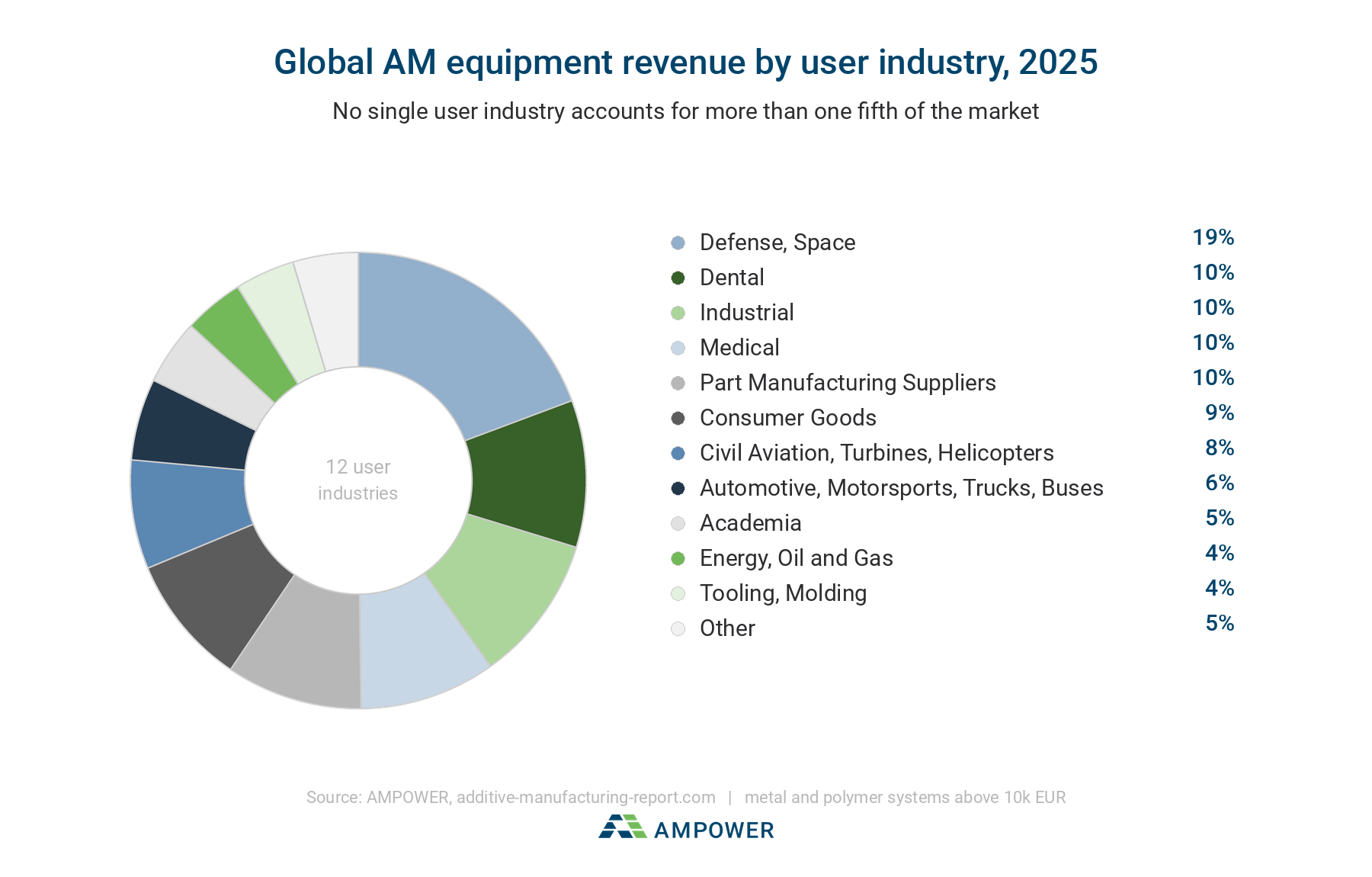
| Revenue Share by Segment* | 20 % aerospace, 15 % medical, 10 % automotive, 55 % “other” | 45 % aerospace, 30 % medical, 15 % oil‑&‑gas, 10 % “other” |
| Sales Cycle | 1–3 months (transactional) | 12–36 months (strategic partnership) |
| Gross Margin | 25‑30 % | 35‑45 % (when niche‑focused) |
*Data compiled from 2023‑2024 industry surveys (AM Insights, 2024).
The “anything” promise made it impossible for vendors to prioritize one sector over another, resulting in a fragmented revenue base and thin margins.
The Entrepreneurial Risk of Application Focus
Choosing a single user group is no longer a marketing tweak—it is a strategic bet. The risk profile differs dramatically from the historic “sell a machine” approach:
| Risk Dimension | Traditional Transactional Model | Application‑Focused Model |
|---|---|---|
| Revenue Timing | Immediate cash flow from each sale | Deferred cash flow; ROI realized after 2‑3 years |
| Engineering Investment | Minimal (standardized machine) | Heavy (custom software, material qualification, post‑process integration) |
| Competitive Barrier | Low (price competition) | High (deep domain expertise, IP‑protected workflows) |
| Market Exposure | Broad, but shallow | Narrow, but deep and defensible |
The upside is a sustainable moat: competitors cannot quickly replicate a turnkey solution that includes certified material recipes, validated process parameters, and regulatory documentation for, say, aerospace turbine blades. The downside is the short‑term revenue gap—companies may see a 15‑20 % dip in quarterly sales while they build the specialized capability.
Implementing Customer Intimacy: A Practical Roadmap
- Select a Target Vertical – Evaluate sectors by total addressable market (TAM), growth rate (>8 % CAGR), and alignment with existing engineering strengths.
- Build a Dedicated Application Team – Assign 30‑40 % of R&D budget to vertical‑specific material science, simulation, and certification.
- Co‑Develop with Early Adopters – Sign multi‑year “innovation partnership” contracts that lock in volume commitments (e.g., 50‑100 parts/year).
- Create Vertical‑Specific Service Packages – Offer end‑to‑end support: design for AM, build‑sheet optimization, heat‑treatment, and post‑process QA.
- Measure Success by Niche Metrics – Gross margin, repeat order rate, and time‑to‑certification become primary KPIs, not just unit count.
Bottom Line
Western AM suppliers can no longer win on price alone. By concentrating on a single, high‑value industry, they trade short‑term sales volume for long‑term differentiation, higher margins, and a defensible market position. The strategy is risky—revenue will be sacrificed now, and the payoff may take several years—but it is the only path that lets Western firms compete against low‑cost Chinese rivals while delivering the deep, application‑specific expertise that high‑tech customers demand.


