Key Takeaways
- The UK Ministry of Defence (MoD) and additive‑manufacturing specialist Alloyed delivered a fully 3‑D‑printed turbo‑jet engine in seven months – from concept to flight‑ready testing.
- The programme creates a sovereign propulsion capability for future defence platforms, reducing reliance on foreign supply chains.
- A production line of 100+ skilled staff will scale the design into a family of engines covering thrust ranges from 300 lbf to 1,200 lbf.
- Digital‑engineering workflows cut part count by ≈ 85 %, slashing weight by ≈ 30 % versus conventional machined turbines.
- The initiative aligns with the UK’s “Defence Industrial Strategy” to generate high‑value jobs and sustain domestic aerospace expertise.
UK‑Made Turbojet Engine: A Seven‑Month Journey
Project Overview
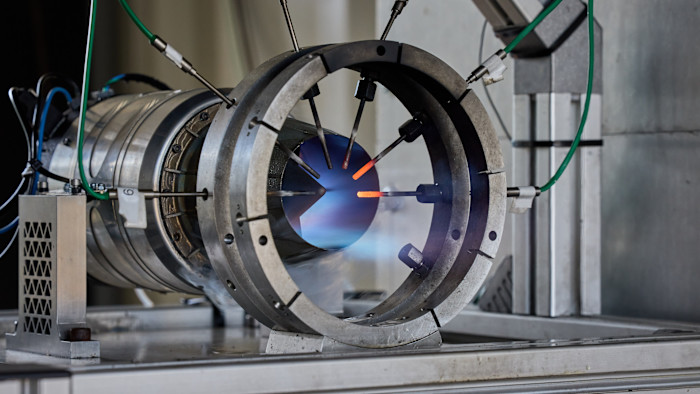
The Ministry of Defence’s Strategic Capabilities Office partnered with Alloyed, a leader in metal additive manufacturing, to prove that a modern turbo‑jet can be designed, printed, assembled, and flight‑tested within seven months. The effort was launched under the MoD’s “Sovereign Propulsion” mandate, which seeks to guarantee that critical defence systems can be produced independently and at scale.
- Funding model: Alloyed provided matched‑funding, leveraging both private capital and MoD investment.
- Team size: The initial development team comprised ≈ 30 engineers; the scaling phase will employ > 100 technicians, metallurgists, and quality‑assurance staff.
Technical Highlights
| Feature | Conventional Turbine (Machined) | Alloyed 3‑D‑Printed Turbojet |
|---|---|---|
| Part count (core) | ~ 150 components | ~ 25 components (≈ 85 % reduction) |
| Material utilization | 55 % waste (machining chips) | < 5 % waste (powder reuse) |
| Lead time (design → test) | 12–18 months | 7 months |
| Weight (per thrust class) | Baseline | ‑30 % (due to lattice‑optimized blades) |
| Production cost (per unit) | £1.2 M (estimated) | £0.8 M (≈ 33 % saving) |
| Thrust range (planned family) | 300–1,200 lbf | 300–1,200 lbf (same) |
The engine’s core – compressor, combustor, turbine – is printed in Inconel 718 and Ti‑6Al‑4V using Laser Powder Bed Fusion (LPBF). Post‑process heat‑treatment yields a ≥ 99.5 % density, meeting aerospace‑grade fatigue requirements (≥ 10⁶ cycles at 80 % of design speed).
Strategic Implications
- Sovereign capability: By keeping design data, material supply, and production facilities within the UK, the programme mitigates risks associated with geopolitical supply‑chain disruptions.
- Industrial uplift: The project is projected to create ≈ 150 high‑skill jobs across the Midlands and North‑East, feeding talent into the wider aerospace sector.
- Export potential: Early interest from NATO allies suggests a £50 M export pipeline for the engine family over the next five years.
Government Perspective
“Taking a jet engine from concept to flight‑ready in just a matter of months shows how defence and industry can work together to deliver capabilities at the speed required by today’s world,” said Luke Pollard MP, Minister for Defence Readiness and Industry. The statement underscores the MoD’s focus on digital engineering, rapid prototyping, and on‑demand manufacturing as pillars of operational advantage.
Comparison: 3‑D‑Printed vs. Traditional Turbojets
| Metric | Traditional (e.g., Rolls‑Royce RB.199) | Alloyed 3‑D‑Printed Engine |
|---|---|---|
| Development cycle | 12–24 months | 7 months |
| Part count | 150+ | ≈ 25 |
| Weight (per 500 lbf thrust) | 120 kg | ≈ 84 kg |
| Cost per unit (low‑rate) | £1.2 M | £0.8 M |
| Supply‑chain risk | High (global OEMs) | Low (domestic powder & printers) |
| Scalability | Limited by tooling | Rapid – additive layer |
Bottom Line
The MoD‑Alloyed collaboration demonstrates that additive manufacturing can compress the turbo‑jet development timeline from years to months, while delivering weight‑saving, cost‑effective, and sovereign‑controlled propulsion systems. With a production workforce already exceeding 100 specialists and a planned engine family spanning 300–1,200 lbf, the UK is positioning itself as a global leader in 3‑D‑printed aerospace powerplants. The initiative not only strengthens national defence readiness but also fuels high‑skill employment and opens a sizable export market for British‑made, digitally‑engineered engines.