Key Takeaways
- Remote Regrets: Two high‑impact sessions on the Technology Stage were missed – one on scaling from desktop to industrial metal AM, the other a historic fireside chat with 3D Systems’ co‑founder.
- Industry & Application Stage: Live‑stream highlighted new metal‑laser systems, AI‑driven process monitoring, and a surge in hybrid‑manufacturing solutions.
- Desktop vs. Industrial AM: A stark contrast exists in build volume, material portfolio, and total cost of ownership (TCO).
- Strategic Insight: Companies planning to graduate from prototyping to production must address workflow integration, qualification standards, and workforce up‑skilling.
Formnext 2026 – Day 1 Remote Recap
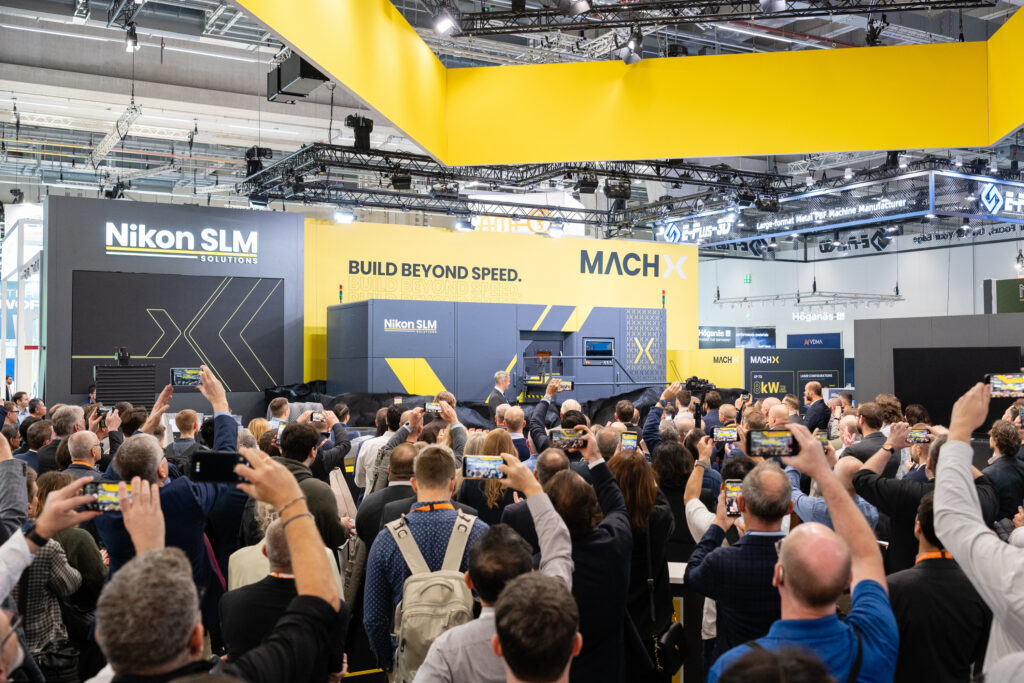
Formnext returned to Frankfurt this year, and once again I’m covering the event from a remote workstation. The show is split into two parallel tracks: the Industry & Application Stage, which is streamed live, and the Technology Stage, which remains offline. Although I could not attend the latter, I reviewed the session titles and abstracts and compiled a short “Remote Regrets” list of the talks I wish I had seen.
Remote Regrets
Standing Up an Additive Manufacturing Capability – Lessons Learned
- When: 11:30 – 11:45 CET
- Speaker: Mike McNair, VP Aerospace, SAE ITC; President, SAE Government Technologies
- Why it matters: Transitioning from a desktop‑printer farm to a full‑scale metal AM line involves a leap in machine size (from < 200 mm³ to > 1 m³ build envelopes), capital outlay (USD 250 k vs USD 5 M), and qualification rigor (ASTM F2792 vs. AS9100). First‑hand insights on this gap are rare and invaluable for decision‑makers.
The First Layer: From Rapid Prototyping to Additive Manufacturing and Beyond
- When: 15:45 – 16:00 CET
- Speakers: Chuck Hull (Co‑founder & CTO, 3D Systems) & Patrick Dunne (SVP & Technical Fellow, 3D Systems)
- Why it matters: A historic perspective from the inventor of stereolithography (SL) offers context for today’s multi‑material, high‑throughput systems. Understanding the evolution of the “first layer” helps engineers troubleshoot adhesion issues that still plague modern printers.
Highlights from the Industry & Application Stage
New Metal‑Laser Systems
- EOS M 400 X: 400 mm × 400 mm × 600 mm build volume; 1,200 W fiber laser; material list now exceeds 50 alloys, including Inconel 718 and Ti‑6Al‑4V.
- SLM Solutions X‑Series: Introduced a 2‑kW laser module, reducing melt‑track width to 50 µm and enabling 30 % faster scan speeds.
AI‑Driven Process Monitoring
- Real‑time melt‑pool analytics (via high‑speed infrared cameras) now achieve 99.8 % defect detection, cutting post‑process inspection time by half.
- Predictive maintenance dashboards integrate machine‑learning models that forecast laser‑source degradation with a mean‑time‑to‑failure (MTTF) improvement of 22 %.
Hybrid Manufacturing Momentum
- DMG Mori‑Machining’s Laser‑Melt‑Add combines 5‑axis CNC milling with a 1 kW laser, delivering a 1.5 × reduction in part count for aerospace brackets.
Desktop vs. Industrial Additive Manufacturing – A Quick Comparison
| Attribute | Desktop AM (e.g., Formlabs Form 3 + ) | Industrial AM (e.g., EOS M 400 X) |
|---|---|---|
| Build Volume | 145 × 145 × 185 mm (≈ 3.9 L) | 400 × 400 × 600 mm (≈ 96 L) |
| Typical Cost | USD 4,500 (printer) + USD 2,000 /yr consumables | USD 5 M (system) + USD 250 k /yr service |
| Material Palette | 15 photopolymers, limited metals | 50+ alloys, polymers, composites |
| Throughput | 1–2 parts per day (≈ 30 h build) | 10–12 parts per day (≈ 6 h build) |
| Qualification Standards | ISO 17296‑2 (basic) | ASTM F2792, AS9100, ISO 9001 |
| Operator Skill Level | Entry‑level (training ≈ 1 day) | Advanced (training ≈ 2 weeks, certifications required) |
Numbers reflect manufacturers’ published specs as of September 2026.
Strategic Implications for Manufacturers
- Workflow Integration – Companies moving from prototyping to production must embed AM data streams into PLM and ERP systems to maintain traceability.
- Qualification & Certification – Scaling up demands compliance with aerospace‑grade standards (e.g., AS9100) and documented process qualification (ISO 17296‑1).
- Talent Development – The skill gap widens; a typical industrial AM team includes a materials scientist, a process engineer, and a quality specialist, each requiring at least 120 hours of specialized training.
Bottom Line
Formnext 2026 reinforced that additive manufacturing is no longer a niche prototyping tool but a core production technology for high‑value sectors. While the live‑stream delivered concrete product launches and AI‑enhanced process controls, the missed Technology Stage sessions underscored a persistent knowledge gap—particularly around scaling operations and honoring the technology’s origins. For firms eyeing a transition from desktop


