Key Takeaways
- HP’s newest additive‑manufacturing (AM) strategy centers on production economics and scale.
- The MJF 1200 targets sub‑$60 k pricing, automated workflow, and a 2027 market launch (early units in Jan 2027).
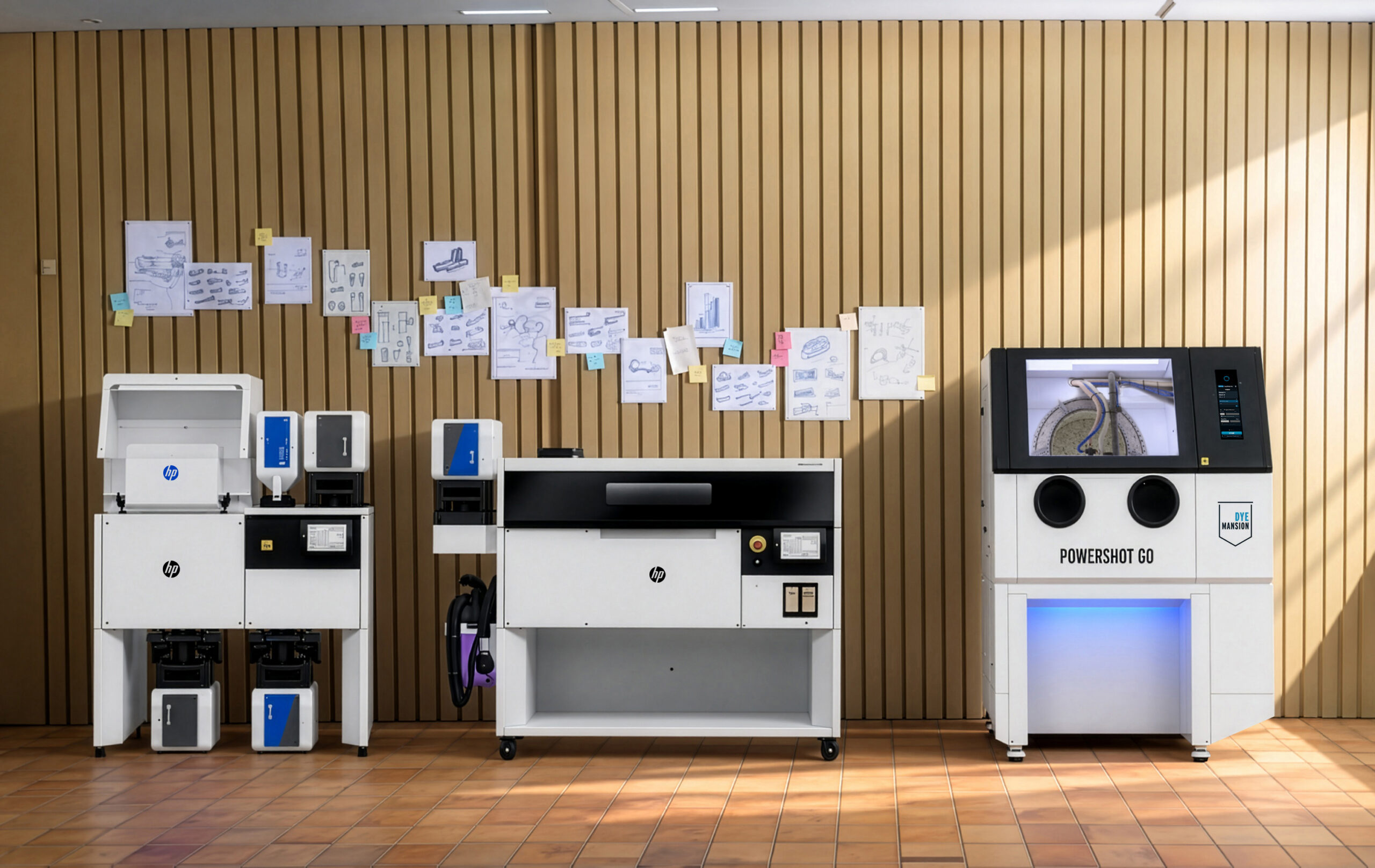
- Partnerships with DyeMansion (for Powdershot Go) and HP Powershot Go extend material and post‑processing capabilities.
- Six additional announcements at Formnext 2026 reinforce HP’s “industrial‑grade AM” roadmap, from software upgrades to large‑volume print farms.
HP’s Unified Message: Economics Over Everything
At Formnext 2026 (Hall 12.1, Booth D41), HP’s senior vice‑president and general manager of Additive Manufacturing Solutions, Alex Moñino, declared that “the next phase of industrial AM will be defined by production economics and scale.” This statement mirrors the company’s long‑standing narrative: make additive manufacturing as cost‑effective as conventional production lines.
Why Production Economics Matters
| Metric | Traditional Injection Molding | Conventional MJF (e.g., 580/880) | HP MJF 1200 (Projected) |
|---|---|---|---|
| Part Cost (≈ 10 k units) | $0.08‑$0.12 | $0.15‑$0.22 | $0.10‑$0.14 |
| Build Volume (mm³) | 250 × 250 × 250 | 380 × 284 × 380 | 540 × 380 × 540 |
| Machine Price (USD) | $2‑$5 M | $100‑$150 k | < $60 k |
| Automation Level | High (robotic) | Medium (optional) | Full‑stack automation |
The table shows that HP is positioning the MJF 1200 to bridge the cost gap between low‑volume AM and high‑volume injection molding, while offering a footprint and price that appeal to midsize manufacturers.
The MJF 1200: Specs That Matter
- Print Technology: Multi Jet Fusion (MJF) with HP‑engineered HP Powder‑Bed Fusion (PBF) head.
- Build Envelope: 540 mm × 380 mm × 540 mm (≈ 110 L).
- Layer Thickness: 0.08 mm – 0.12 mm, selectable per job.
- Material Portfolio (initial): PA12, PA12 CF, TPU 95A, and Powdershot Go (a low‑viscosity, recyclable polymer from DyeMansion).
- Automation Suite: Integrated conveyor‑style part removal, in‑machine cooling, and optional robotic arm for post‑process handling.
- Software: HP Smart Factory Connect (cloud‑based production monitoring) and Build Planner AI for nesting optimization.
Early‑adopter shipments begin in January 2027, with a broader commercial release slated for April 2027. HP has already qualified Powdershot Go (DyeMansion) on the MJF 1200, expanding the material range to include a high‑flow, recyclable polymer suitable for consumer‑goods and automotive interior parts.
Complementary Announcements at Formnext 2026
| Announcement | Description | Impact on Scale |
|---|---|---|
| HP Powershot Go | Portable, on‑site powder recycling unit (up to 150 kg / day). | Reduces material waste by 30 % and lowers logistics cost. |
| HP Smart Factory Connect 2.0 | Real‑time KPI dashboard, predictive maintenance AI. | Increases machine uptime to > 96 %. |
| Large‑Scale Print Farm Blueprint | Modular, rack‑mountable MJF 1200 clusters (up to 12 units). | Enables batch production of > 5 M parts/year. |
| New Material Certification | PA12 CF‑30% and TPU 98A added to the approved list. | Broadens functional part capabilities. |
| HP Additive Finance Program | Lease‑to‑own model with 0 % APR for the first 24 months. | Lowers entry barrier for SMEs. |
| Eco‑Compliance Suite | Automated reporting for REACH, RoHS, and carbon‑footprint tracking. | Facilitates regulatory approval in EU markets. |
Collectively, these releases reinforce HP’s claim that scale, cost, and sustainability are now integral to every AM offering.
Bottom Line
HP’s Formnext 2026 rollout makes it clear that the company is no longer just adding another printer to its lineup; it is reshaping the economics of additive manufacturing. By pricing the MJF 1200 below $60 k, expanding material options through DyeMansion’s Powdershot Go, and bundling automation, software, and financing into a single value proposition, HP is positioning itself to capture a larger slice of the mid‑volume production market. If the projected part‑cost reductions and uptime improvements hold, the MJF 1200 could become the de‑facto workhorse for manufacturers seeking to transition from prototyping to true series production without the massive capital outlay of traditional molding.