Key Takeaways
- 3DCP Group, COBOD BOD3 yazıcısını kullanarak Danimarka, Holstebro’da 36 tam-bitmiş öğrenci dairesi teslim etti.
- Geliştirme 1.650 m² alanı kapsıyor; bireysel birimler 39 – 50 m² arasında ve 12 ay içinde tamamlandı.
- İki özel beton kullanıldı: FUTURECEM (Aalborg Portland + D.fab) ve MEVOcem, %84 CO₂-azaltma iddiası taşıyan düşük-karbon bağlayıcı.
- Altı bina kümesinin tekrarlanması, yazıcının hızı, doğruluğu ve geleneksel bina sistemleriyle entegrasyonu sürdürme yeteneğini kanıtladı.
Overview of the Skovsporet Student Housing Project
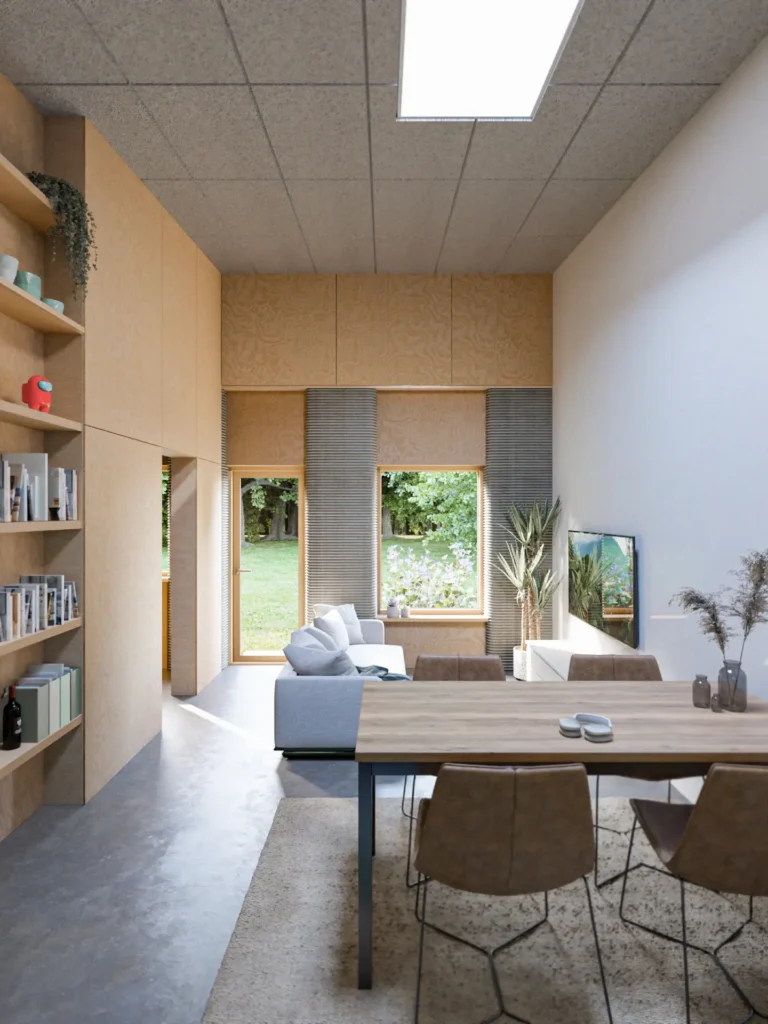
Danimarka’nın 3DCP Group’u, araştırma-odaklı bir konsepti işlevsel bir konut topluluğuna dönüştürdü. Holstebro’da VIA University College’a bitişik Skovsporet sahası, SAGA Space Architects ve MS+ tarafından tasarlanan 36 tek katlı daireden oluşuyor. Her konut bir mutfak, çalışma köşesi, oturma alanı, banyo ve uyuma bölümü içeriyor; büyük çatı pencereleri ve eğimli tavanları, gün ışığını iç mekana yönlendiriyor.
3D Printing Technology Deployed
COBOD BOD3 Printer
- Build envelope: 6 × 6 × 3 m (L × W × H)
- Layer height: 10 mm (detaylı bölgeler için 5 mm’ye ayarlanabilir)
- Print speed: en yeni ekstrüzyon kafasıyla 0.9 m³/h kadar
- Material compatibility: hazır-karışım beton, düşük-karbon bağlayıcılar ve katkı-madde geliştirilmiş karışımlar
BOD3’ün portal sistemi, altı aynı kümeyi ardışık olarak basarak tekrarlanabilirliği gösterdi; bu, ticari benimseme için kritik bir ölçüttür.
Materials: FUTURECEM vs. MEVOcem
| Property | FUTURECEM (Aalborg Portland + D.fab) | MEVOcem (Material Evolution) |
|---|---|---|
| Primary binder | Portland cement (CEM I 42.5 N) | Düşük-karbon çimento (kalkine kil + kireçtaşı) |
| Compressive strength | 45 MPa (28 days) | 40 MPa (28 days) |
| CO₂ footprint | ~0.85 t CO₂/t cement | 0.14 t CO₂/t cement (≈%84 azalma) |
| Print viscosity | Yüksek akışlı ekstrüzyon için optimize edilmiş | Düşük ısı, hızlı sertleşme için uyarlanmış |
| Typical use | Yapısal duvarlar, taşıyıcı paneller | Taşıyıcı olmayan dolgu, iç bölmeler |
Her iki karışım da BOD3’ün ekstrüzyon kafasından pompalandı, ancak düşük-karbon MEVOcem, iç bölmeler ve dekoratif kaplamalar gibi taşıyıcı olmayan bileşenler için kullanıldı; bu, projenin Danimarka’nın iklim-nötr bina hedefleriyle uyumlu olmasını sağladı.
Construction Timeline & Performance
- Design & permitting: 4 months
- Site preparation & foundation: 2 months
- 3D printing phase: 5 months (altı küme boyunca ortalama 0.75 m³/h)
- Finishing & services integration: 1 month
Yer kazısından taşınmaya kadar tüm süreç 12 months içinde tamamlandı; bu süre, benzer birim sayısı için geleneksel ahşap çerçeve inşaatına rakip bir zaman çizelgesidir.
Stakeholder Perspectives
“Kırılma noktası tek bir başarılı baskı değil, altı küme boyunca süreci tekrarlama yeteneği, hızı artırma, doğruluğu koruma ve basılan elemanları geleneksel bina sistemleriyle entegre etme,” – Mikkel Brich, Co-Founder & CEO, 3DCP Group.
“Bu proje, 3D baskının prototiplerin ötesine geçtiğini gösteriyor. Topluluk ölçeğinde 36 ev teslim etmek, teknolojinin artık ciddi bir mimari araç olduğunu kanıtlıyor,” – Sebastian Aristotelis, Co-Founder & Lead Architect, SAGA Space.
Implications for the Wider Industry
- Scalability: Büyük-format yazıcıların, boyutsal toleransı (< 3 mm sapma) kaybetmeden çok-birim projeleri yönetebileceğini gösteriyor.
- Sustainability: FUTURECEM’in yüksek dayanım performansı ile MEVOcem’in düşük-karbon profili birleştirilerek, geleneksel betona kıyasla gelişmenin toplam gömülü karbonu %30 oranında azaltılıyor.
- Cost efficiency: Ön maliyet analizi, geleneksel blok inşaatına göre %15-20 malzeme atığı ve işçilik saatinde azalma öngörüyor.
Bottom Line
Skovsporet öğrenci konut projesi, 3D-baskılı inşaatın orta katlı konut projeleri için uygulanabilir, tekrarlanabilir ve çevreye duyarlı bir yöntem olduğunu doğruluyor. COBOD BOD3 yazıcısı ve hibrit beton stratejisi—yapısal elemanlar için yüksek-dayanımlı FUTURECEM ve iç mekanlar için ultra-düşük-karbon MEVOcem—kullanılarak 3DCP Group, bir yıl içinde 36 ev teslim etti ve Avrupa pazarında hız, hassasiyet ve sürdürülebilirlik açısından yeni bir ölçüt belirledi.