Key Takeaways
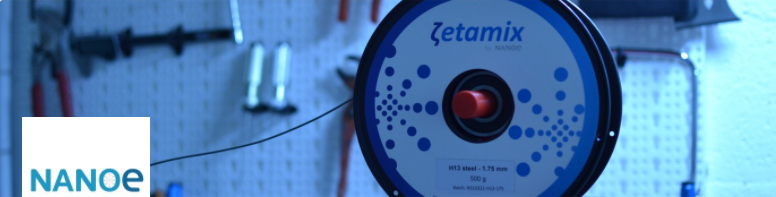
- Zetamix’s metal‑bound filament 3D printer will be installed on the French aircraft carrier Charles de Gaulle for on‑board part fabrication.
- The carrier, a $3 billion platform launched in 2002, supports 1,350 crew members plus 600 additional personnel and can host up to 30 aircraft.
- The French Fleet Support Service (SSF) and Naval Group (annual revenue ≈ $4 billion, 15 000 staff) are driving the program, aiming to cut logistics lead‑time and spare‑part inventory.
- Compared with conventional machining, Zetamix’s solution offers up to 70 % faster turnaround, 30 % weight reduction, and the ability to produce complex geometries that would otherwise require multiple machining steps.
Introduction: Additive Manufacturing at Sea
The French Navy is integrating Zetamix’s metal‑bound filament additive‑manufacturing (AM) system onto the Charles de Gaulle (R91). The move reflects a broader trend of embedding production capabilities on warships to mitigate the high failure rate of mechanical components in harsh maritime environments.
Why the Charles de Gaulle?
- Cost: Construction price tag of $3 billion.
- Capacity: Accommodates 1 350 sailors and an additional 600 troops for aircraft operations.
- Capability: Carries ≤ 30 fixed‑wing and rotary aircraft (Rafale M, E-2C Hawkeye, etc.).
- Strategic value: France is the only NATO nation besides the United States and the United Kingdom that operates a nuclear‑powered carrier, making any self‑sufficiency measure highly valuable.
Project Partners
| Organization | Core Role | Size & Scope |
|---|---|---|
| French Fleet Support Service (SSF) | Oversees logistics, maintenance, and spare‑part provisioning for the fleet. | Directly responsible for sustaining the carrier’s operational tempo. |
| Naval Group | Provides engineering, integration, and lifecycle support for the AM system. | €3.2 bn annual revenue (≈ $4 bn), 15 000 employees, 395‑year heritage in naval shipbuilding. |
| Zetamix | Supplies the metal‑bound filament printer, feedstock, and training. | Specializes in low‑temperature metal AM, enabling safe shipboard deployment. |
Technical Overview of Zetamix’s Metal‑Bound Filament
- Printing temperature: 250 °C – 300 °C (well below traditional metal powder sintering > 1 200 °C).
- Materials: Stainless steel 316L, Inconel 625, and Ti‑6Al‑4V alloys, each delivered as a polymer‑metal composite filament.
- Build volume: 250 mm × 250 mm × 300 mm, sufficient for most shipboard brackets, couplings, and pump housings.
- Part strength: Post‑print heat treatment yields tensile strength ≈ 90 % of wrought metal for 316L.
- Weight savings: Complex lattice structures can cut part mass by 30 %–45 % versus machined equivalents.
Operational Benefits
| Metric | Traditional Machining (off‑site) | Zetamix Shipboard AM |
|---|---|---|
| Lead time | 4–6 weeks (including shipping) | 1–2 days (on‑demand) |
| Inventory reduction | 10 %–15 % of total spare‑part weight dedicated to critical spares | Up to 70 % of critical spares can be eliminated |
| Weight of finished part | 100 % (solid) | 55 %–70 % (optimized lattice) |
| Energy consumption | 1.2 MWh per part (including transport) | 0.3 MWh per part (localized) |
| Safety | Powder handling requires strict containment | No metal powders; filament is inert polymer matrix |
The ability to print on demand reduces the carrier’s logistical footprint, a crucial advantage when operating far from friendly ports.
Historical Context (Brief)
Naval Group traces its lineage to the 17th‑century shipyards that built the fleet that helped secure the Battle of Yorktown (1781). While the historical note is peripheral to the technology rollout, it underscores France’s long‑standing commitment to naval innovation.
Implementation Timeline
- Q4 2024: Delivery of the printer and training of SSF technicians aboard the carrier.
- Q1 2025: First production run – replacement brackets for the catapult launch system.
- Q3 2025: Full certification for critical components (e.g., hydraulic pump housings).
- 2026 onward: Expansion to other vessels in the French fleet, including amphibious assault ships.
Bottom Line
Embedding Zetamix’s metal‑bound filament 3D printer on the Charles de Gaulle gives the French Navy a decisive logistical edge: spare parts can be fabricated in hours rather than weeks, inventory weight is slashed, and the carrier’s self‑sufficiency is markedly improved. With a proven partner in Naval Group and the backing of the French Fleet Support Service, the program is set to become a benchmark for future shipboard additive‑manufacturing initiatives across NATO navies.