Key Takeaways
- Researchers at the University of Texas (UT) are developing a low-cost, "tabletop" EUV lithography machine using volumetric 3D printing.
- The new method can print entire 3D nanostructures at once, reducing production time from design to output.
- The UT researchers' approach uses a single source of light passing through stationary, self-assembling nanospheres.
- Traditional EUV lithography requires building 3D structures from multiple 2D layers, patterned one layer at a time.
- The UT team's work was funded in part by a 2024 grant from the National Science Foundation (NSF).
Introduction to EUV Lithography
EUV lithography is a crucial process in semiconductor manufacturing, where lasers transfer patterns onto chemical layers coating a substrate. However, the most advanced machines, such as High-NA EUV, are extremely expensive, with a price tag of around $400 million, making them inaccessible to many researchers and manufacturers.
The UT Researchers' Approach
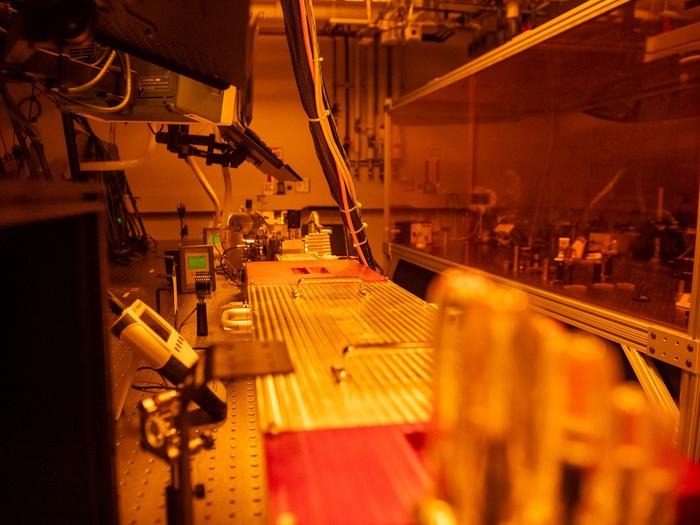
The UT researchers are attempting to overcome the barriers to entry by developing a low-cost, tabletop EUV lithography machine that leverages volumetric 3D printing. This process involves using a single source of light that passes through stationary, self-assembling nanospheres to create objects all at once, but on a much smaller scale. The team's method, documented in the journal Nano Letters, can print entire 3D nanostructures at once, drastically reducing the time from design to output.
Comparison of EUV Lithography Methods
| Method | Description | Production Time | Cost |
|---|---|---|---|
| Traditional EUV Lithography | Building 3D structures from multiple 2D layers | Multiple hours or days | $400 million (High-NA EUV) |
| UT Researchers' Approach | Printing entire 3D nanostructures at once using volumetric 3D printing | Significantly reduced | Estimated to be lower than traditional EUV lithography |
Benefits and Future Implications
The UT researchers' approach has the potential to speed up semiconductor research and make EUV lithography more accessible to a wider range of manufacturers and researchers. With a lower cost and faster production time, this new method could lead to breakthroughs in fields such as electronics, healthcare, and energy.
Conclusion
The UT researchers' development of a low-cost, tabletop EUV lithography machine using volumetric 3D printing has the potential to revolutionize the semiconductor manufacturing industry. By reducing production time and costs, this new method could make EUV lithography more accessible to a wider range of manufacturers and researchers, leading to innovative breakthroughs and advancements in various fields.
Bottom Line
The University of Texas researchers' innovative approach to EUV lithography using volumetric 3D printing could significantly reduce production time and costs, making this critical semiconductor manufacturing process more accessible to a broader range of researchers and manufacturers, and potentially leading to groundbreaking discoveries and advancements in various industries.


