Key Takeaways
- UCLA researchers developed a 3D printed hybrid zinc-ion battery with 7 times more energy storage capacity
- The battery combines features of batteries and supercapacitors, using zinc, a cheaper and safer material
- The technology has potential for storing renewable energy from solar and wind power
- The findings were published in the journal Small, with a paper titled "High Mass-Loading Vanadium Oxide on 3D Printed Carbon Lattices for Zinc-Ion Supercapacitors"
Introduction to 3D Printed Zinc-Ion Batteries
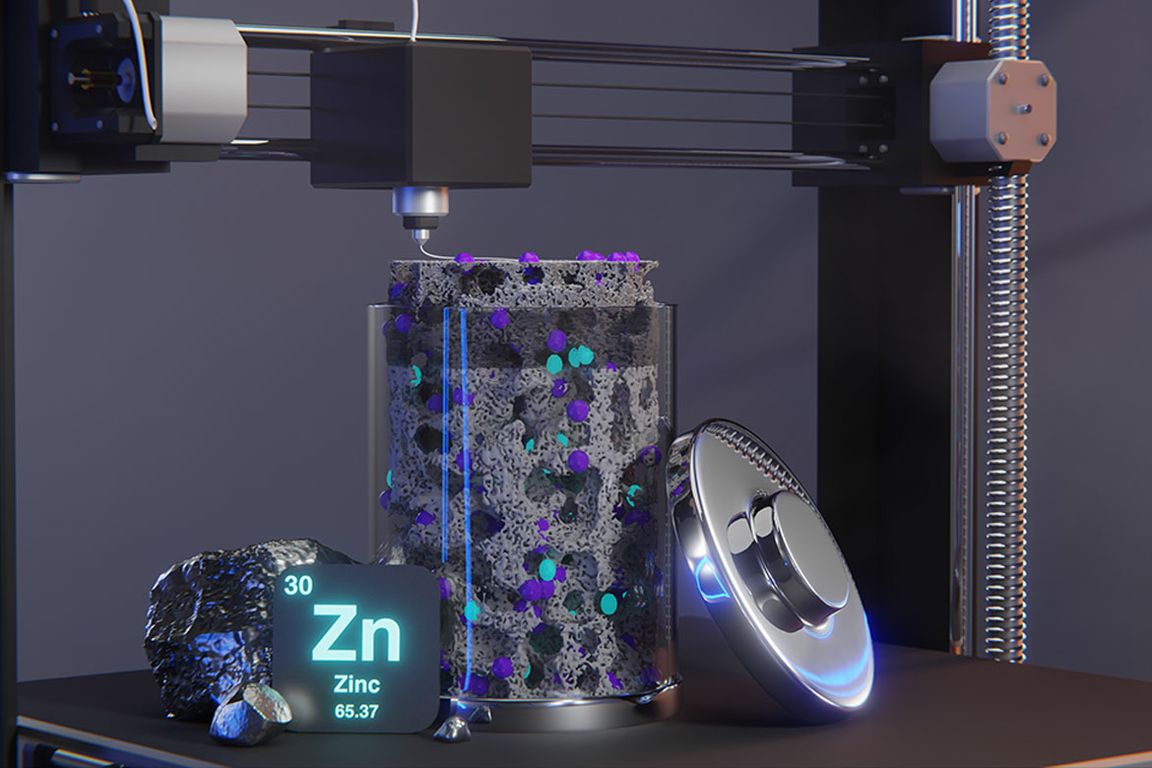
The University of California, Los Angeles (UCLA) has made a significant breakthrough in energy storage technology by developing a 3D printed hybrid zinc-ion battery. This innovative battery has the capacity to store more than seven times as much energy as similar devices, making it a promising option for storing renewable energy from sources like solar and wind power.
How 3D Printed Zinc-Ion Batteries Work
Unlike traditional lithium-ion batteries, the hybrid zinc-ion battery combines the features of both batteries and supercapacitors. This allows it to store large amounts of energy while delivering it quickly. The use of zinc, a material that is cheaper, easier to find, and typically considered safer, makes these batteries an attractive option for storing renewable energy. The following comparison table highlights the key differences between lithium-ion and zinc-ion batteries:
| Battery Type | Energy Storage Capacity | Material | Safety |
|---|---|---|---|
| Lithium-ion | Lower | Lithium | Higher risk of explosion |
| Zinc-ion | Higher (7 times more) | Zinc | Safer, less prone to explosion |
Benefits of 3D Printed Zinc-Ion Batteries
The 3D printed zinc-ion battery has several benefits, including:
- Higher energy storage capacity, making it suitable for storing renewable energy
- Use of zinc, a cheaper and safer material, reducing costs and risks
- Potential for long-term use, with batteries lasting for years and recharging quickly
Expert Insights
According to Maher El-Kady, co-corresponding author and assistant researcher in UCLA's Department of Chemistry and Biochemistry, "The future of energy storage won't be defined by a single technology... At some point, we will need to look for something to complement the current options for grid-scale energy storage." The study's findings, published in the journal Small, demonstrate the potential of zinc-ion hybrid devices to store nearly one order of magnitude higher capacity.
Bottom Line
The development of 3D printed zinc-ion batteries by UCLA researchers marks a significant breakthrough in energy storage technology. With its higher energy storage capacity, use of safer materials, and potential for long-term use, this technology has the potential to play a crucial role in storing renewable energy from sources like solar and wind power. As the world continues to shift towards sustainable energy sources, innovations like this will be essential for meeting our energy storage needs.