Key Takeaways
- OpenCAL is an open‑source, DIY volumetric printer co‑developed by UC Berkeley, Prusa Research, and Formlabs.
- The system uses a rotating resin vat and a high‑resolution projector to cure an entire volume in a single exposure, eliminating layers and support structures.
- Prototype units are already deployed at MIT, NIST, Purdue, and have even flown on a sub‑orbital mission.
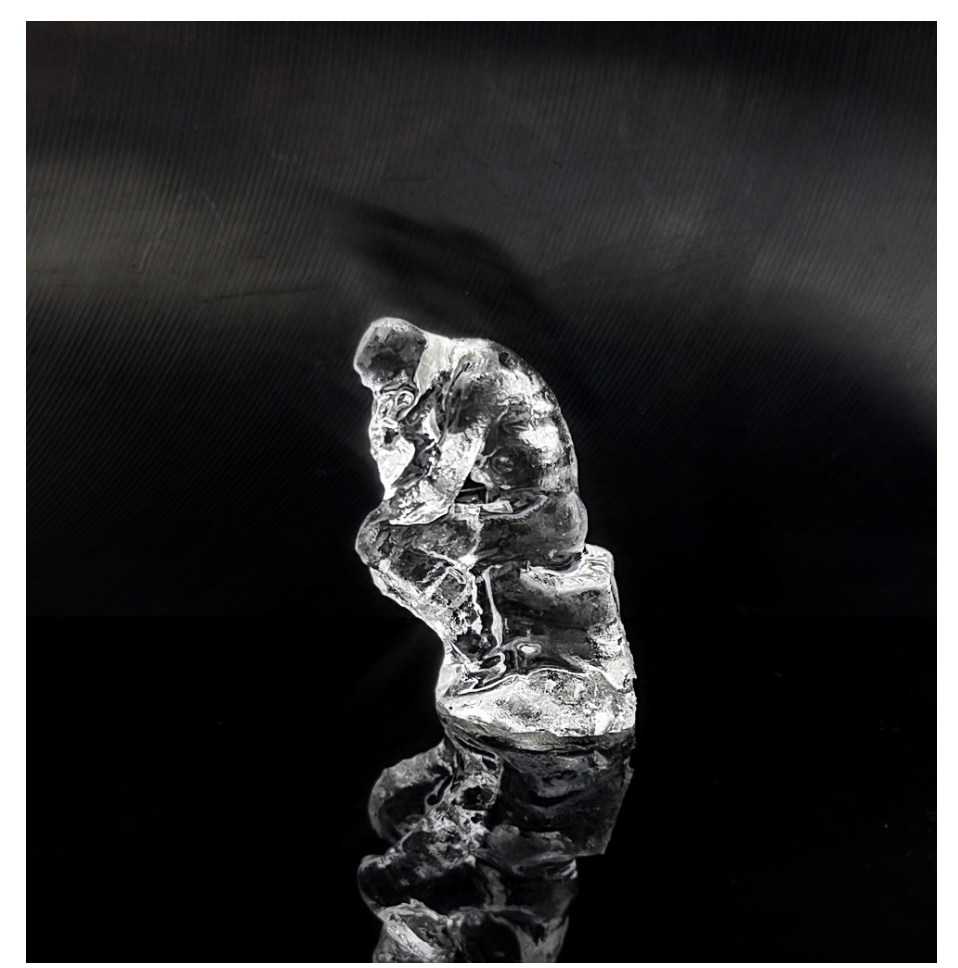
- Compared with conventional SLA/DLP, OpenCAL can print a 10 cm‑scale object (e.g., a Rodin’s Thinker replica) in ≈ 90 seconds—a speed increase of 10‑30×.
- Formlabs supplies the proprietary resin (Formlabs Clear Resin, 1.05 g cm⁻³, viscosity 0.85 Pa·s), which will be distributed through Prusa’s global channel.
Introduction
UC Berkeley has unveiled OpenCAL, a fully open‑source volumetric 3‑D printer built on the Computed Axial Lithography (CAL) principle. The project is a joint effort with Prusa Research, which will handle hardware kits and assembly support, and Formlabs, the resin supplier. Early adopters include top research institutions such as MIT, the National Institute of Standards and Technology (NIST), and Purdue University, underscoring the platform’s rapid acceptance in academia and industry.
How OpenCAL Works
Rotating Vat & Projected Light
OpenCAL replaces the traditional layer‑by‑layer approach with a single‑shot volumetric exposure:
- A transparent resin vial (≈ 200 ml capacity) spins at 0–10 rpm.
- A digital light projector (1920 × 1080 pixels, 4 K resolution, 405 nm wavelength) casts a 3‑D light field into the rotating resin.
- The light intensity is modulated in real‑time to match the desired geometry, curing the entire part simultaneously.
Because the resin is continuously moving, the system mitigates light attenuation and reduces speckle artifacts that typically limit volumetric printers to small parts.
Speed & Accuracy
- Print time: 90 s for a 10 cm × 10 cm × 10 cm object (Rodin’s Thinker replica).
- Resolution: 50 µm isotropic voxel size, comparable to high‑end SLA machines.
- Surface finish: RMS roughness ≤ 5 µm, no post‑processing needed for support removal.
Comparison: Volumetric (OpenCAL) vs. Conventional Layer‑Based SLA/DLP
| Feature | OpenCAL (Volumetric) | Conventional SLA/DLP |
|---|---|---|
| Build Strategy | Single‑exposure, layer‑free | Layer‑by‑layer (25–100 µm) |
| Typical Print Speed | 0.5–1 cm³ · s⁻¹ (≈ 90 s for 1 L) | 0.02–0.05 cm³ · s⁻¹ |
| Maximum Build Volume | 10 cm × 10 cm × 10 cm (prototype) | 15 cm × 15 cm × 18 cm (high‑end) |
| Support Structures | None required | Required for overhangs |
| Material Compatibility | Formlabs Clear Resin (1.05 g cm⁻³) | Wide resin library (100+) |
| Hardware Cost (DIY kit) | ≈ $4,500 (includes projector, motor, vat) | ≈ $3,000–$7,000 (printer only) |
| Energy Consumption | 250 W (projector + motor) | 150–300 W (laser + galvanometer) |
| Scalability Limitation | Light attenuation at > 12 cm depth | Build height limited by Z‑axis mechanics |
Data compiled from OpenCAL technical brief (2026) and leading SLA vendor specifications.
Real‑World Deployments
- MIT integrated OpenCAL into its Materials Science Lab to fabricate rapid‑prototype photonic components, cutting design‑iteration cycles from days to minutes.
- NIST used the system for metrology‑grade reference parts, leveraging the layer‑free geometry to achieve sub‑micron dimensional accuracy.
- Purdue University employed OpenCAL in a space‑flight experiment; the printer survived launch vibration and successfully cured resin in micro‑gravity, confirming CAL’s potential for on‑orbit manufacturing.
Industry Impact
OpenCAL democratizes a technology that previously existed only in a handful of national labs. By publishing the mechanical drawings, firmware, and calibration scripts under an MIT license, UC Berkeley enables hobbyists, startups, and large enterprises to build, modify, and scale volumetric printers without proprietary lock‑in. The partnership with Prusa ensures a ready supply chain, while Formlabs’ resin guarantees consistent optical properties—critical for reliable volumetric curing.
Bottom Line
OpenCAL transforms volumetric 3‑D printing from an experimental curiosity into an accessible manufacturing tool. Its single‑exposure workflow slashes build times by an order of magnitude, eliminates support structures, and delivers fine surface quality—all within a cost‑effective, open‑source package. With early adoption by premier research institutions and a successful sub‑orbital test, OpenCAL is poised to accelerate innovation across aerospace, biomedical, and consumer‑product sectors.