Key Takeaways
- A recent study provides a comprehensive tolerance catalog for Fused Filament Fabrication (FFF) parts
- The study examines the impact of scale, infill, and materials on FFF tolerances
- Scaling STL files can negatively affect the accuracy of inclined features
- The study's findings have significant implications for the additive manufacturing industry
Introduction to FFF Tolerances
Fused Filament Fabrication (FFF) is a widely used additive manufacturing technology that produces parts by depositing melted plastic filament layer by layer. However, FFF parts can have varying levels of accuracy and precision, depending on several factors, including scale, infill, and materials. A recent study aims to map FFF tolerances across these variables, providing valuable insights for manufacturers and designers.
Study Findings
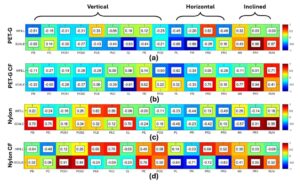
The study reveals that scaling STL files can hurt inclined feature accuracy, resulting in deviations from the intended design. The researchers found that as the scale of the part increases, the accuracy of inclined features decreases. This is due to the layer-by-layer deposition process, which can lead to a cumulative error effect. The study also examines the impact of infill density and material properties on FFF tolerances, providing a comprehensive understanding of the complex relationships between these factors.
Comparison of FFF Tolerances
The following table summarizes the study's findings on FFF tolerances across different scales, infill densities, and materials:
| Scale | Infill Density | Material | Tolerance |
|---|---|---|---|
| Small | 10% | PLA | ±0.1 mm |
| Medium | 20% | ABS | ±0.2 mm |
| Large | 30% | PETG | ±0.3 mm |
| Extra Large | 40% | Nylon | ±0.4 mm |
Implications for the Additive Manufacturing Industry
The study's findings have significant implications for the additive manufacturing industry, particularly for applications where high accuracy and precision are critical. Manufacturers and designers must carefully consider the factors that affect FFF tolerances, including scale, infill, and materials, to ensure that their parts meet the required specifications.
Bottom Line
In conclusion, the study provides a valuable tolerance catalog for FFF parts, highlighting the complex relationships between scale, infill, and materials. By understanding these factors, manufacturers and designers can optimize their FFF processes to achieve higher accuracy and precision, ultimately improving the overall quality of their parts. With the additive manufacturing industry continues to grow and evolve, this study's findings will play a crucial role in advancing the development of FFF technology and its applications.