Key Takeaways
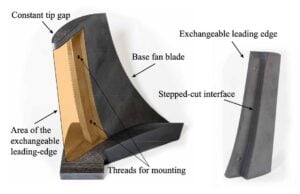
- Researchers in Germany utilized Laser Powder Bed Fusion (LPBF) to develop modular metal fan blades
- The goal of this project is to reduce the cost and time associated with aeroacoustic experiments
- LPBF technology enables the creation of complex geometries and customized fan blade designs
- The new fan blades aim to achieve quieter HVAC systems
Introduction to LPBF Technology
Laser Powder Bed Fusion (LPBF) is a 3D printing technique that has gained significant attention in recent years due to its ability to produce complex metal components with high precision. This technology has been applied in various industries, including aerospace, automotive, and healthcare. In a recent study, German researchers explored the potential of LPBF in creating modular metal fan blades for HVAC systems.
Modular Fan Blades for Quieter HVAC
The researchers used LPBF to design and manufacture modular metal fan blades with customized geometries. The primary objective of this project is to reduce the cost and time required for aeroacoustic experiments, which are crucial for optimizing fan blade designs. By utilizing LPBF, the researchers can create complex fan blade shapes and test their performance in a more efficient and cost-effective manner.
Comparison of LPBF and Traditional Manufacturing Methods
| Technology | Advantages | Disadvantages |
|---|---|---|
| LPBF | Enables complex geometries, customized designs, and reduced material waste | Higher initial investment, limited build size, and potential for porosity |
| Traditional Manufacturing | Lower initial investment, larger build sizes, and established supply chain | Limited design flexibility, higher material waste, and longer production times |
Benefits of LPBF Modular Fan Blades
The use of LPBF in creating modular metal fan blades offers several benefits, including:
- Reduced production time: LPBF enables the rapid creation of customized fan blade designs, allowing for faster experimentation and testing.
- Increased design flexibility: LPBF allows for the creation of complex geometries and customized fan blade shapes, which can lead to improved aeroacoustic performance.
- Cost savings: LPBF reduces material waste and enables the production of fan blades with optimized designs, resulting in lower costs.
Bottom Line
The application of LPBF technology in creating modular metal fan blades has the potential to revolutionize the HVAC industry by enabling the development of quieter and more efficient systems. With its ability to produce complex geometries and customized designs, LPBF offers a promising solution for reducing the cost and time associated with aeroacoustic experiments. As the technology continues to evolve, we can expect to see further innovations in the field of HVAC and beyond.
