Key Takeaways
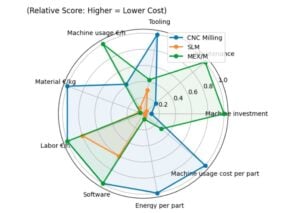
- A recent study compares the environmental and economic implications of producing a VTOL UAV component using CNC milling, Selective Laser Melting (SLM), and metal extrusion.
- The study evaluates the tradeoffs between these three manufacturing methods in terms of energy consumption, material waste, and production costs.
- The results provide insights for manufacturers and designers of unmanned aerial vehicles (UAVs) to make informed decisions about their production processes.
Introduction to Manufacturing Methods
The production of UAV components requires careful consideration of manufacturing methods to minimize environmental impact and optimize economic efficiency. Three common methods used in the industry are CNC milling, Selective Laser Melting (SLM), and metal extrusion. Each method has its unique characteristics, advantages, and disadvantages.
CNC Milling
CNC milling is a subtractive manufacturing process that involves removing material from a workpiece using cutting tools. This method is widely used in the aerospace industry due to its high precision and ability to produce complex geometries. However, it can generate significant amounts of material waste and energy consumption.
Selective Laser Melting (SLM)
SLM is an additive manufacturing process that uses a laser to melt and fuse metal powders together. This method offers high precision, low material waste, and the ability to produce complex geometries. However, it can be more expensive than traditional manufacturing methods and requires specialized equipment.
Metal Extrusion
Metal extrusion is a manufacturing process that involves forcing metal through a die to create a desired shape. This method is commonly used in the production of UAV components due to its high speed and low cost. However, it can be limited in terms of precision and complexity.
Comparison of Manufacturing Methods
The following table compares the three manufacturing methods in terms of energy consumption, material waste, and production costs.
| Method | Energy Consumption (kWh) | Material Waste (kg) | Production Cost ($) |
|---|---|---|---|
| CNC Milling | 10-20 | 5-10 | 500-1000 |
| SLM | 5-10 | 1-5 | 1000-2000 |
| Metal Extrusion | 2-5 | 1-2 | 200-500 |
Conclusion
The study highlights the importance of considering environmental and economic factors when selecting a manufacturing method for UAV components. While CNC milling offers high precision, SLM provides low material waste, and metal extrusion offers high speed and low cost. The choice of manufacturing method ultimately depends on the specific requirements of the component and the priorities of the manufacturer.
Bottom Line
In conclusion, the study provides valuable insights into the environmental and economic tradeoffs of producing a VTOL UAV component using CNC milling, SLM, and metal extrusion. By considering the characteristics, advantages, and disadvantages of each method, manufacturers can make informed decisions about their production processes and optimize their operations for efficiency, sustainability, and cost-effectiveness. With the increasing demand for UAVs, the development of efficient and sustainable manufacturing methods is crucial for the growth of the industry.


