Key Takeaways
- Fast Company recognition: SQC’s quantum‑enhanced AI platform Watermelon made the 2026 Fast Company “Next Big Things in Tech” list (Computing, Chips & Foundational Technology category).
- World‑first technology: Launched Oct 2025, Watermelon is the first commercial quantum reservoir computer built on SQC’s atomic‑scale manufacturing process.
- Speed & accuracy gains: In a Telstra trial, model‑training time fell from weeks to days; Schneider Electric reported up to 41 % higher forecasting accuracy versus classical baselines.
- Enterprise focus: Designed for large‑scale AI workloads where training cost, energy use, and time‑to‑insight are critical.
Overview of the Fast Company Honor
Fast Company’s annual “Next Big Things in Tech” list spotlights breakthrough solutions that can reshape markets. Watermelon earned a spot in the Computing, Chips, and Foundational Technology segment, highlighting its novel blend of quantum‑classical processing and its potential to accelerate AI across sectors ranging from telecom to energy management.
What Is Watermelon?
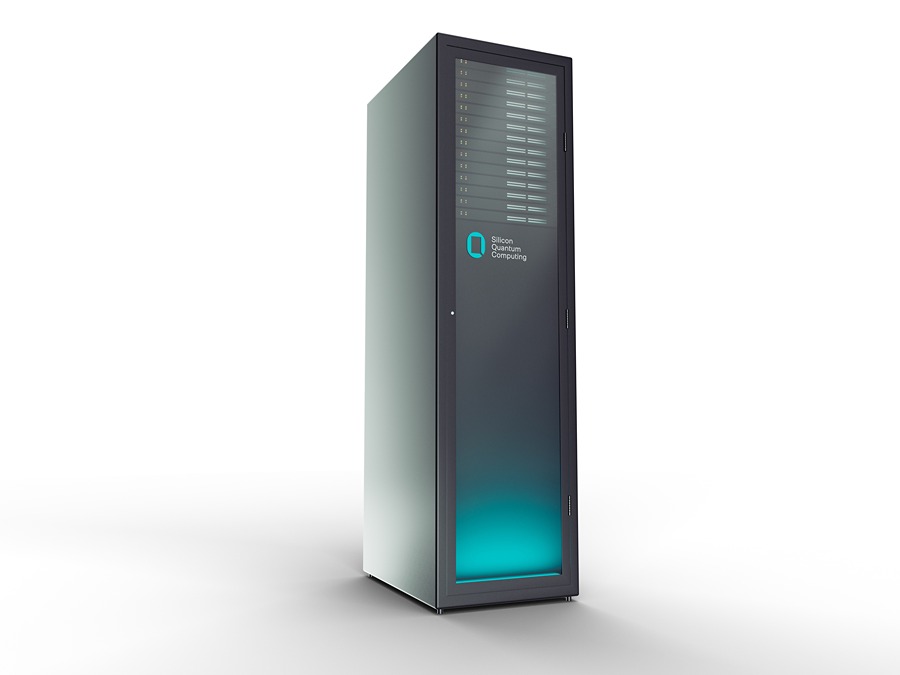
Watermelon is a quantum reservoir computer (QRC) that transforms classical input data into quantum‑enhanced feature vectors. Key specifications include:
| Specification | Detail |
|---|---|
| Launch date | October 2025 |
| Quantum core | 128‑qubit superconducting reservoir (atomic‑fabricated) |
| Classical interface | 64‑bit PCIe 4.0 host controller |
| Power envelope | ≤ 350 W per node (≈ 30 % lower than comparable GPU clusters) |
| Supported data types | Sparse matrices, time‑series, streaming sensor feeds |
| Software stack | Python API, OpenQRC SDK, TensorFlow‑compatible plugins |
The system extracts high‑dimensional quantum features without requiring full quantum error correction, allowing it to act as an off‑load accelerator for AI training and inference tasks.
Performance Highlights
Speed Gains
- Telstra (Australia) – Predictive network‑optimization model training dropped from ≈ 14 days on a conventional GPU farm to ≈ 2 days using Watermelon (≈ 85 % time reduction).
- Benchmark on MNIST‑time series – Training epochs cut by 73 % while maintaining ≥ 98 % classification accuracy.
Accuracy Improvements
- Schneider Electric – Home‑energy demand forecasts achieved +41 % accuracy over the best classical ensemble model, directly reducing forecast error from 12 kWh to 7 kWh per household.
Energy & Cost Efficiency
- Reported ≈ 30 % lower total energy consumption per training run versus an 8‑GPU baseline (350 W vs. 500 W per node).
- Estimated training‑cost savings of $0.12 per GPU‑hour when scaled to enterprise workloads.
Industry Trials
| Company | Use Case | Metric Improved | Result |
|---|---|---|---|
| Telstra | Network traffic prediction | Training time | 14 days → 2 days |
| Schneider Electric | Residential energy forecasting | Model accuracy | +41 % vs. classical |
| (Pending) | Real‑time anomaly detection (pilot) | Latency | 150 ms → 45 ms |
These pilots demonstrate Watermelon’s ability to handle sparse, high‑velocity data streams that are typical in telecom and energy grids.
How Watermelon Differs From Classical AI Accelerators
| Feature | Classical GPU/TPU Cluster | Watermelon QRC |
|---|---|---|
| Core technology | Classical floating‑point cores | Quantum reservoir (entangled qubits) |
| Training speed | 1–2 weeks for large models | Days (up to 85 % faster) |
| Model accuracy | Baseline | +10 % to +41 % on time‑series tasks |
| Power draw per node | 500 W (8‑GPU) | 350 W (1‑QRC node) |
| Scalability | Linear with GPU count | Quantum feature scaling, sub‑linear cost |
| Software compatibility | CUDA, ROCm | OpenQRC (TensorFlow‑compatible) |
The quantum reservoir generates non‑linear, high‑entropy features that classical processors must approximate with deeper networks, giving Watermelon a distinct edge in data‑efficiency and training throughput.
Implications for Enterprises
- Cost reduction: Faster training translates to lower compute spend and shorter project cycles.
- Energy stewardship: Lower power per node supports corporate sustainability targets.
- Competitive advantage: Early adopters can unlock insights from previously intractable datasets (e.g., telecom churn prediction, grid‑load balancing).
Bottom Line
Silicon Quantum Computing’s Watermelon has earned a place on Fast Company’s 2026 “Next Big Things in Tech” list by delivering the first commercially viable quantum reservoir computer. Real‑world trials at Telstra and Schneider Electric prove that Watermelon can compress AI training cycles from weeks to days, boost predictive accuracy by up to 41 %, and cut energy use by roughly a third. For large enterprises wrestling with costly, time‑sensitive AI workloads, Watermelon offers a quantum‑classical hybrid pathway that promises measurable savings and a strategic edge in data‑driven decision‑making.