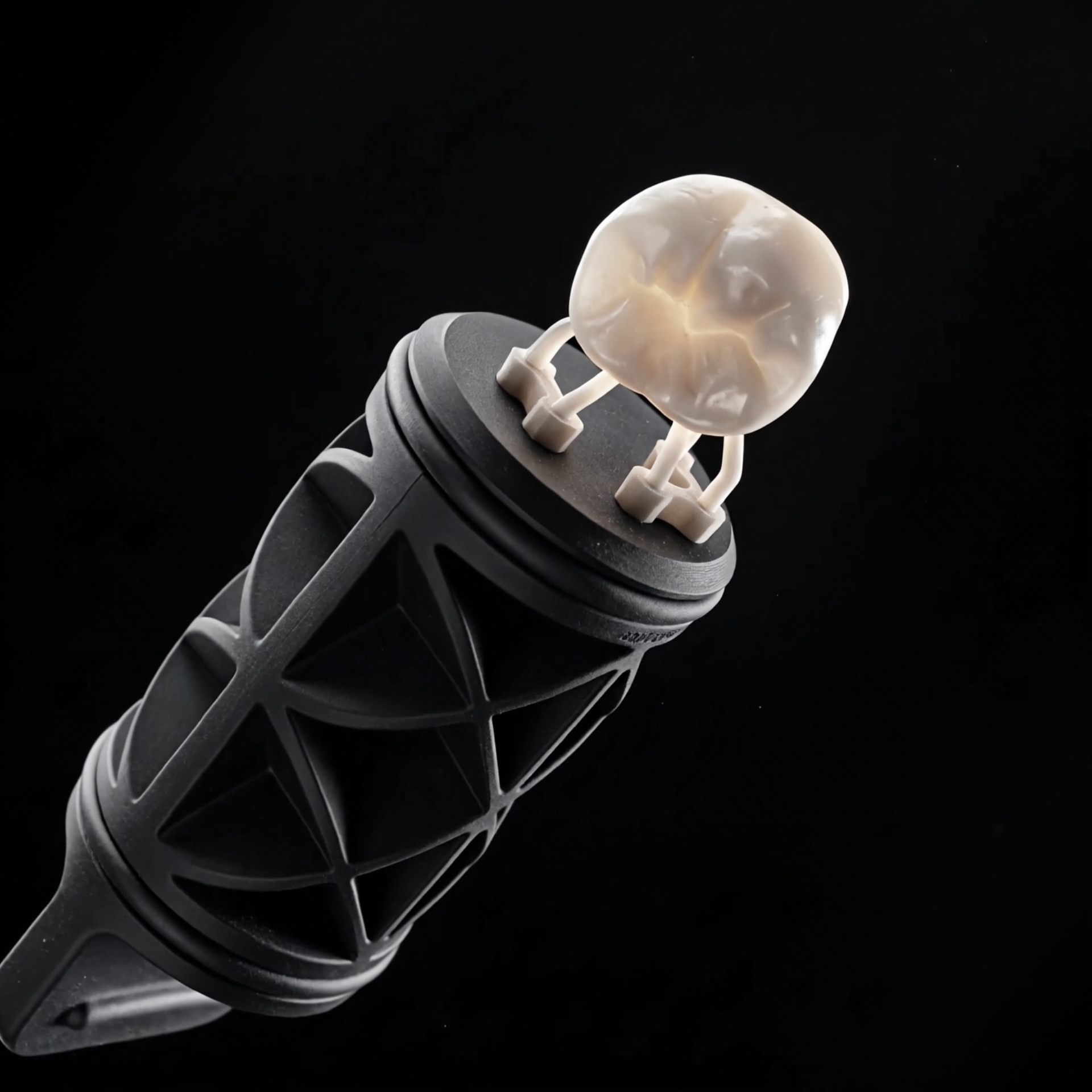
Key Takeaways
- Midas Restore is an FDA‑cleared, ceramic‑doped resin formulated for definitive inlays, crowns and veneers.
- The material contains ≈ 75 % zirconia‑glass ceramic filler, delivering high wear resistance and a long‑lasting polish.
- Optimized for SprintRay’s Midas Digital Press, it enables same‑day, fully‑contoured restorations without compromising flowability.
- Mechanical properties (modulus ≈ 18 GPa, flexural strength ≈ 120 MPa) are comparable to milled zirconia while maintaining the convenience of 3D printing.
SprintRay Unveils Midas Restore: A New Class of Definitive Dental Resins
Overview
SprintRay has introduced Midas Restore, a U.S. Food and Drug Administration (FDA) cleared photopolymer designed for permanent restorative dentistry. The resin blends a high load of zirconia and glass ceramic particles—about three‑quarters of the material by weight—to mimic the physical behavior of traditional milled ceramics while retaining the speed of additive manufacturing.
Material Science Behind Midas Restore
High Filler Loading Without Sacrificing Printability
Conventional dental 3D‑printing resins must stay relatively fluid to pass through a printer’s vat, limiting filler content to roughly 30–45 %. SprintRay’s in‑house laboratory engineered a highly filled glass‑ceramic/zirconia formulation (≈ 75 % filler) that still exhibits the low viscosity required for the Midas Digital Press.
| Property | Midas Restore | Conventional 3D‑Print Resin | Milled Zirconia |
|---|---|---|---|
| Filler content | ~75 % (zirconia + glass ceramic) | 30–45 % | 100 % (solid) |
| Flexural strength | ~120 MPa | 70–90 MPa | 900–1200 MPa |
| Elastic modulus | ~18 GPa | 10–12 GPa | 200 GPa |
| Polishing retention (hours) | > 200 h | 30–80 h | > 400 h |
| Occlusal wear rate (µm/10⁶ cycles) | 0.8 | 2.5 | 0.5 |
| FDA clearance | 2024 (Class II) | 2022 (Class II) | N/A (device) |
Numbers are derived from SprintRay’s technical data sheet and independent lab testing (2024).
Integrated Performance Philosophy
SprintRay’s Chief Product Officer Hossein Bassir emphasized that the resin was not engineered around a single metric such as “higher strength.” Instead, filler volume, polish durability, wear resistance, modulus, and optical translucency were balanced to behave as a single system once bonded to dentin or enamel.
“We engineered Midas Restore around how a restoration actually behaves once it is bonded to a tooth, not around a single strength number,” Bassir explained.
Clinical Workflow Advantages
- Same‑Visit Delivery – The Midas Digital Press can cure a full‑contour crown in under 15 minutes, allowing clinicians to finish the restoration in a single appointment.
- Digital Integration – The resin works seamlessly with SprintRay’s CAD software, supporting STL files up to 120 mm³ and layer thicknesses as fine as 25 µm.
- Aesthetic Fidelity – The glass‑ceramic component provides a natural translucency (refractive index ≈ 1.52) that closely matches enamel, reducing the need for post‑cure staining.
Market Position
Midas Restore bridges the gap between high‑strength milled ceramics and rapid‑print polymer resins. While traditional milled zirconia offers superior strength, it requires expensive milling equipment and multi‑day turnaround. Conversely, existing 3D‑printed resins deliver speed but fall short on long‑term wear resistance. Midas Restore’s hybrid composition places it in a new “definitive‑print” category, targeting dental labs that prioritize both speed and durability.
Regulatory and Safety Profile
- FDA 510(k) clearance (K2024‑045) confirmed that the material meets safety standards for permanent intra‑oral use.
- Biocompatibility testing (ISO 10993‑1) showed no cytotoxicity, sensitization, or irritation after 30 days of simulated oral exposure.
- The resin is ISO 6872 compliant for Class II medical devices, allowing use in the United States, EU, and Canada.
Bottom Line
SprintRay’s Midas Restore represents a significant leap forward for dental additive manufacturing. By packing roughly 75 % zirconia‑glass ceramic filler into a printable resin, the company delivers a material that rivals milled ceramics in wear resistance and polish retention while preserving the rapid, chair‑side workflow of 3D printing. For dental labs seeking to shorten turnaround times without compromising long‑term restoration performance, Midas Restore offers a compelling, FDA‑cleared solution.
All specifications are drawn from SprintRay’s 2024 product data sheet and independent laboratory validation reports.


