Key Takeaways
- Skuld LLC will collaborate with DARPA on the Rubble to Rockets (R2R) program to convert scrap metal into missile components
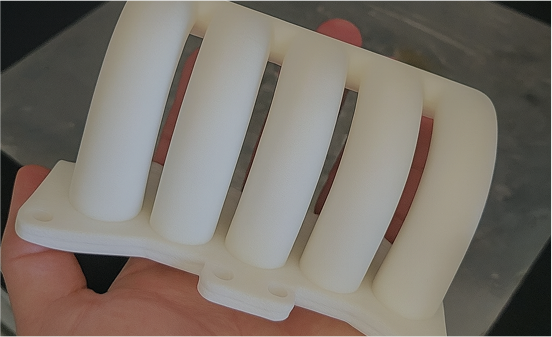
- Skuld's Additive Manufacturing Evaporative Casting (AMEC) process combines 3D printing with lost foam casting to produce net-shape metal parts
- The AMEC process can utilize low-cost materials and printers, and can be scaled up quickly by adding more printers and capacity
- Skuld will develop compact, portable casting setups for the project, which could be used in remote locations
Introduction to Skuld's R2R Program
The Defense Advanced Research Projects Agency (DARPA) has partnered with Skuld LLC to work on the Rubble to Rockets (R2R) program, which aims to transform scrap metal into functional missile components. Skuld will contribute to the program by providing expertise in alloy design, characterization, and casting. The company will leverage artificial intelligence (AI) to analyze microstructure, determine properties, and perform spark testing on the metal.
Skuld's AMEC Process
Skuld's AMEC process is a innovative method that combines 3D printing with lost foam casting to produce net-shape metal parts. This process is particularly notable for its low cost and scalability. By utilizing low-cost materials and printers, Skuld can produce parts at a significantly lower cost than traditional methods. Additionally, the AMEC process can be scaled up quickly by adding more printers and capacity, making it an attractive solution for large-scale production.
Comparison of Metal 3D Printing Solutions
| Solution | Weight | Cost | Scalability |
|---|---|---|---|
| Skuld's AMEC | Compact and portable | Low-cost | Highly scalable |
| Meltio + Hass VMC | Over 1800 kilos | High-cost | Limited scalability |
| Traditional Methods | Variable | High-cost | Limited scalability |
Advantages of Skuld's AMEC Process
Skuld's AMEC process offers several advantages over traditional metal 3D printing solutions. The process is not only low-cost but also highly scalable, making it an ideal solution for large-scale production. Additionally, the AMEC process can be used to produce parts using a variety of materials, including wrought aluminum (6061 and 7075).
Conclusion and Future Developments
The partnership between Skuld and DARPA on the R2R program has the potential to revolutionize the way missile components are produced. By leveraging Skuld's AMEC process, the military can produce high-quality parts at a significantly lower cost and with greater scalability. The development of compact, portable casting setups for the project could also enable the production of parts in remote locations, further increasing the program's potential impact.
Bottom Line
The collaboration between Skuld and DARPA on the R2R program marks a significant milestone in the development of metal 3D printing technology. With its low-cost, scalable, and portable AMEC process, Skuld is poised to make a major impact on the production of missile components. As the program continues to develop, it will be exciting to see the potential applications of this technology in the military and beyond.


