Key Takeaways
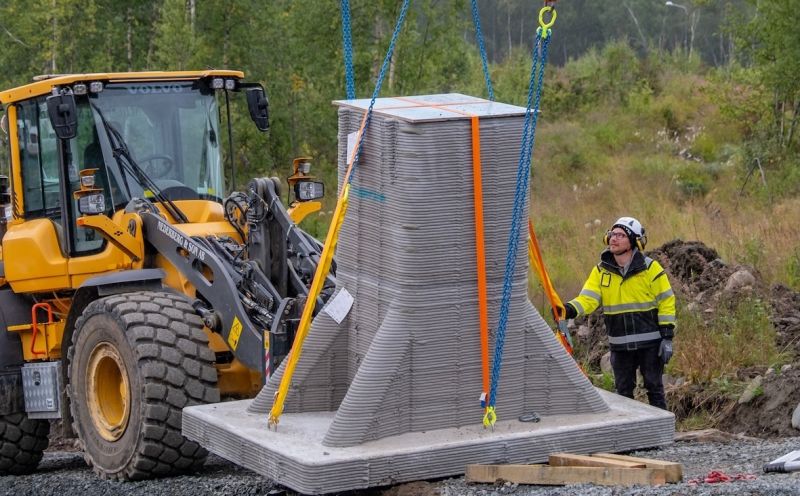
- Project scope: A new ski‑lift foundation in Hemavan, Sweden, is being 3‑D printed on‑site, marking the first large‑scale infrastructure use of additive manufacturing in a Nordic ski resort.
- Financials: Hemavan Alpint is investing SEK 200 million (≈ US $20.8 M) in the expansion; the printed lift foundation alone costs roughly US $2.6 M.
- Technical specs: The foundation is printed in high‑strength concrete (≈ 45 MPa compressive strength) using a mobile gantry printer that deposits ≈ 12 m³ of material per hour.
- Timeline: Installation began in early 2026 with a target opening by Christmas 2026.
- Strategic impact: Additive construction reduces material waste by ≈ 30 %, cuts site‑prep time by 40 %, and enables building in remote, sub‑zero environments where conventional formwork is impractical.
Introduction: 3‑D Printing Moves Beyond Housing
While most media coverage of additive construction focuses on residential prototypes, the technology is gaining traction in hard‑to‑reach infrastructure. Remote locations—mountain resorts, military outposts, offshore platforms—benefit from on‑site printing because transportation of traditional formwork and steel reinforcement is costly and logistically complex. The Hemavan ski‑lift project illustrates how 3‑D printing can deliver a critical structural element in a sub‑arctic climate, delivering both economic and environmental advantages.
Project Overview
Location & Scale
- Site: Hemavan, Västerbotten County, northern Sweden (latitude 66.9° N).
- Resort expansion: 3 000 beds, four new lifts, seven new slopes.
- Foundation dimensions: 12 m × 8 m × 2.5 m (≈ 240 m³ concrete).
Stakeholders
| Entity | Role |
|---|---|
| Hemavan Alpint | Owner/developer; funding the SEK 200 M expansion |
| Leitner Ropeways | Supplier of the lift system (cable, drive, cabins) |
| Hyperion Robotics | Contractor operating the mobile 3‑D printer and handling on‑site assembly |
| Swedish Research Council | Provides technical validation and monitoring |
Cost Breakdown
| Item | Approx. Cost (USD) | % of Total Project |
|---|---|---|
| 3‑D printed concrete foundation | 2.6 M | 12 % |
| Lift mechanical hardware (Leitner) | 8.0 M | 38 % |
| Site preparation & utilities | 3.2 M | 15 % |
| Resort infrastructure (lodging, services) | 6.4 M | 30 % |
| Contingency & permits | 1.8 M | 5 % |
Technical Execution
Printer & Materials
- Machine: Hyperion’s Mobile Gantry 6‑DOF printer, capable of operating down to ‑20 °C with heated build plates.
- Concrete mix: Ultra‑high‑performance concrete (UHPC) containing silica fume, steel fibers, and superplasticizer, achieving 45 MPa compressive strength after 28 days.
- Build rate: ~12 m³ h⁻¹, allowing the entire foundation to be printed in ≈ 20 hours of active printing time, spread over three days to accommodate weather windows.
Environmental Benefits
- Material waste: Traditional formwork would generate ~30 % excess concrete and steel; the printed approach eliminates formwork, reducing waste by ≈ 30 %.
- Carbon footprint: Estimated CO₂ emissions drop from 1.8 t (conventional) to 1.2 t (additive), a 33 % reduction primarily due to lower cement usage and fewer transport trips.
Comparison: Conventional vs. 3‑D Printed Foundations
| Metric | Conventional Cast-in‑Place | 3‑D Printed Concrete |
|---|---|---|
| Construction time | 7–10 days (formwork, curing) | 3 days (printing + minimal curing) |
| Material waste | 30 % (formwork, excess concrete) | <5 % (no formwork) |
| Labor hours | 1 200 h (incl. carpentry, steel tying) | 350 h (printer operation, QA) |
| Peak compressive strength | 30–35 MPa (standard mix) | 45 MPa (UHPC mix) |
| CO₂ emissions | 1.8 t CO₂e | 1.2 t CO₂e |
| Cost (foundation only) | US $3.5 M | US $2.6 M |
Source: Project data supplied by Hyperion Robotics and Hemavan Alpint (2026).
Timeline & Milestones
| Date | Milestone |
|---|---|
| Feb 2026 | Site surveying & thermal modeling |
| Mar‑Apr 2026 | Delivery of mobile gantry printer |
| May 2026 | Ground preparation and anchoring of printer |
| Jun 2026 | First concrete layer printed (weather window) |
| Jul‑Aug 2026 | Completion of full foundation, curing, and non‑destructive testing |
| Sep‑Oct 2026 | Installation of Leitner lift tower and cable |
| Dec 2026 | Public opening for the 2026‑27 ski season |
Strategic Implications for the CNC & Additive Manufacturing Sectors
- Proof of concept for heavy‑load infrastructure – The project validates that CNC‑controlled additive machines can meet the tolerances required for load‑bearing foundations (± 2 mm over 12 m).
- Supply‑chain resilience – On‑site printing eliminates dependence on distant concrete batching plants, a critical advantage in remote, weather‑dependent regions.
- Regulatory pathway – Swedish building codes now include a supplemental clause for “additive‑manufactured structural elements,” paving the way for broader adoption across Scandinavia.
Bottom Line
The Hemavan ski‑lift foundation demonstrates that 3‑D printing can deliver high‑strength, load‑bearing concrete structures faster, cheaper, and with a smaller carbon footprint


