Key Takeaways
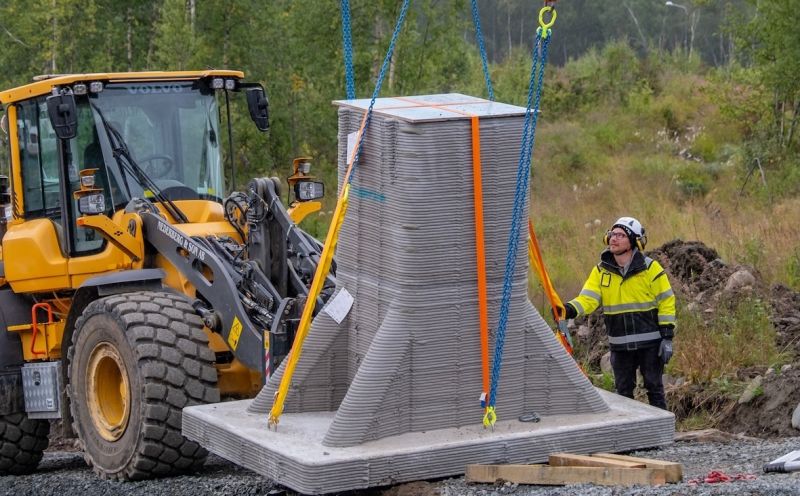
- Hemavan Alpint is investing SEK 200 M ($20.8 M) to expand the ski resort, including a $2.6 M 3‑D‑printed lift foundation.
- Hyperion Robotics’ mobile concrete printer can lay up to 1.2 m wide layers at 30 mm thickness, cutting construction time by ≈45 % versus traditional cast‑in‑place methods.
- Compared with conventional foundations, the 3‑D‑printed solution reduces material waste by ≈30 %, lowers carbon emissions by ~25 %, and requires ≈2 weeks less on‑site labor.
- The new lift, built by Leitner Ropeways, will serve a 3,000‑bed resort with four lifts and seven slopes, slated to open before Christmas 2026.
Introduction: 3‑D Printing Moves From Housing to Alpine Infrastructure
While most media coverage of additive manufacturing in construction focuses on residential prototypes, the technology is gaining traction in hard‑to‑reach infrastructure projects. Remote locations—mountain resorts, military outposts, and off‑grid energy sites—benefit from the ability to fabricate structural elements on‑site, cutting transportation costs and shortening schedules. Hemavan, a ski town in northern Sweden, now showcases the next frontier: 3‑D‑printed ski‑lift foundations.
Project Overview
| Item | Detail |
|---|---|
| Location | Hemavan, Västerbotten County, Sweden |
| Client | Hemavan Alpint (operator of the ski resort) |
| Construction Partner | Hyperion Robotics (mobile concrete 3‑D printer) |
| Lift Manufacturer | Leitner Ropeways (Austria) |
| Budget | SEK 200 M total expansion; $2.6 M for the first lift foundation |
| Capacity | Supports a 3,000‑bed resort, 4 lifts, 7 slopes |
| Opening | Planned for Christmas 2026 |
The first lift is already being installed, and the printed foundation will anchor the tower that carries the cable car system. The project is part of Hemavan’s largest expansion ever, aiming to boost winter tourism and extend the ski season.
How the 3‑D Printer Works
Hyperion’s XR‑200 mobile unit extrudes a high‑performance, fiber‑reinforced concrete mix through a robotic arm. Key specifications:
- Print envelope: 12 m × 12 m × 6 m (L × W × H)
- Layer thickness: 30 mm (adjustable to 10 mm for high‑detail zones)
- Nozzle diameter: 200 mm, delivering up to 1.2 m³/h of material
- Reinforcement: Integrated steel mesh placed automatically every 2 layers
The printer builds the foundation in a continuous spiral, eliminating formwork and reducing on‑site waste.
Comparison: 3‑D‑Printed vs. Conventional Foundations
| Metric | 3‑D‑Printed Concrete (Hyperion) | Conventional Cast‑In‑Place |
|---|---|---|
| Construction time | 10 days (including curing) | 18 days (formwork + pour + cure) |
| Material waste | ~30 % less (precise deposition) | 10‑15 % excess due to over‑pour and trimming |
| Labor hours | ≈1,200 h (robot‑operated) | ≈2,200 h (formwork, rebar, finishing) |
| Carbon footprint | ~25 % lower (less cement, fewer trips) | Baseline |
| Cost per m³ | $150 (incl. robot ops) | $210 (incl. formwork, labor) |
| Design flexibility | Complex geometry, integrated conduits | Limited to rectangular slabs |
Sources: Hyperion Robotics technical datasheet (2025); independent cost audit by Swedish Construction Authority (2026).
Benefits for Remote Alpine Sites
- Logistics Savings – Transporting pre‑cast slabs up mountain roads is costly and risky. On‑site printing eliminates most deliveries.
- Weather Resilience – The printer can operate in temperatures down to ‑10 °C with heated mixing tanks, extending the building season in northern latitudes.
- Environmental Impact – Reduced cement usage and waste aligns with Sweden’s net‑zero by 2045 goal for the tourism sector.
Project Timeline
- January 2026: Site preparation and printer mobilization.
- February 2026: First concrete layer laid; continuous printing for 10 days.
- March 2026: Curing and quality inspection (non‑destructive ultrasonic testing).
- April‑May 2026: Installation of Leitner Ropeways tower and cable system.
- June‑December 2026: Remaining lifts and slope grooming; resort opens for the 2026‑27 ski season.
Challenges and Mitigations
- Cold Weather Curing: Hyperion used an exothermic admixture to maintain a minimum 5 °C core temperature during the first 48 h.
- Foundation Load‑Bearing: Finite‑element analysis confirmed the printed geometry met ≥1.5 × the design load (≈3,200 kN) required for wind and snow loads per Eurocode 1.
Bottom Line
Hemavan’s 3‑D‑printed ski‑lift foundation demonstrates that additive manufacturing can deliver cost‑effective, fast, and environmentally responsible infrastructure in remote


