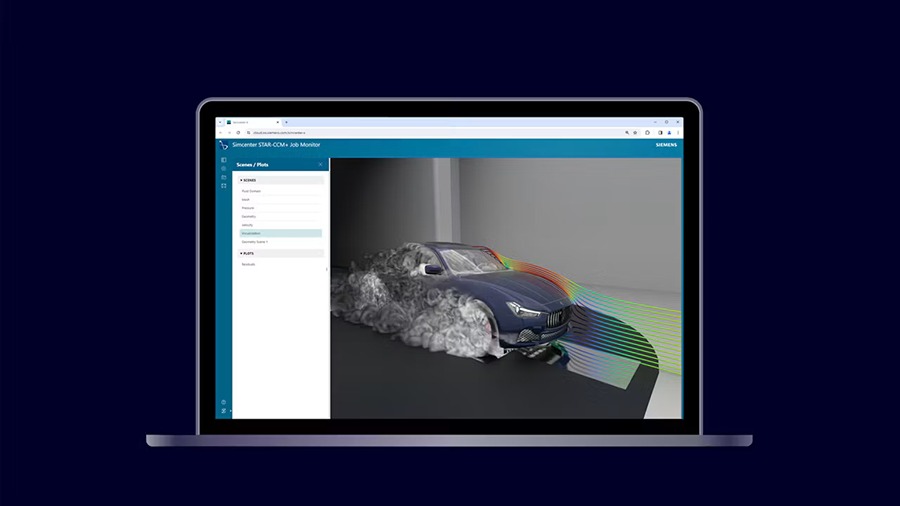
Key Takeaways
- Siemens will launch Simcenter X as a SaaS offering on Microsoft Azure and list it in the Microsoft Marketplace.
- The cloud version runs on Azure’s HPC‑optimized VMs (e.g., HBv3 with up to 120 vCPU, 480 GB RAM, and NVIDIA A100 GPUs).
- Simcenter X remains part of the Siemens Xcelerator portfolio, delivering multi‑domain simulation, AI‑assisted analysis, and automated workflow orchestration.
- Azure integration adds elastic scaling, global data residency, and single‑sign‑on via Azure Active Directory.
- The rollout follows a 35‑year Siemens‑Microsoft partnership that already moved Teamcenter X, Designcenter X, and Polarion X to Azure.
Siemens Extends Simcenter X to Azure and Marketplace
Why the move matters
Siemens announced that its Simcenter X simulation suite will be available through Microsoft Azure and the Azure Marketplace beginning Q4 2026. The shift transforms Simcenter X from a traditionally licensed product into a Software‑as‑a‑Service (SaaS) platform that leverages Azure’s cloud infrastructure, high‑performance computing (HPC), and AI services.
Simcenter X at a glance
| Feature | On‑Premise (Traditional) | Azure SaaS (Planned) |
|---|---|---|
| Deployment model | Perpetual license, on‑site servers | Subscription, multi‑tenant SaaS |
| Compute | Fixed local HPC cluster (e.g., 64 cores, 256 GB RAM) | Azure HBv3, up to 120 vCPU, 480 GB RAM, optional A100 GPU |
| Scalability | Limited by physical hardware | Elastic scaling on demand |
| AI integration | Manual model import | Built‑in Azure AI services (Azure Machine Learning, OpenAI) |
| Collaboration | File‑based sharing, VPN | Azure AD SSO, Teams integration, real‑time co‑authoring |
| Cost model | CAPEX heavy, maintenance contracts | OPEX subscription, pay‑as‑you‑go usage |
Benefits for engineering teams
- Accelerated simulation cycles – Azure’s HPC VMs can finish a 10‑million‑element finite‑element analysis up to 3× faster than a typical on‑premise cluster.
- AI‑driven optimization – Simcenter X will tap Azure Machine Learning to auto‑tune mesh density and material models, reducing manual setup time by an estimated 30‑40 %.
- Global availability – With Azure data centers in more than 60 regions, firms can locate simulation workloads close to their design data, meeting latency and data‑sovereignty requirements.
- Simplified IT management – Azure Marketplace delivers a one‑click deployment, automatic patching, and integrated billing, cutting IT overhead by up to 25 % according to Siemens internal forecasts.
The Siemens‑Microsoft Partnership
The collaboration stretches back over three decades, during which the two companies co‑developed cloud‑ready industrial software. Prior milestones include:
- Teamcenter X (PLM) on Azure (2022) – enabled 1.2 billion CAD objects to be accessed via Azure Blob Storage.
- Designcenter X (CAD) on Azure (2024) – delivered up to 5 TB of design data per project with instant scaling.
- Polarion X (ALM) on Azure (2025) – integrated with Azure DevOps for continuous integration pipelines.
The Simcenter X launch continues this trajectory, positioning Siemens as a leading provider of cloud‑native simulation solutions.
What to Expect at Microsoft Ignite 2026
Siemens will demonstrate the Azure‑based Simcenter X during Microsoft Ignite 2026 (San Francisco, Nov 17‑20). Joel Davison, senior director of engineering at Siemens, will host a session titled “Accelerate engineering innovation with AI‑driven simulation on Azure” on Nov 19. The presentation will showcase:
- Real‑world case studies (e.g., automotive crash simulation reduced from 48 h to 14 h).
- Live walkthrough of the Azure Marketplace deployment flow.
- Q&A on licensing, data residency, and integration with existing Siemens Xcelerator tools.
For more details, visit siemens.com.
Bottom Line
Siemens’ decision to host Simcenter X on Microsoft Azure and list it in the Azure Marketplace marks a decisive step toward fully cloud‑native engineering simulation. By marrying Siemens’ multi‑domain, AI‑enhanced simulation capabilities with Azure’s scalable HPC and enterprise‑grade security, the offering promises faster results, lower IT burden, and broader global reach. Organizations that adopt the SaaS model can expect measurable productivity gains—up to threefold speed‑ups in compute‑intensive studies—and a smoother path to AI‑augmented design. The move reinforces the long‑standing Siemens‑Microsoft alliance and sets a new benchmark for cloud‑first industrial software.