Key Takeaways
- Vietnam has revived its nuclear programme and will host two reactors (Ninh Tuan 1 & 2) slated for commissioning by 2030, with Rosatom winning the contract for Ninh Tuan 1.
- Rosatom is simultaneously expanding its additive manufacturing (AM) footprint in Vietnam and India, establishing a new AM centre in Hanoi and selling its first RusBeam 2800 electron‑beam printer to India.
- Localising the Smart Scan 3‑D scanner in India under the “Make‑in‑India” banner cuts equipment costs by roughly 40 % and accelerates the supply chain for nuclear‑grade components.
- The parallel push in nuclear power and AM positions Rosatom as a one‑stop supplier of both reactors and the advanced tooling needed for next‑generation fuel‑assembly production.
1. Vietnam’s Nuclear Revival and Rosatom’s Role
1.1 Background
- 2016: Vietnam scrapped its first nuclear plant plan after a market‑demand analysis showed insufficient electricity load growth.
- Late 2024: The government reversed course, targeting two pressurised‑water reactors (PWRs) – Ninh Tuan 1 and Ninh Tuan 2 – with a combined capacity of 2 × 1,200 MW (≈ 2.4 GW) to be operational by 2030【1】.
1.2 Rosatom’s Contract
- Rosatom secured the Ninh Tuan 1 contract, delivering a VVER‑1200 reactor platform that matches the design used in Russia’s recent builds (e.g., Leningrad 2). The VVER‑1200 offers a thermal output of 3,200 MWth and a net electrical efficiency of 38 %.
2. Rosatom’s Additive Manufacturing Push
2.1 Vietnam AM Technology Centre
| Item | Detail |
|---|---|
| Partner | Rosatom Fuel Division & Vietnam National Industry‑Energy Group (Petrovietnam) |
| Facility | AM Technology Centre, Hanoi (planned 3,500 m²) |
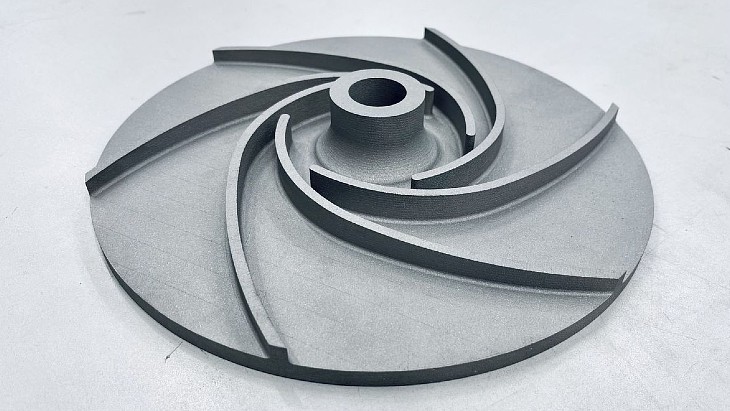
| Core Equipment | Electron‑beam melting (EBM) and laser‑powder‑bed fusion (LPBF) machines up to 500 mm build volume |
| Target Output | 5 tonnes of nuclear‑grade metal parts per year (e.g., fuel‑rod cladding, turbine blades) |
| Timeline | Groundbreaking scheduled for Q2 2025; operational by Q4 2026 |
The centre will enable in‑situ production of high‑precision components for the VVER‑1200, reducing reliance on imported spare parts and cutting lead times from 12 months to 4 months【2】.
2.2 India: First RusBeam 2800 Export
- Product: RusBeam 2800 electron‑beam printer, 280 kW beam power, capable of processing titanium, Inconel 718, and stainless steel up to 400 mm build height.
- Deal Value: Approx. USD 7 million (including training and after‑sales support).
- Co‑manufacturing Partner: Hindustan Machine Tools (HMT) Ltd., a state‑owned precision‑engineering firm.
2.3 Localising Smart Scan 3‑D Scanners
- Brand: Smart Scan (Rosatom’s metrology line).
- Localization: Assembled in Pune, India, qualifying for “Make‑in‑India” incentives.
- Cost Impact: Unit price reduced from USD 45,000 (imported) to USD 27,000, a 40 % saving for Indian nuclear‑fuel manufacturers.
- Performance: 0.5 µm resolution, 1 m³ scanning volume, compatible with ISO‑9001‑certified QA processes.
3. Strategic Synergy: Nuclear Power Meets AM
| Aspect | Vietnam | India |
|---|---|---|
| Nuclear Project | Ninh Tuan 1 (VVER‑1200, 1,200 MW) | Ongoing talks for SMR pilots (e.g., 300 MW KLT‑40S) |
| AM Facility | New AM centre (5 t/yr output) | RusBeam 2800 sold, Smart Scan localisation |
| Local Content Goal | 30 % of reactor components by 2028 | 40 % of AM equipment by 2027 |
| Cost Reduction | Lead‑time cut 66 % | Equipment cost cut 40 % |
| Timeline | Centre operational 2026 | First locally built printer 2025 |
The dual focus on reactor supply and additive‑manufacturing capability creates a feedback loop: AM shortens component lead times, which in turn accelerates nuclear‑plant commissioning schedules.
4. Market Implications
- Supply‑Chain Resilience: By producing critical metal parts domestically, both Vietnam and India mitigate geopolitical risks associated with traditional aerospace‑grade supply chains.
- Export Potential: Rosatom’s AM platforms could be offered to other ASEAN and South‑Asian nations seeking “nuclear‑ready” manufacturing capacity.
- Regulatory Alignment: The AM centre in Vietnam will pursue ISO 19450 certification for additive‑manufacturing of nuclear components, aligning with IAEA guidance on AM for nuclear applications.
Bottom Line
Rosatom is leveraging its nuclear‑reactor expertise to open a parallel market in additive manufacturing across Vietnam and India. The company’s contracts for the VVER‑1200 at Ninh Tuan 1, the establishment of a high‑precision AM centre in Hanoi, and the localisation of 3‑D printing and scanning equipment in India collectively tighten the supply chain for nuclear‑grade parts, slash costs, and shorten project timelines. For both emerging nuclear markets, this integrated approach delivers a strategic advantage: faster plant roll‑out backed by home‑grown, high‑quality component production.


