Key Takeaways
- Vietnam has revived its nuclear program, targeting the Ninh Thuận 1 & 2 plants for completion by 2030, with Rosatom awarded the contract for Ninh Thuận 1.
- Rosatom is leveraging the same VVER‑1200 reactor design in India, where it also promotes Small Modular Reactors (SMRs).
- The Russian state corporation is expanding additive‑manufacturing (AM) footholds in both Vietnam and India, establishing a new AM technology centre in Vietnam and localising 3‑D printing equipment in India.
- Recent product launches – the RusBeam 2800 electron‑beam printer and the Smart Scan 3‑D scanner – illustrate Rosatom’s “Make‑in‑India” strategy, cutting Indian buyer costs by roughly 40 %.
Vietnam’s Nuclear Re‑launch and Rosatom’s Role
Background
- 2016: Vietnam scrapped its first nuclear plant plan after market analysis showed insufficient electricity demand.
- Late 2024: The government reversed course, approving two VVER‑1200 units – Ninh Thuận 1 and 2 – with a target operational date of 2030.
Rosatom’s Contract
Rosatom, Russia’s nuclear‑energy giant, secured the engineering, procurement, and construction (EPC) contract for Ninh Thuận 1. The plant will use the VVER‑1200 design, delivering 1,200 MW of net electrical output and featuring passive safety systems that meet the latest IAEA standards.
Parallel Expansion in India
Nuclear Collaboration
- Russia and India have signed multiple agreements to supply the same VVER‑1200 model for future Indian projects, alongside joint development of SMRs ranging from 50 MW to 300 MW.
Additive Manufacturing (AM) Push
| Feature | RusBeam 2800 (India) | Smart Scan 3‑D Scanner (India) |
|---|---|---|
| Technology | Electron‑beam melting (EBM) | Structured‑light 3‑D scanning |
| Power / Energy | 2.8 kW electron beam | 0.5 W laser source |
| Build / Scan Volume | 300 × 300 × 500 mm³ | 500 × 500 × 500 mm³ |
| Layer Resolution | 30–100 µm | 20 µm |
| Material Compatibility | Ti‑6Al‑4V, Inconel, stainless steel | Metals & polymers (post‑process) |
| Localisation | Co‑manufactured with HMT Limited | Produced under “Make‑in‑India” label |
| Cost Impact | Reduces import cost by ~30 % | Cuts buyer price by ~40 % |
| Launch Date | Q1 2024 | Q3 2024 |
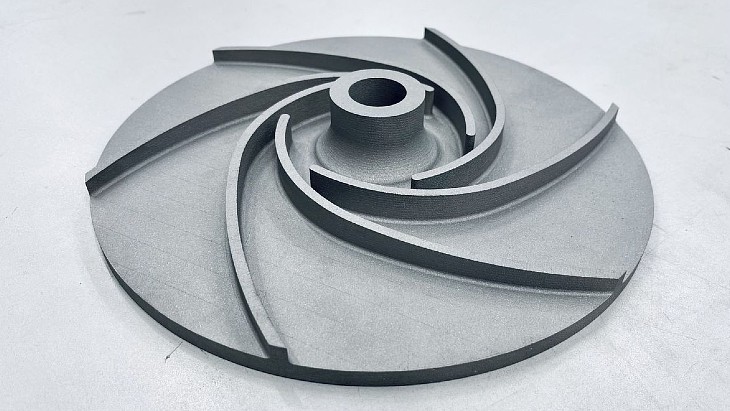
- RusBeam 2800: First Rosatom‑branded EBM printer sold abroad, enabling high‑density titanium parts for aerospace and nuclear components.
- Smart Scan: A portable scanner that delivers sub‑20 µm accuracy, now manufactured in India to qualify for the “Make‑in‑India” incentive, slashing equipment prices for domestic users.
AM Infrastructure in Vietnam
During the state summit between President To Lâm and President Vladimir Putin, Rosatom’s Fuel Division and Petrovietnam signed a memorandum of understanding (MoU) to create a Vietnam Additive Manufacturing Technology Centre. Planned features include:
- Two industrial‑scale EBM printers (up to 2 kW power) for turbine‑blade and fuel‑rod production.
- Materials lab capable of processing titanium, nickel‑based superalloys, and zirconium – critical for nuclear fuel cycles.
- Training hub for up to 150 engineers annually, targeting a skilled AM workforce by 2027.
Strategic Rationale
- Supply‑Chain Resilience: Local AM reduces reliance on imported spare parts for VVER‑1200 reactors, shortening lead times from 12–18 months to under 6 months.
- Cost Efficiency: In‑country production of scanners and printers trims equipment costs by 30‑40 %, improving project economics for both Vietnam and India.
- Technology Transfer: Partnerships with HMT Limited and Petrovietnam embed Russian AM expertise within domestic engineering ecosystems, fostering long‑term collaboration.
Bottom Line
Rosatom is synchronising its nuclear expansion with a robust additive‑manufacturing strategy across Vietnam and India. By coupling VVER‑1200 reactor contracts with locally built AM facilities and “Make‑in‑India” equipment, the Russian state corporation not only secures a foothold in two fast‑growing nuclear markets but also creates a self‑sufficient supply chain that cuts costs and accelerates deployment timelines. This dual‑track approach positions Rosatom as a one‑stop solution for next‑generation nuclear power and the advanced manufacturing capabilities that modern reactors demand.


