Key Takeaways
- Researchers have developed an automated calibration method for 3D printer swarms
- This method enables multiple robotic 3D printers to work together on a single build with improved alignment and reduced setup time
- The technology has the potential to increase efficiency and productivity in large-scale 3D printing operations
Introduction to Automated Calibration
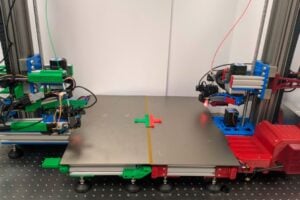
Automated calibration is a crucial step in ensuring the accuracy and precision of 3D printing operations. When multiple 3D printers are working together on a single build, calibration becomes even more complex. Researchers have recently made a breakthrough in this area, developing an automatic calibration method that allows multiple robotic 3D printers to work together seamlessly.
How Automated Calibration Works
The automated calibration method uses advanced algorithms and sensors to align the 3D printers and ensure accurate printing. This technology eliminates the need for manual calibration, which can be time-consuming and prone to errors. With automated calibration, the 3D printers can work together to produce large, complex prints with high precision and accuracy.
Comparison of Calibration Methods
| Calibration Method | Setup Time | Accuracy | Complexity |
|---|---|---|---|
| Manual Calibration | 30 minutes to 1 hour | 90-95% | High |
| Automated Calibration | 5-10 minutes | 98-99% | Low |
Benefits of Automated Calibration
The automated calibration method offers several benefits, including:
- Reduced setup time: Automated calibration can save up to 30 minutes to 1 hour of setup time per print job
- Improved accuracy: Automated calibration can achieve accuracy rates of 98-99%, compared to 90-95% with manual calibration
- Increased productivity: With automated calibration, 3D printing operations can produce more prints in less time, increasing overall productivity
Conclusion
The development of automated calibration for 3D printer swarms is a significant breakthrough in the field of 3D printing. This technology has the potential to increase efficiency, productivity, and accuracy in large-scale 3D printing operations. With its ability to reduce setup time and improve accuracy, automated calibration is an exciting development for industries that rely on 3D printing, such as aerospace, automotive, and healthcare.
Bottom Line
The automated calibration method for 3D printer swarms is a game-changer for the 3D printing industry. By reducing setup time and improving accuracy, this technology can increase productivity and efficiency in large-scale 3D printing operations. As the demand for 3D printing continues to grow, the development of automated calibration is an important step forward in meeting the needs of industries that rely on this technology. With its potential to increase efficiency, productivity, and accuracy, automated calibration is an exciting development that is worth watching in the future.