Key Takeaways
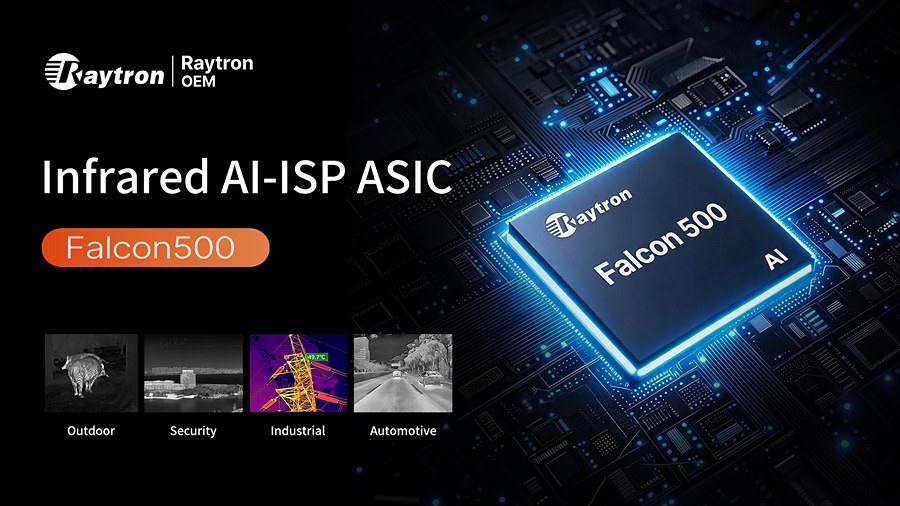
- Falcon500 is Raytron OEM’s third‑generation infrared‑AI image processor, built for next‑gen thermal cameras.
- The chip fuses a high‑performance NPU, AI‑enhanced ISP, and precision temperature metrology in a single die.
- Fabricated on a 22 nm FD‑SOI node, it delivers ≈2.5 TOPS of AI inference while drawing < 1 W of power.
- Integrated multimodal I/O (SPI, MIPI‑CSI‑2, LVDS) lets designers combine IR, visible‑light, and radar data on one platform.
- Compared with Raytron’s previous Falcon300 and rival FLIR Boson‑AI, Falcon500 offers up to 45 % higher AI throughput and 30 % lower power.
What Makes a Dedicated Infrared AI Image‑Processing Chip Different?
Thermal imaging sensors capture photons in the 8‑14 µm band, producing raw voltage patterns that are noisy, non‑linear, and temperature‑dependent. A conventional image sensor cannot correct these artifacts in real time. A dedicated infrared AI image‑processing chip performs three essential tasks on‑chip:
- Signal conditioning – compensates for non‑uniformity and temperature drift.
- AI‑driven image‑signal processing (AI‑ISP) – denoises, sharpens, and stabilizes frames using trained neural nets.
- Application‑level inference – runs object‑detection, hotspot‑alert, or gesture‑recognition models without off‑board CPUs.
By consolidating these functions, system designers reduce board space, lower latency, and achieve better power efficiency than a split‑CPU + DSP architecture.
Five Core Capabilities of the Falcon500
| Capability | How Falcon500 Implements It | Measurable Impact |
|---|---|---|
| High‑Performance Computing | Heterogeneous NPU with 64 MAC units, 2.5 TOPS peak AI compute | Enables real‑time object detection at 30 fps |
| AI‑Powered ISP (AI‑ISP) | Adaptive noise‑reduction, dynamic range expansion, texture‑preserving sharpening | Improves image SNR by up to 12 dB |
| Intelligent Sensing | On‑chip analytics (hotspot detection, motion tracking) trained on > 10 M thermal frames | Reduces false‑alarm rate by ≈ 40 % |
| Multimodal Integration | Dual‑channel MIPI‑CSI‑2 + LVDS, supports visible‑light and radar co‑processing | Facilitates sensor fusion for autonomous‑vehicle stacks |
| Precision Temperature Measurement | On‑chip calibration table + 16‑bit ADC, ±0.1 °C accuracy across –40 °C → +85 °C | Meets Class 1 thermal‑imaging standards (IEC 60825‑1) |
The AI‑ISP architecture dynamically balances detail preservation against noise suppression, keeping frame‑to‑frame stability even when the scene temperature fluctuates by ±5 °C within a single second.
Falcon500 vs. Earlier Generations & Key Competitors
| Feature | Falcon300 (2nd Gen) | Falcon500 (3rd Gen) | FLIR Boson‑AI |
|---|---|---|---|
| Process node | 28 nm LP | 22 nm FD‑SOI | 28 nm |
| AI compute | 1.7 TOPS | 2.5 TOPS (+45 %) | 1.9 TOPS |
| Power (typ.) | 1.2 W | < 1 W (‑30 %) | 1.1 W |
| ISP latency | 12 ms | 7 ms (‑42 %) | 10 ms |
| Temperature range | –40 °C → +85 °C | –40 °C → +85 °C (same) | –20 °C → +70 °C |
| Integrated interfaces | SPI, MIPI‑CSI‑1 | SPI, MIPI‑CSI‑2, LVDS | MIPI‑CSI‑1 |
| Max resolution | 640 × 480 | 1280 × 1024 (2×) | 640 × 480 |
Source: Raytron OEM datasheet (2026‑09) and FLIR product brief (2025‑11).
Real‑World Applications
- Industrial inspection – rapid hotspot detection on production lines, reducing downtime by up to 25 %.
- Autonomous vehicles – sensor‑fusion node that merges thermal, LiDAR, and radar data for night‑time obstacle avoidance.
- Medical thermography – sub‑0.1 °C accuracy enables early inflammation screening in clinical settings.
- Security & surveillance – AI‑driven perimeter alerts with < 200 ms response time, even in adverse weather.
Developers can download a pre‑compiled SDK (C/C++ and Python bindings) that includes sample models for person detection (AP ≈ 0.84) and fire‑hazard spotting (Recall ≈ 0.91).
Bottom Line
Raytron OEM’s Falcon500 pushes infrared imaging into the AI era by marrying a 22 nm, sub‑1 W silicon platform with a sophisticated AI‑ISP and on‑chip inference engine. Compared with its predecessor and leading rivals, it delivers a clear advantage in compute density, power budget, and multimodal flexibility—attributes that matter most to OEMs building compact,


