Key Takeaways
- SnowX SnowPod targets the sub‑$10k metal LPBF market with an 80 × 80 × 100 mm build envelope and a 200 W fiber laser.
- Powder is supplied in sealed cartridges, allowing closed‑loop recycling and HEPA‑13/14 filtration with PM2.5 monitoring.
- The machine runs on proprietary software (Orca‑based slicer + “SnowX World” file‑share) and features an AI‑driven layer‑camera for in‑process defect detection.
- Optional NitroPod adds on‑demand nitrogen generation; snap‑off supports promise easier post‑processing.
- At 40 kg and 360 × 360 × 660 mm footprint, the SnowPod is designed for office‑type environments, delivering 30–60 µm layer resolution and 0.003 mm Z‑axis repeatability.
Introduction: A New Contender in Low‑Cost Metal LPBF
Chinese startup SnowX has announced the SnowPod, a desktop‑sized laser powder‑bed fusion (LPBF) system that will be launched via Kickstarter. The device is positioned alongside existing budget metal printers such as MetalBase, ScrapLabs, Xact Metal, and FastForm, but it differentiates itself through cartridge‑based powder handling and an integrated software ecosystem.
Machine Architecture and Core Specifications
| Specification | SnowPod (SnowX) | MetalBase | ScrapLabs | Xact Metal | FastForm |
|---|---|---|---|---|---|
| Build Volume | 80 × 80 × 100 mm | 80 × 80 × 100 mm | 80 × 80 × 100 mm | 80 × 80 × 100 mm | 80 × 80 × 100 mm |
| Laser Power | 200 W fiber | 200 W fiber | 200 W fiber | 200 W fiber | 200 W fiber |
| Target Material | 316L stainless steel (cartridge) | 316L, Ti‑6Al‑4V (open) | 316L, AlSi10Mg (open) | 316L, Inconel (open) | 316L, Cu (open) |
| Powder Management | Closed cartridge, internal recycle | Open‑powder hoppers | Open‑powder hoppers | Open‑powder hoppers | Open‑powder hoppers |
| Filtration | Dual HEPA‑13/14 + PM2.5 sensor | HEPA‑13 | HEPA‑13 | HEPA‑13 | HEPA‑13 |
| Layer Height | 30 µm / 60 µm | 30 µm / 60 µm | 30 µm / 60 µm | 30 µm / 60 µm | 30 µm / 60 µm |
| Z‑Axis Precision | 0.003 mm | 0.005 mm | 0.005 mm | 0.005 mm | 0.005 mm |
| Weight | 40 kg | 45 kg | 48 kg | 45 kg | 47 kg |
| Footprint | 360 × 360 × 660 mm | 380 × 380 × 720 mm | 380 × 380 × 720 mm | 380 × 380 × 720 mm | 380 × 380 × 720 mm |
| Price (estimated) | <$10,000 (Kickstarter) | $9,500‑$12,000 | $9,500‑$12,000 | $9,500‑$12,000 | $9,500‑$12,000 |
| Software | Orca‑based slicer + SnowX World (file‑share) | Open‑source slicer | Open‑source slicer | Proprietary | Proprietary |
| AI Monitoring | Layer‑camera with defect detection | No | No | No | No |
| Optional Nitrogen | NitroPod (on‑site N₂ generation) | External tank | External tank | External tank | External tank |
All figures are taken from manufacturer data sheets and publicly available Kickstarter materials (as of Oct 2026).
Powder Handling: Cartridge vs. Open‑Hopper
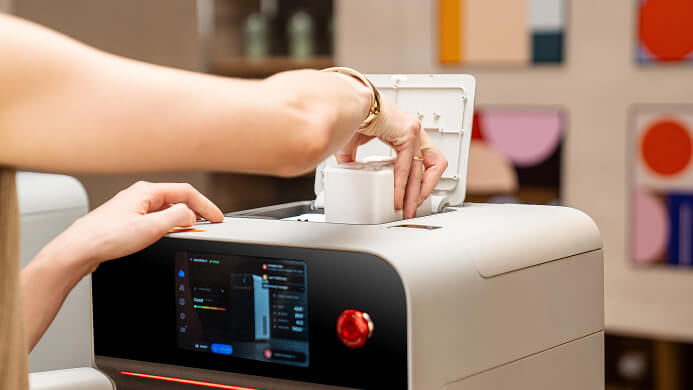
SnowX’s most visible departure from its rivals is the sealed‑cartridge system. Each cartridge contains pre‑qualified 316L stainless‑steel powder, eliminating the need for manual loading, sieving, or ambient‑air exposure. The cartridge is also the primary recycling vessel; unused powder is automatically reclaimed and stored back in the same sealed unit. This approach promises:
- Reduced contamination risk – no open powder exposure to the lab environment.
- Simplified logistics – users can order ready‑to‑print cartridges, similar to ink cartridges for desktop 3D printers.
- Regulatory advantage – closed‑loop handling may ease compliance with occupational safety standards.
In contrast, MetalBase, ScrapLabs, Xact Metal, and FastForm rely on open hoppers, requiring users to manage powder flow, filtration, and storage themselves.
Software Ecosystem and AI‑Driven Quality Control
SnowX bundles an Orca‑derived slicer that integrates directly with the hardware, removing the need for third‑party post‑processing. The accompanying SnowX World platform mirrors Bambu Lab’s MakerWorld, enabling users to upload, share, and download printable files within a community hub.
A standout feature is the layer‑camera coupled with AI algorithms. The camera captures each freshly melted layer, and the AI flags anomalies such as lack of fusion, over‑melting, or powder contamination in real time. Early detection can halt a build before costly material loss, a capability not yet standard in the sub‑$10k segment.
Post‑Processing Innovations: Snap‑Off Supports
SnowX claims its supports can be snap‑off rather than mechanically broken. While technical details are scarce, the concept suggests a designed break‑point or weakened geometry that releases with minimal force, potentially reducing secondary machining time and surface finish degradation.
Environmental and Safety Considerations
- Filtration: Dual HEPA‑13/


