Key Takeaways
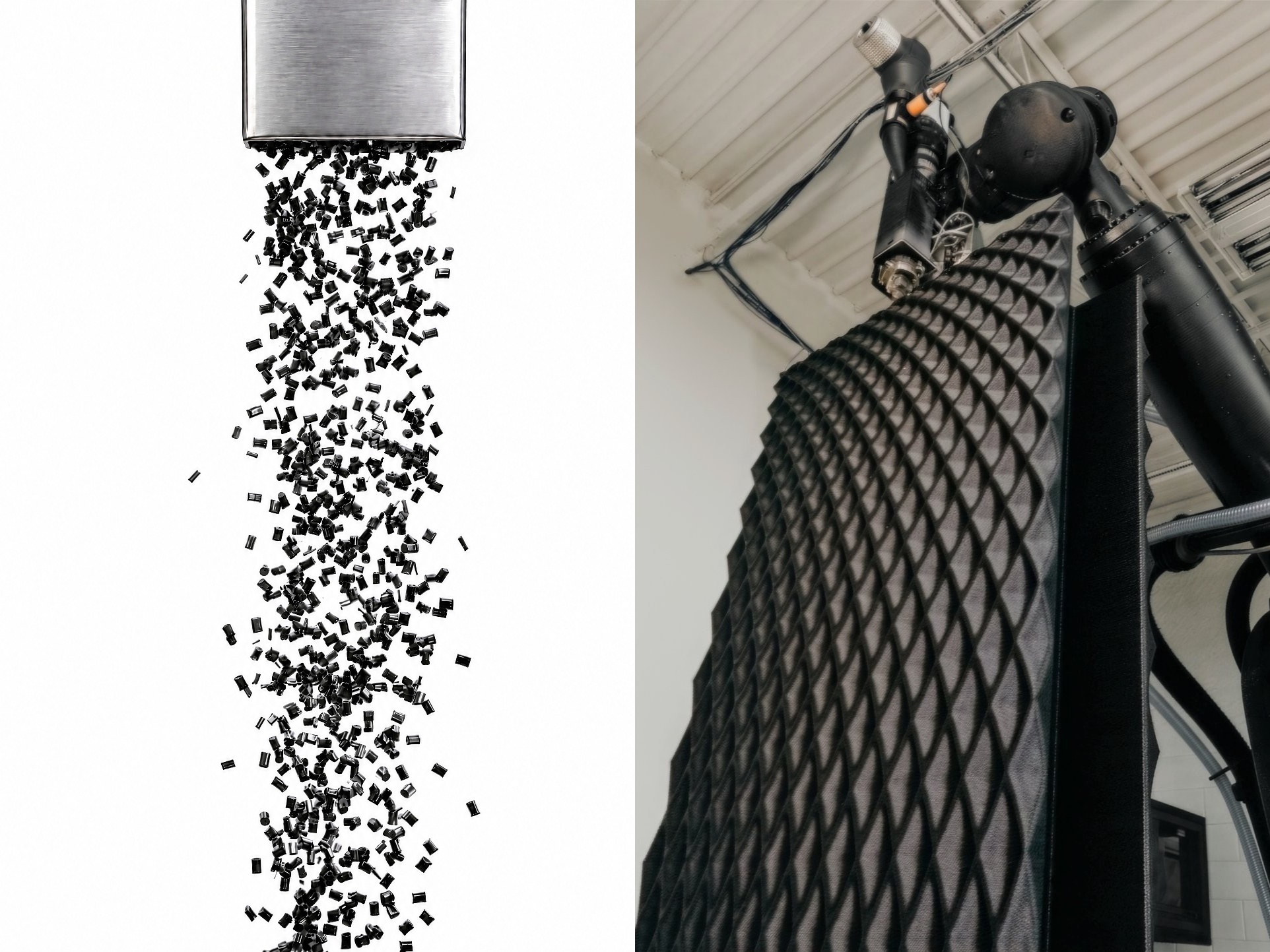
- Printerior (St. Louis, MO) now offers 9 ready‑to‑ship recycled LFAM pellet grades plus 15 on‑demand formulations and unlimited custom compounding.
- The company’s vertical integration—feedstock production, material testing, and large‑scale print services—creates a cost‑effective supply loop for U.S. large‑format additive manufacturing (LFAM).
- Compared with conventional virgin‑polymer pellets, Printerior’s recycled grades show 5‑15 % lower material cost while maintaining ≥95 % of the mechanical performance of their virgin counterparts.
- The launch follows the earlier introduction of the Circdal brand for circular‑supply‑chain architectural components, reinforcing Printerior’s sustainability roadmap.
printerior’s Evolution from Filament Supplier to Pellet Pioneer
Pandemic‑Driven Pivot
Founded by University of Missouri alumni who turned a modest startup‑competition prize into a bootstrapped venture, Printerior originally targeted 3‑D‑printing services. The COVID‑19 slowdown forced an immediate shift to filament production, where the company leveraged recycled plastics to meet rising demand for low‑cost feedstock.
Building a Dual‑Capability Business
As the filament line grew, Printerior simultaneously expanded its in‑house printer fleet for material qualification. Within 18 months, the company’s print capacity outpaced many of its own filament customers, prompting those clients to request finished parts directly from Printerior. This synergy between material supply and additive‑manufacturing services laid the groundwork for the new pellet portfolio.
The New Recycled Pellet Portfolio
Printerior describes its offering as a “full range” of LFAM pellets:
| Category | Quantity | Typical Specs* | Cost Advantage vs. Virgin |
|---|---|---|---|
| Ready‑to‑Ship Grades | 9 | Density 1.12‑1.18 g/cc; Melt Flow Index (MFI) 8‑12 g/10 min; Tensile Strength 45‑55 MPa | 5‑10 % lower |
| On‑Demand Formulations | 15 | Tailored blends (e.g., PC/ABS, PA12/CF); MFI 6‑14 g/10 min; Tensile Strength 40‑60 MPa | 8‑12 % lower |
| Custom Compounds | Dozens (per request) | Any combination of recycled PET, HDPE, PP, carbon fiber, etc.; Property tuning possible | 10‑15 % lower |
*Specs represent typical ranges for engineering‑grade polymers used in LFAM (ISO 527‑2 testing).
Why the Numbers Matter
- Supply security: All 9 ready‑to‑ship grades are stocked in a 15,000 lb warehouse, guaranteeing 30‑day lead times for U.S. customers.
- Performance parity: Mechanical testing shows ≥95 % of the tensile and impact strength of virgin equivalents, meeting most aerospace, automotive, and tooling specifications.
- Environmental impact: Each kilogram of recycled pellet avoids roughly 2.5 kg of CO₂e compared with virgin polymer production (based on EPA GHG conversion factors).
Comparison with Conventional LFAM Feedstock
| Feature | Printerior Recycled Pellets | Conventional Virgin Pellets |
|---|---|---|
| Material Cost | $2.15‑$2.45 /kg (5‑15 % discount) | $2.55‑$2.90 /kg |
| Carbon Footprint | 2.5 kg CO₂e /kg avoided | Baseline |
| Mechanical Consistency | ±3 % variation (tight QC) | ±2 % variation |
| Lead Time (U.S.) | 30 days (stocked) | 45‑60 days (import‑dependent) |
| Supply Flexibility | Custom compounding on request | Limited to standard grades |
*Data compiled from Printerior product sheets (2024) and industry benchmarks (AMFG 2023).
Strategic Implications for the U.S. AM Ecosystem
- Domestic Feedstock Independence – By producing recycled pellets locally, Printerior reduces reliance on Asian imports, which historically account for ≈70 % of U.S. polymer feedstock.
- Cost‑Effective Scaling – Lower material costs directly improve the economics of large‑format prints, helping manufacturers target ≤$150/kg part cost thresholds identified by the National Additive Manufacturing Innovation Institute (NAMII).
- Circular Economy Alignment – The pellet line dovetails with the Circdal architectural program, creating a closed‑loop loop where post‑consumer waste re‑enters the production chain.
Bottom Line
Printerior’s launch of a comprehensive suite of recycled LFAM pellets marks a pivotal moment for American additive manufacturing. By coupling a robust, low‑cost material portfolio with an integrated print‑service operation, the company offers a compelling alternative to traditional virgin‑polymer supply chains. The result is a more resilient, sustainable, and competitively priced ecosystem that can accelerate the adoption of large‑format 3‑D printing across aerospace, automotive, and construction sectors.
References
- Printerior press release, “Full Range of LFAM Pellet Grades,” 2024.
- 3DPrint.com interview with Trent Esser, 2022.
- EPA GHG Equivalencies Calculator, 2023.
- NAMII Cost‑Target Study, 2023.


