Key Takeaways
- A new patent proposes a method for recycling thermoset polymers into 3D printing filaments
- Thermoset polymers are currently non-recyclable and contribute to significant waste
- The proposed method could reduce waste and provide a sustainable source of 3D printing materials
- The recyclable thermoset filaments could have similar properties to traditional thermoset materials
- The development of recyclable thermoset filaments could have significant environmental and economic benefits
Introduction to Thermoset Polymers
Thermoset polymers are a type of plastic that is commonly used in various industries, including aerospace, automotive, and construction. They are known for their high strength, durability, and resistance to heat and chemicals. However, thermoset polymers are currently non-recyclable, which means that they contribute to significant waste and environmental pollution.
The Proposed Recycling Method
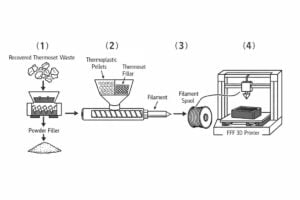
The proposed patent outlines a method for recycling thermoset polymers into 3D printing filaments. The method involves breaking down the thermoset polymers into smaller particles, which are then processed into a filament that can be used in 3D printing. The resulting filament is said to have similar properties to traditional thermoset materials, including high strength and durability.
Comparison of Recycling Methods
| Method | Description | Benefits | Limitations |
|---|---|---|---|
| Mechanical Recycling | Breaking down thermoset polymers into smaller particles | Simple and cost-effective | Limited to certain types of thermoset polymers |
| Chemical Recycling | Breaking down thermoset polymers into their chemical components | Can be used for a wide range of thermoset polymers | Complex and expensive process |
| Proposed Method | Breaking down thermoset polymers into smaller particles and processing into 3D printing filaments | Can produce high-quality 3D printing filaments with similar properties to traditional thermoset materials | Still in the development stage and requires further testing |
Potential Benefits
The development of recyclable thermoset filaments could have significant environmental and economic benefits. It could reduce the amount of waste generated by thermoset polymers and provide a sustainable source of 3D printing materials. Additionally, the use of recyclable thermoset filaments could reduce the cost of 3D printing and make it more accessible to a wider range of industries and applications.
Bottom Line
The proposed patent for recycling thermoset polymers into 3D printing filaments is a significant development in the field of 3D printing and sustainability. If successful, it could provide a sustainable source of 3D printing materials and reduce the environmental impact of thermoset polymers. With further testing and development, recyclable thermoset filaments could become a game-changer in the 3D printing industry, enabling the creation of high-quality products while minimizing waste and environmental pollution. As the industry continues to evolve, it is likely that we will see more innovative solutions for recycling and reusing thermoset polymers, driving growth and sustainability in the years to come.