Key Takeaways
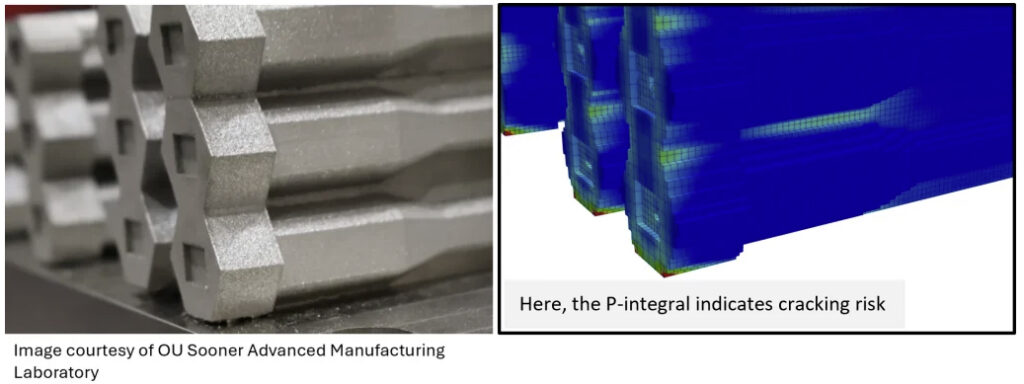
- PanOptimization's PanX software has been recognized for its benefits in predicting errors and simulating parts in additive manufacturing.
- A research paper published in the International Journal of Advanced Manufacturing Technology highlights the use of PanX in predicting outcomes in LPBF builds.
- The research was supported by an $8.7 million AFRL grant related to additive manufacturing and sustainment.
- PanX software can be used to optimize tool paths, check for distortion, and more.
- The software is available in LPBF and DED flavors.
Introduction to PanOptimization
PanOptimization is a company founded by Pan Michaleris, offering an FEA optimization tool that can be used to predict errors and simulate parts in additive manufacturing. Their software, PanX, is designed to optimize tool paths, check for distortion, and more, and is available in LPBF and DED flavors.
Research Paper and AFRL Grant
A research paper titled "Part scale prediction of residual stress through thermomechanical modeling of additively manufactured Ti-6Al-4V" was published in the International Journal of Advanced Manufacturing Technology. The paper was written by a team of experienced researchers from the Air Force Life Cycle Management Center, Tinker Air Force Base, Oklahoma City Air Logistics Center, Sooner Advanced Manufacturing Laboratory, University of Oklahoma, and Air Force Research Laboratory (AFRL). The research was supported by an $8.7 million AFRL grant, FA8650-23-C-5701, related to additive manufacturing and sustainment.
Comparison of Additive Manufacturing Methods
| Method | Description | Advantages |
|---|---|---|
| LPBF (Laser Powder Bed Fusion) | A method of additive manufacturing that uses a laser to melt and fuse metal powder | High accuracy, low porosity |
| DED (Directed Energy Deposition) | A method of additive manufacturing that uses a focused beam of energy to melt and deposit metal | High deposition rate, low cost |
Benefits of PanX Software
The PanX software offers several benefits, including the ability to predict outcomes in LPBF builds, optimize tool paths, and check for distortion. The software can be used to move beyond trial-and-error builds and toward physics-based models that support qualification, certification, and production reliability.
Conclusion
The recognition of PanOptimization's PanX software by the AFRL is a significant milestone in the development of additive manufacturing technology. The software has the potential to improve the accuracy and reliability of additive manufacturing processes, and its use is expected to become more widespread in the industry.
Bottom Line
The use of PanX software in additive manufacturing has the potential to revolutionize the industry by providing a more accurate and reliable method of predicting outcomes and optimizing tool paths. With the support of the AFRL and the publication of research papers highlighting its benefits, PanOptimization is poised to become a leader in the field of additive manufacturing.


