Key Takeaways
- The US needs to secure its supply chains for energy and power generation components, particularly large format metal parts.
- Oak Ridge National Laboratory (ORNL) is addressing this issue by combining advanced manufacturing techniques, including additive manufacturing (AM) and powder metallurgical hot isostatic pressing (PM-HIP).
- ORNL has successfully produced a component, similar to a turbine blade, using a 2,000-pound canister made with multiple forms of 3D printing and incorporated into the standard PM-HIP process.
- The combination production method enables the creation of complex geometries and unlocks the use of advanced alloys.
Introduction to the Supply Chain Challenge
The US is facing a significant challenge in securing its supply chains for energy and power generation components, particularly large format metal parts. This is a critical issue, as the current supply chains are at risk of shortage, which could have severe consequences for the energy sector. To address this challenge, ORNL is exploring innovative manufacturing techniques, including the combination of AM and PM-HIP.
Combining AM and PM-HIP
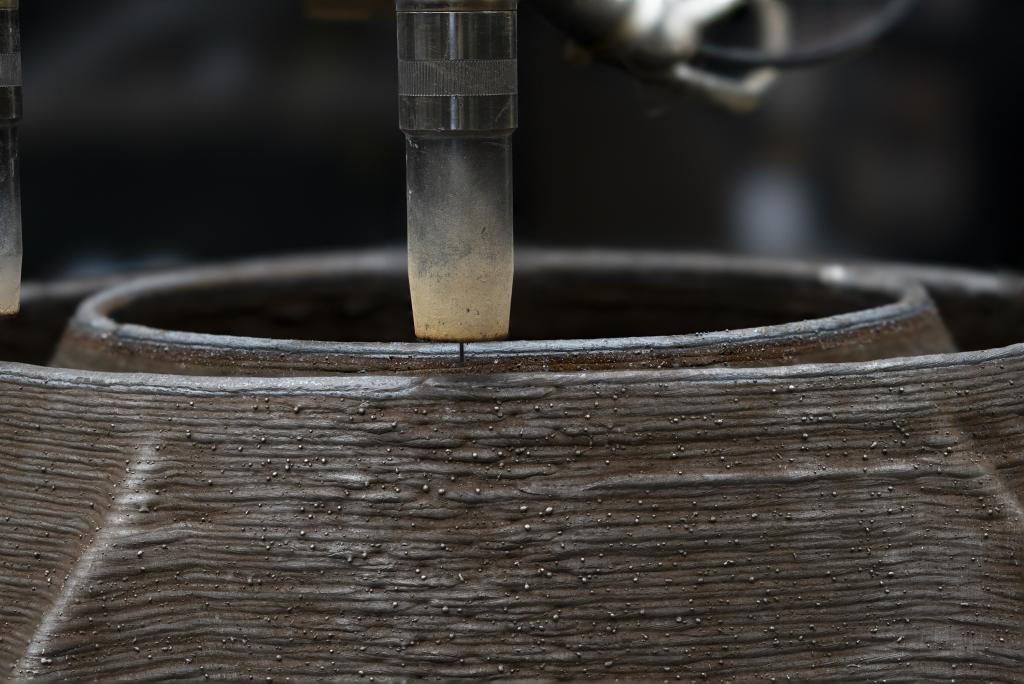
ORNL's approach involves using wire-arc additive manufacturing (WAAM) to produce large vessels that can be used for PM-HIP. This method utilizes pressure-sealed vessels and furnaces to form metal powder without melting. By making the PM-HIP molds with AM, ORNL aims to establish a process for making very large metal components without relying on traditional casting and forging supply chains.
Comparison of Manufacturing Techniques
| Technique | Description | Advantages |
|---|---|---|
| WAAM | Wire-arc additive manufacturing | Enables the production of large components with complex geometries |
| PM-HIP | Powder metallurgical hot isostatic pressing | Allows for the creation of high-density metal components without melting |
| Traditional Casting and Forging | Traditional manufacturing methods | Limited by geometric constraints and material properties |
Successful Production of a Large Format Component
ORNL has announced a significant breakthrough in the production of a large format component, similar to a turbine blade, using a 2,000-pound canister made with multiple forms of 3D printing. The canister was incorporated into the standard PM-HIP process, demonstrating the viability of this combination production method. The resulting component showcases the potential of this approach to create complex geometries and unlock the use of advanced alloys.
Conclusion
The combination of AM and PM-HIP offers a promising solution to the challenge of securing supply chains for large format metal parts. ORNL's successful production of a large format component demonstrates the potential of this approach to create complex geometries and unlock the use of advanced alloys. As the energy sector continues to evolve, the development of innovative manufacturing techniques will play a critical role in ensuring the security and reliability of supply chains.
Bottom Line
The US needs to prioritize the development of secure supply chains for energy and power generation components, particularly large format metal parts. ORNL's research into combining AM and PM-HIP offers a promising solution to this challenge, enabling the creation of complex geometries and unlocking the use of advanced alloys. With continued innovation and investment in advanced manufacturing techniques, the US can ensure a secure and reliable supply chain for the energy sector.