Key Takeaways
- Researchers have developed an open-source 6-DoF robot for 3D printing
- The robot enables faster and support-free curved builds
- The system has the potential to accelerate the adoption of curved FFF (Fused Filament Fabrication) technology
- The open-source nature of the project allows for community involvement and customization
Introduction to 6-DoF Robots in 3D Printing
The development of a six-axis robotic 3D printing system has the potential to revolutionize the field of additive manufacturing. By providing an open-source platform, researchers aim to accelerate the adoption of curved FFF technology, which enables the creation of complex geometries without the need for support structures.
Technical Specifications
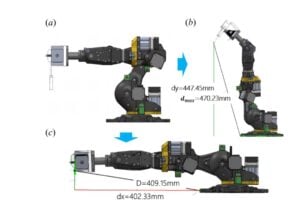
The 6-DoF robot features six degrees of freedom, allowing for precise control over the printing process. This enables the creation of curved and complex shapes with high accuracy and speed. The system's technical specifications include:
| Feature | Description |
|---|---|
| Degrees of Freedom | 6 |
| Printing Technology | Fused Filament Fabrication (FFF) |
| Build Speed | Up to 100 mm/s |
| Layer Resolution | 0.1 mm |
Comparison to Traditional 3D Printing Methods
Compared to traditional 3D printing methods, the 6-DoF robot offers several advantages, including:
| Method | Build Speed | Support Requirements |
|---|---|---|
| Traditional FFF | Up to 50 mm/s | Required for complex geometries |
| 6-DoF Robot | Up to 100 mm/s | Support-free for curved builds |
Benefits and Applications
The open-source 6-DoF robot has the potential to accelerate the adoption of curved FFF technology in various industries, including aerospace, automotive, and healthcare. The benefits of this technology include:
- Increased build speed and accuracy
- Reduced material waste and support requirements
- Enhanced design flexibility and complexity
Bottom Line
The development of an open-source 6-DoF robot for 3D printing has the potential to revolutionize the field of additive manufacturing. With its ability to create complex geometries without support structures, this technology can accelerate the adoption of curved FFF technology in various industries. As the project is open-source, it allows for community involvement and customization, further increasing its potential impact on the 3D printing industry.