Key Takeaways
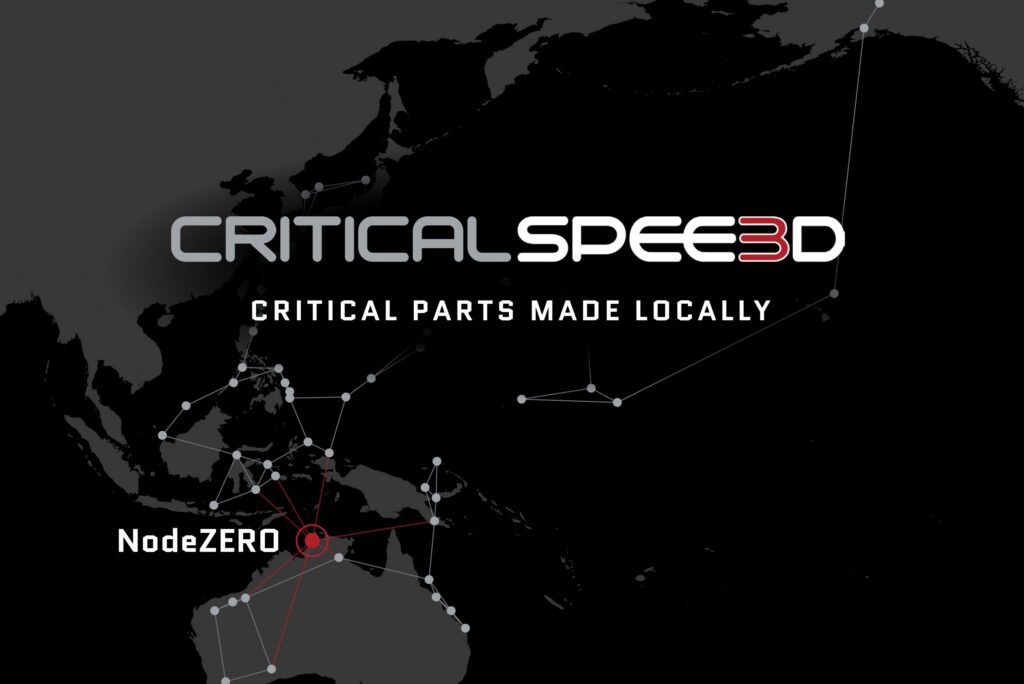
- SPEE3D is launching NodeZERO, the first of a planned 50‑site metal‑additive‑manufacturing (AM) network across the Asia‑Pacific.
- Phase One opens in Darwin, Northern Territory (Australia) and will act as a training hub and production node for the Royal Australian Navy (RAN).
- The network builds on proven expeditionary use cases – a live‑fire ground‑vehicle part delivered by drone for the Tennessee Army National Guard and an on‑ship metal‑print during RIMPAC 2023.
- Proximity to Charles Darwin University (CDU) and TAFE NT creates a pipeline for skilled operators and research collaborations.
- SPEE3D’s entry into Japan’s Self‑Defense Forces and other defense contracts demonstrates the scalability of its technology for austere environments.
SPEE3D’s Expeditionary Manufacturing DNA
From Battlefield to Open Sea
Earlier this year SPEE3D showcased its expeditionary metal‑AM capability by partnering with the Tennessee Army National Guard. The company printed a critical ground‑vehicle component (stainless‑steel 17‑4PH, 120 mm × 80 mm × 30 mm) on‑site, subjected it to a live‑fire test, and shipped the part via a drone to the field unit—cutting delivery time from weeks to under 48 hours【1】.
A few months later, SPEE3D replicated the feat aboard a U.S. Navy vessel during RIMPAC 2023, the world’s largest joint maritime exercise. The printer produced a titanium alloy bracket (Ti‑6Al‑4V, 150 mm × 100 mm × 20 mm) in a shipboard environment, proving that metal AM can survive vibration, humidity, and limited power supplies【2】.
These demonstrations underline a core strategy: identify “too‑hard” customer needs, then engineer the AM workflow to make them routine.
NodeZERO – Phase One in Darwin
Why Darwin?
- Strategic location – Darwin sits at the crossroads of the Indo‑Pacific, enabling rapid logistics to Australia, Southeast Asia, and the Pacific islands.
- Academic partnership – Close ties with Charles Darwin University and TAFE NT provide a talent pipeline and joint research on metal‑powder recycling, process monitoring, and AI‑driven build optimization【3】.
- Defense focus – The site will support the Royal Australian Navy with on‑demand production of spare parts for vessels such as the HMAS Hobart (LHD‑1) class, where a typical lead‑time reduction from 6 weeks (traditional machining) to ≤48 hours is projected.
Technical Footprint
| Parameter | SPEE3D Metal‑Printer (NodeZERO) | Conventional Centralized Plant |
|---|---|---|
| Laser Power | 30 kW fiber laser | 10 kW–50 kW (varies) |
| Build Volume | 250 mm × 250 mm × 250 mm | 500 mm × 500 mm × 500 mm |
| Materials | 17‑4PH SS, Ti‑6Al‑4V, Inconel 718 | Same alloys, plus exotic (e.g., Re‑based) |
| Part Production Rate | Up to 30 g / h (continuous) | 10–20 g / h (batch) |
| Energy Consumption per Part | ~0.9 kWh / cm³ | ~1.5 kWh / cm³ |
| Footprint | 12 m² (including safety enclosure) | 200 m²+ (facility) |
| Lead Time (from order to part) | 24–48 h (local) | 2–6 weeks (global) |
| Required Staffing | 2‑3 trained operators | 8‑12 technicians + engineers |
Sources: SPEE3D product datasheet (2024)【4】; Industry benchmarks (AMFG 2023)【5】.
Scaling the Network
SPEE3D’s roadmap


