Key Takeaways
- A new study demonstrates the possibility of manufacturing electronic components directly in space using a dry additive manufacturing process.
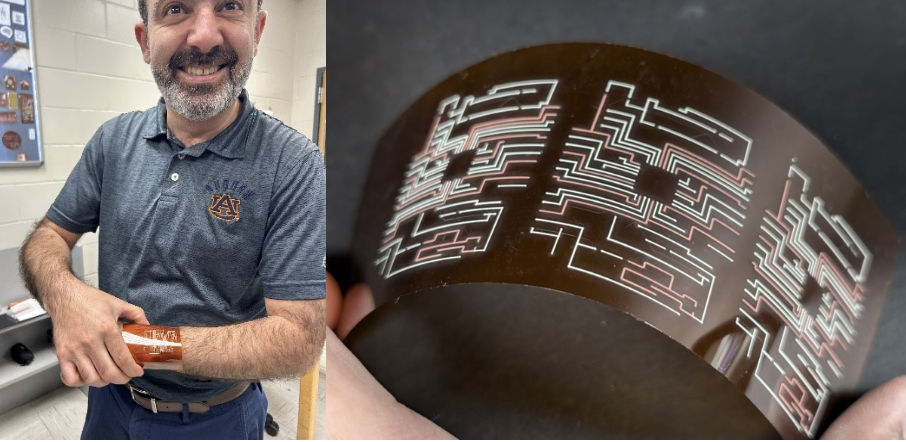
- The process, called Dry-ANM, uses silver and copper nanoparticles to create conductive structures without the need for inks or liquid materials.
- Researchers from Auburn University and NASA Marshall Space Flight Center have successfully tested the Dry-ANM process in microgravity conditions.
- The technology has the potential to enable on-demand electronics manufacturing during future space missions.
Introduction to Dry-ANM
The Dry-ANM process is a significant breakthrough in additive manufacturing, as it allows for the production of electronic components in space without the need for liquid materials. This is particularly important in microgravity environments, where traditional manufacturing methods can be challenging to implement. The Dry-ANM process uses a dry, ink-free printing method to create conductive silver and copper structures.
Comparison of Additive Manufacturing Methods
| Method | Materials | Environment | Advantages | Disadvantages |
|---|---|---|---|---|
| Dry-ANM | Silver, Copper | Microgravity | No liquid materials, high precision | Limited to specific materials |
| Traditional 3D Printing | Various | Terrestrial | Wide range of materials, established technology | Not suitable for microgravity environments |
| Liquid Metal 3D Printing | Liquid metals | Terrestrial | High conductivity, flexible materials | Difficult to control in microgravity environments |
Applications and Future Directions
The Dry-ANM process has the potential to revolutionize the way electronic components are manufactured in space. With the ability to produce conductive structures on demand, astronauts can repair and maintain electronic equipment during long-duration space missions. The technology also has implications for the development of new space-based technologies, such as satellite communications and navigation systems.
Technical Specifications
The Dry-ANM process uses nanoparticles with diameters ranging from 10-100 nanometers. The system can produce conductive structures with a resolution of up to 10 micrometers. The researchers have demonstrated the production of silver and copper structures with conductivities of up to 80% of their bulk values.
Conclusion
The development of the Dry-ANM process is a significant step forward in the field of additive manufacturing. With its ability to produce conductive structures in microgravity environments, the technology has the potential to enable on-demand electronics manufacturing during future space missions. As researchers continue to develop and refine the Dry-ANM process, we can expect to see new and innovative applications of this technology in the field of space exploration.
Bottom Line
The Dry-ANM process is a groundbreaking technology that enables the production of electronic components in space using a dry, ink-free printing method. With its potential to revolutionize the way electronic components are manufactured in space, the Dry-ANM process is an exciting development in the field of additive manufacturing. As the technology continues to evolve, we can expect to see new and innovative applications of this technology in the field of space exploration, from satellite communications to navigation systems.


