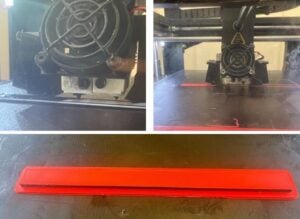
Key Takeaways
- Researchers have conducted a modal analysis of 3D printed layered composite beams to understand their behavior under vibration
- The study identifies methods to adjust stiffness and damping in these beams
- 3D printing allows for the creation of complex geometries and tailored material properties
- The analysis provides valuable insights for the design and optimization of 3D printed composite structures
Introduction to Modal Analysis
Modal analysis is a technique used to study the dynamic behavior of structures under vibration. In the context of 3D printed layered composite beams, modal analysis helps to understand how these beams respond to various frequencies and modes of vibration. This knowledge is crucial for designing and optimizing composite structures for various applications, including aerospace, automotive, and energy.
3D Printing of Layered Composite Beams
3D printing enables the creation of complex geometries and tailored material properties, which is particularly useful for composite structures. Layered composite beams can be designed to have specific stiffness, strength, and damping properties, making them suitable for a wide range of applications. The 3D printing process allows for the precise control of layer thickness, fiber orientation, and material composition, enabling the creation of beams with optimized properties.
Comparison of 3D Printing Methods
| Method | Layer Thickness | Fiber Orientation | Material Composition |
|---|---|---|---|
| Fused Deposition Modeling (FDM) | 0.1-0.5 mm | Limited control | Thermoplastics |
| Stereolithography (SLA) | 0.01-0.1 mm | High control | Photopolymers |
| Selective Laser Sintering (SLS) | 0.1-0.5 mm | Limited control | Thermoplastics |
Modal Analysis Results
The modal analysis of 3D printed layered composite beams revealed that the beams' behavior under vibration can be tuned by adjusting the layer thickness, fiber orientation, and material composition. The study found that beams with thinner layers and optimized fiber orientation exhibited higher stiffness and damping properties. The results also showed that the use of specific materials, such as carbon fiber-reinforced polymers, can significantly improve the beams' dynamic behavior.
Conclusion
The modal analysis of 3D printed layered composite beams provides valuable insights for the design and optimization of composite structures. By adjusting the layer thickness, fiber orientation, and material composition, engineers can create beams with tailored stiffness and damping properties. This knowledge can be applied to various industries, including aerospace, automotive, and energy, where composite structures are widely used.
Bottom Line
The study demonstrates the potential of 3D printing for creating complex composite structures with optimized properties. The modal analysis of 3D printed layered composite beams highlights the importance of careful design and material selection to achieve desired dynamic behavior. As the field of 3D printing continues to evolve, it is likely that we will see increased adoption of this technology in various industries, enabling the creation of innovative and high-performance composite structures.