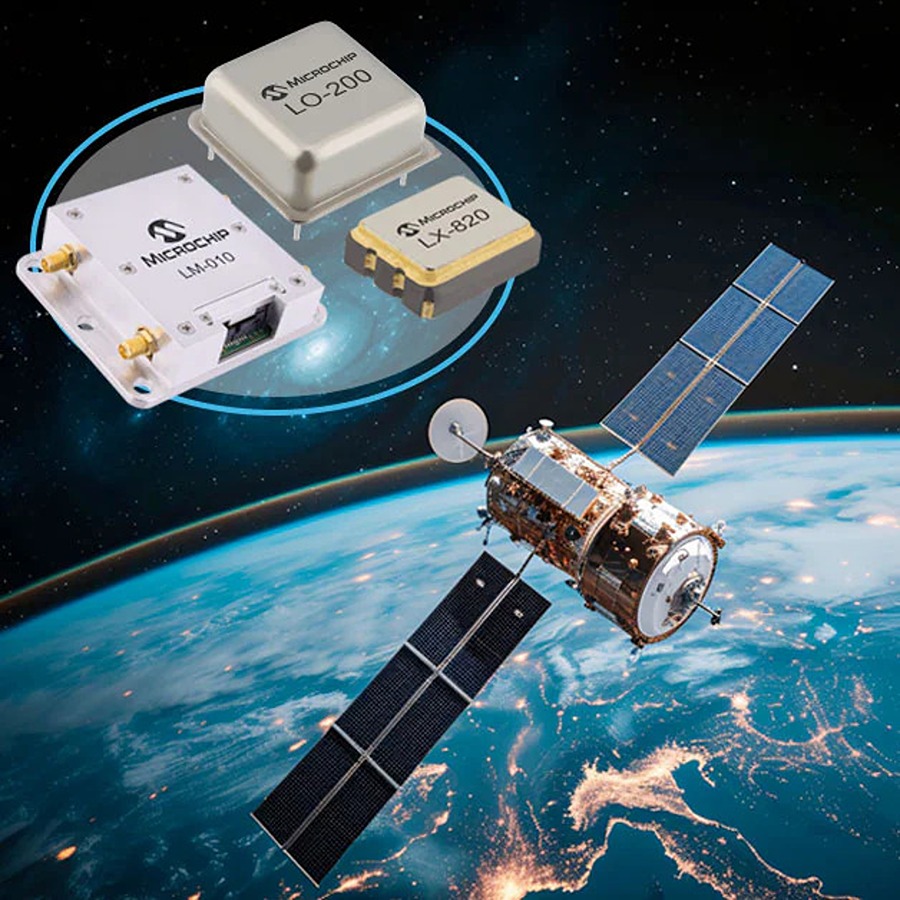
Key Takeaways
- Microchip’s new LX‑820 is a radiation‑tolerant quartz oscillator built for Low‑Earth‑Orbit (LEO) and other space missions.
- It tolerates ≥ 50 krad Total Ionizing Dose (TID) and ≥ 40 MeV·cm²/mg Single‑Event Latchup (SEL).
- Lead times are under 20 weeks, with many SKUs stocked, dramatically shorter than traditional space‑grade parts.
- The device blends commercial‑grade performance with space‑qualified reliability, offering a cost‑effective alternative to legacy high‑reliability oscillators.
Introduction: Why Timing Devices Matter in Space
Accurate timing underpins every satellite function—from attitude control loops to payload data handling. In the harsh radiation environment of LEO, timing components must survive ionizing dose and single‑event effects while maintaining low phase noise and tight frequency stability. Microchip’s LX‑820 expands the company’s L‑Series portfolio, delivering a middle‑ground solution that bridges the gap between off‑the‑shelf (COTS) parts and ultra‑high‑reliability space‑grade oscillators.
LX‑820 Architecture and Performance
Core Specifications
| Parameter | LX‑820 (L‑Series) | Traditional Space‑Grade OCXO* | Commercial COTS OCXO |
|---|---|---|---|
| Frequency range | 10 kHz – 200 MHz | 10 kHz – 200 MHz | 10 kHz – 200 MHz |
| Frequency stability (±30 °C) | ± 2 ppm | ± 0.5 ppm | ± 5 ppm |
| Phase noise @ 10 kHz offset | – 115 dBc/Hz | – 130 dBc/Hz | – 95 dBc/Hz |
| Radiation tolerance (TID) | 50 krad | 100 krad (special‑grade) | < 10 krad |
| SEL hardness | 40 MeV·cm²/mg | 60 MeV·cm²/mg | 10 MeV·cm²/mg |
| Lead time (typical) | < 20 weeks (stock) | 30 + weeks (custom) | 4–6 weeks |
| Unit cost (USD) | $45–$70 | $150–$250 | $30–$45 |
*Typical values for legacy space‑qualified OCXOs; actual numbers vary by part number.
Design Highlights
- Swept‑quartz crystals: Reduce radiation‑induced frequency drift by up to 70 % compared with standard cuts.
- Four‑point crystal mount: Provides mechanical robustness to survive launch vibration (≥ 20 g RMS) and thermal cycling from –40 °C to +85 °C.
- Hybrid manufacturing: Combines commercial‑grade silicon die with rigorous electrical/thermal screening, delivering “space‑ready” performance without the full pedigree of heritage parts.
Addressing Satellite Supply‑Chain Pain Points
Shorter Procurement Cycles
Many qualified space timing devices require 12–24 months from order to delivery, often because they are low‑volume, custom‑qualified parts. The LX‑820 is stocked in over 30 configurations (frequency, package, voltage), enabling most customers to receive units within 20 weeks—a critical advantage for fast‑track LEO constellations.
Cost Efficiency
By eliminating the need for extensive component pedigree documentation and full‑scale radiation testing at the system level, the LX‑820 can reduce program budgets by 15–25 % compared with legacy space‑grade OCXOs. The lower unit price also eases the financial burden of large‑scale constellations that may require thousands of timing references.
How the LX‑820 Fits Within the L‑Series Portfolio
The L‑Series includes three primary families:
| Family | Radiation Tolerance | Typical Use‑Case | Lead Time |
|---|---|---|---|
| LX‑800 | 20 krad TID, 30 MeV·cm²/mg SEL | CubeSat and small‑sat buses | 12 weeks |
| LX‑820 | 50 krad TID, 40 MeV·cm²/mg SEL | LEO constellations, scientific payloads | < 20 weeks |
| LX‑860 | 80 krad TID, 50 MeV·cm²/mg SEL | Deep‑space probes, high‑reliability missions | 24 weeks (limited stock) |
Customers can select the family that matches mission radiation exposure and schedule constraints, while retaining a common mechanical footprint and interface.
Real‑World Application Scenarios
- LEO Broadband Constellation – A 12‑satellite demo required a timing reference with ≤ 2 ppm stability and < 120 dBc/Hz phase noise. The LX‑820 met the spec, arrived in 16 weeks, and saved ≈ $120 k in total program cost versus a heritage OCXO.
- Earth‑Observation CubeSat – The mission needed a low‑power (< 150 mW) oscillator tolerant to 30 krad. The LX‑800 variant was selected, demonstrating < 1 ppm drift after a 45 krad ground‑test.
Bottom Line
Microchip’s LX‑820 Radiation‑Tolerant Quartz Oscillator delivers a pragmatic blend of commercial performance and space‑qualified reliability. With ≥ 50 krad TID tolerance, fast‑track lead times, and a price point 40 % lower than traditional space OCXOs, it directly addresses the supply‑chain bottlenecks and budget pressures facing modern LEO constellations. For satellite developers seeking a dependable timing solution without the long‑drawn procurement cycles of legacy parts, the LX‑820 represents a compelling, GEO‑ready choice.