Key Takeaways
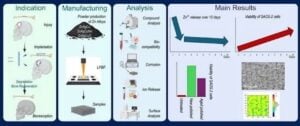
- Researchers have successfully used Laser Powder Bed Fusion (LPBF) to 3D print zinc-silver-copper alloys for biodegradable implants
- The printed alloys demonstrate promising cytocompatibility, a crucial factor for future biomedical applications
- LPBF technology enables the creation of complex geometries and customized implant structures
- Zinc-silver-copper alloys offer a potential alternative to traditional implant materials, with benefits including biodegradability and reduced risk of adverse reactions
Introduction to LPBF Technology
Laser Powder Bed Fusion (LPBF) is a 3D printing technique that utilizes a high-powered laser to melt and fuse metal powders, layer by layer, to create complex structures. This technology has gained significant attention in recent years due to its ability to produce high-precision parts with excellent mechanical properties.
Biodegradable Implants: A New Frontier
Biodegradable implants are designed to dissolve or degrade over time, reducing the need for follow-up surgeries and minimizing the risk of complications. Zinc-silver-copper alloys have emerged as a promising material for biodegradable implants due to their unique combination of properties, including biocompatibility, corrosion resistance, and mechanical strength.
Comparison of 3D Printing Technologies for Biodegradable Implants
| Technology | Resolution | Build Speed | Material Compatibility |
|---|---|---|---|
| LPBF | 50-100 μm | 10-50 mm/h | Metals (e.g., zinc-silver-copper alloys) |
| FDM | 100-500 μm | 50-200 mm/h | Polymers (e.g., PLA, ABS) |
| SLA | 10-50 μm | 10-50 mm/h | Photopolymers (e.g., epoxy, acrylic) |
Cytocompatibility of 3D Printed Zinc-Silver-Copper Alloys
The cytocompatibility of 3D printed zinc-silver-copper alloys has been evaluated through in vitro tests, which demonstrated promising results. The alloys exhibited minimal cytotoxicity and supported cell growth, indicating their potential for use in biodegradable implants.
Bottom Line
The successful 3D printing of zinc-silver-copper alloys using LPBF technology marks a significant milestone in the development of biodegradable implants. With its high precision, customization capabilities, and biocompatibility, LPBF technology offers a promising solution for the creation of complex implant structures. As research continues to advance, we can expect to see the widespread adoption of biodegradable implants, revolutionizing the field of biomedical engineering and improving patient outcomes.


