Key Takeaways
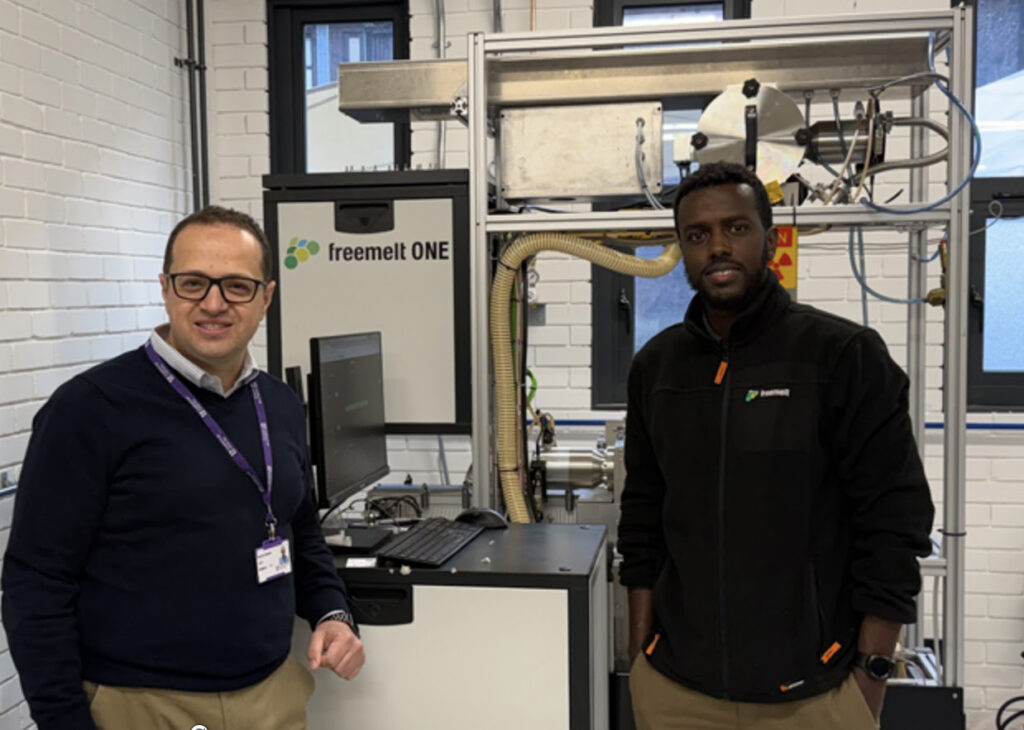
- Loughborough University is utilizing Freemelt's Electron Beam Melting (EBM) technology to advance additive manufacturing (AM) research
- The university chose Freemelt due to its open architecture design, allowing for greater flexibility and accessibility in research
- EBM technology has shown promise in printing challenging metals such as copper, molybdenum, and tungsten
- Freemelt's solutions have been adopted by research institutions and companies worldwide, including in the US, Italy, Sweden, Hungary, and the UK
Introduction to EBM Technology
Electron Beam Melting (EBM) is a type of additive manufacturing technology that uses a focused electron beam to melt and fuse metal powders together. This technology has gained popularity in recent years due to its ability to print complex geometries and challenging metals with high accuracy and precision.
Advantages of Freemelt's EBM Technology
Freemelt's EBM technology stands out from other additive manufacturing techniques due to its open architecture design. This design allows researchers to experiment with parameters, explore new alloys, and develop processes that are impossible on closed commercial platforms. According to Professor Moataz Attallah, "Electron beam technology succeeds where other additive techniques have struggled. The Freemelt system stands out by being open, flexible, and accessible for researchers."
Comparison of EBM Technology with Other AM Techniques
| Technology | Advantages | Disadvantages |
|---|---|---|
| EBM | High accuracy and precision, ability to print challenging metals | Limited build size, high equipment cost |
| Laser-Based AM | High speed and productivity, wide range of material options | Limited ability to print challenging metals, high equipment cost |
| Powder Bed Fusion | High accuracy and precision, ability to print complex geometries | Limited build size, high equipment cost |
Applications of EBM Technology
EBM technology has a wide range of applications in industries such as aerospace, automotive, and healthcare. It is particularly useful for printing complex geometries and challenging metals that are difficult to produce using traditional manufacturing techniques.
Conclusion
Loughborough University's adoption of Freemelt's EBM technology is a significant step forward in advancing AM research. The university's choice of Freemelt is a testament to the company's innovative solutions and open architecture design. With its ability to print challenging metals and complex geometries, EBM technology has the potential to revolutionize various industries and applications.
Bottom Line
In conclusion, Loughborough University's partnership with Freemelt is a significant development in the field of additive manufacturing. The use of EBM technology has the potential to drive innovation and advancement in various industries, and its adoption by research institutions and companies worldwide is a testament to its versatility and effectiveness. As the technology continues to evolve, we can expect to see new and exciting applications of EBM in the future.