Key Takeaways
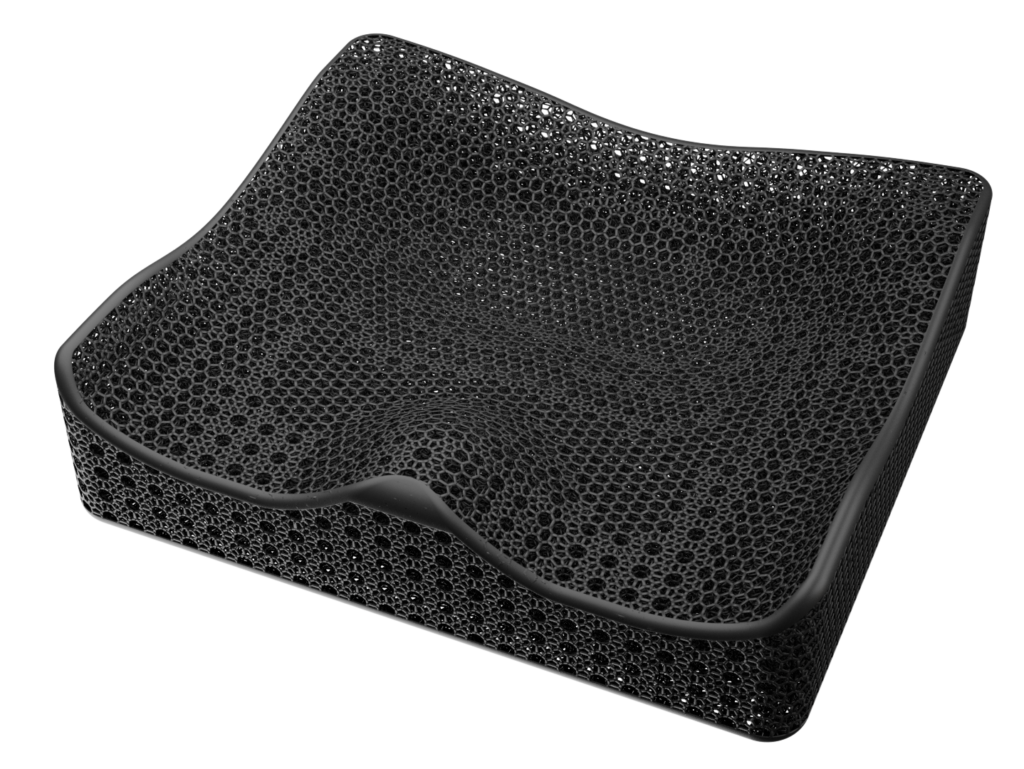
- Kalogon introduces the Verro, a 3D printed wheelchair cushion with variable density lattice technology
- The cushion is designed to provide comfort and support for wheelchair users, particularly those with windswept posture, pelvic obliquity, or asymmetry
- The Verro is Medicare coded (E2609) and available in two models: variable-density lattice and dual-density foam
- Kalogon is seeking to patent its variable density lattice technology
Introduction to the Verro
Kalogon, a company known for producing wheelchair seats and military aircraft seats in the US, has launched the Verro, a 3D printed wheelchair cushion. The Verro utilizes vat polymerization technology to create a variable density lattice, which provides a precise, body-conforming fit for users. This innovative design aims to offer enhanced comfort and support, particularly for individuals with specific postural or asymmetrical needs.
Technical Specifications
The Verro features a 3D printed elastomer construction that varies firmness across the cushion surface. The lattice structure is designed to be firmer in areas where the body needs support and softer in areas where pressure needs to be diffused. The cushion is available in two models: the Verro variable-density lattice and the Verro dual-density foam. Both models are Medicare coded (E2609), making them more accessible to users.
Comparison with Existing Technologies
| Product | Technology | Features |
|---|---|---|
| Verro (Kalogon) | 3D printed variable density lattice | Variable firmness, body-conforming fit |
| FX3D (Glide) | 3D printed variable density elastomer | Customizable, variable density |
| Etac 3D Printed Cushions | 3D printed variable density | Custom-made, variable density |
| Carbon Advanced Lattices | Variable density elastomeric lattices | Applied to various products, including wheelchair cushions |
| Wheelair Cushion (LCS) | Variable density | Customizable, adjustable firmness |
Patents and Market Presence
Kalogon is seeking to patent its variable density lattice technology, which may raise questions about the uniqueness of this innovation. Other companies, such as Glide, Etac, and Carbon, have already developed similar technologies. The Verro's Medicare coding and availability in two models may contribute to its market presence, but the competition in this space is notable.
Bottom Line
The Verro, Kalogon's 3D printed wheelchair cushion, offers a promising solution for users seeking comfort and support. While the technology is not entirely new, the Verro's features and Medicare coding make it an attractive option. As the company navigates the patent process, it will be interesting to see how the Verro competes with existing products in the market. With its variable density lattice and customizable design, the Verro has the potential to make a significant impact in the wheelchair cushion industry.