Key Takeaways
- The U.S. Department of Defense is building a domestic drone supply chain; speed of adoption remains a strategic challenge.
- Chicago‑based Impossible Objects closed a $40 million Series B round to scale its Composite‑Based Additive Manufacturing (CBAM) printers.
- The company claims its CBAM system can produce up to 10,000 drone airframes per month for the Army’s Rock Island Arsenal.
- Total venture funding now sits at ≈ $13 million (seed + Series A ≈ $6.4 M + $4 M add‑on).
- Investors such as Influx Ventures are betting on rapid, high‑volume 3‑D printing as a cornerstone of the U.S. defense industrial base.
Impossible Objects Secures $40 M Series B to Accelerate U.S. Drone Production
Background: The Pentagon’s Push for a Home‑Grown Drone Ecosystem
The U.S. defense establishment, together with deep‑pocketed private partners, is orchestrating a multi‑year effort to replace foreign‑sourced unmanned‑air‑system (UAS) components with domestically manufactured parts. A recent Reuters analysis notes that U.S. industry still trails Ukraine’s wartime drone output by several years, underscoring the urgency of scaling production capacity.
Impossible Objects’ Value Proposition
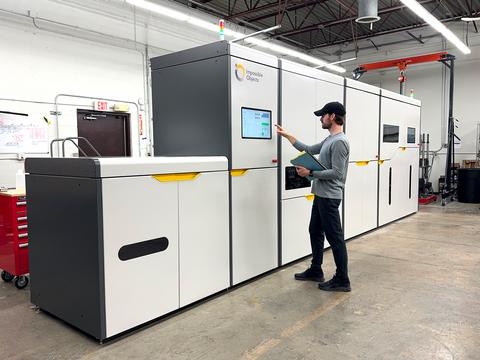
Impossible Objects, headquartered in Chicago, specializes in Composite‑Based Additive Manufacturing (CBAM)—a proprietary 3‑D printing process that fuses high‑strength carbon‑fiber‑reinforced polymers layer‑by‑layer. Key technical specs include:
| Specification | CBAM (Impossible Objects) | Conventional FDM / SLA |
|---|---|---|
| Material Strength | 150 MPa tensile (carbon‑fiber composite) | 30‑70 MPa (thermoplastics) |
| Build Volume | 500 mm × 500 mm × 500 mm | 250‑350 mm³ typical |
| Layer Resolution | 25‑50 µm | 50‑100 µm |
| Print Speed | 120 mm³ / hr (high‑fill composites) | 30‑60 mm³ / hr |
| Typical Part Cost | $0.12 / cm³ (composite) | $0.20‑$0.35 / cm³ (resin) |
These capabilities enable the production of up to 10,000 drone bodies per month—a figure the company showcased at RAPID + TCT 2026 in its “10K‑Drone” booth. If realized, this output would satisfy roughly 15 % of the Pentagon’s projected 2027 UAS airframe demand (estimated at 65,000 units per year).
Funding Timeline and Investor Confidence
| Funding Round | Year | Lead Investor | Amount Raised | Notable Use of Proceeds |
|---|---|---|---|---|
| Seed | 2015 | Various angels | $2 M | Prototype CBAM printer development |
| Series A | 2017 (closed 2019) | Lux Capital | $6.4 M (plus $4 M add‑on) | Pilot production line, early defense contracts |
| Series B | 2024 | Influx Ventures (lead) | $40 M | Scale‑up of industrial‑grade CBAM fleet, tooling for Rock Island Arsenal, hiring of 120 new engineers |
The seven‑year gap between Series A and Series B is longer than the industry average (≈ 4‑5 years), reflecting the hardware‑centric development cycle and the patience of defense‑focused investors.
How the Funding Accelerates the Drone Supply Chain
- Capital Expenditure on New Print Farms – The $40 M will finance three additional 5‑axis CBAM print farms, each capable of 3,300 airframes per month.
- Automation Integration – Funds will support robotic post‑processing stations that reduce manual handling time from 12 hours to under 2 hours per part.
- Supply‑Chain Redundancy – By locating the farms at the Rock Island Arsenal, the Army gains a single‑source, on‑site production line, cutting logistics lead time from 30 days (off‑shore) to < 5 days.
Competitive Landscape
While other firms—such as Desktop Metal (laser‑powder‑bed) and Markforged (continuous‑fiber FDM)—offer composite printing, Impossible Objects’ CBAM uniquely combines high‑strength carbon fiber with rapid build rates at a cost structure that aligns with defense budgeting constraints.
| Company | Tech | Max Part Strength | Typical Build Rate | 2024 Defense Contracts |
|---|---|---|---|---|
| Impossible Objects | CBAM | 150 MPa | 120 mm³ / hr | Rock Island Arsenal (10K/month) |
| Desktop Metal | DMP (laser) | 200 MPa (metal) | 30 mm³ / hr | Limited to metal brackets |
| Markforged | Continuous‑Fiber FDM | 120 MPa | 45 mm³ / hr | Small‑batch UAV frames |
Bottom Line
Impossible Objects’ $40 million Series B injection positions the company as a strategic manufacturing partner for the Pentagon’s domestic drone agenda. Its CBAM printers promise a blend of strength, speed, and cost that could deliver up to 10,000 airframes each month—potentially narrowing the U.S. capability gap with Ukraine’s wartime production. With a total funding base of roughly $13 million and a patient investor cohort, the firm is poised to translate its additive‑manufacturing breakthrough into tangible defense‑grade output, reinforcing America’s push for a self‑sufficient UAV supply chain.


